°C
°C
 3
Min
3
Min
Construction is finished on a major Massachusetts offshore wind farm, the first project to reach this stage during President Donald Trump’s time in office. Offshore construction was completed Friday night on Vineyard Wind with the installation of the final blades, Craig Gilvarg, a spokesperson for the project, said Saturday.
Construction finishes on a major offshore wind farm, the first during Trump’s tenure
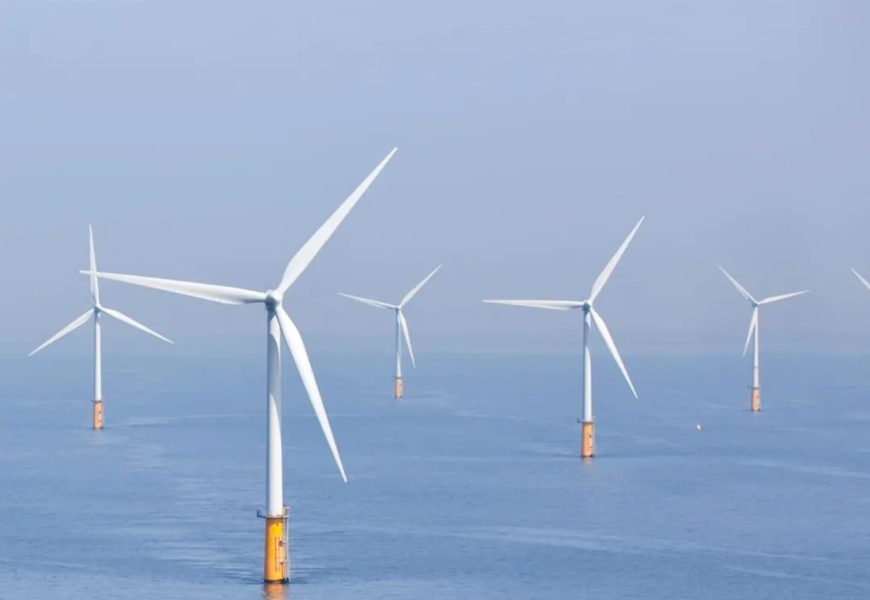
Construction is finished on a major Massachusetts offshore wind farm, the first project to reach this stage during President Donald Trump's time in office.
Offshore construction was completed Friday night on Vineyard Wind with the installation of the final blades, Craig Gilvarg, a spokesperson for the project, said Saturday.
Trump, who often talks about his hatred of wind power, has said his goal is to not let any "windmills" be built. Vineyard Wind was one of five major East Coast offshore wind projects the Trump administration halted construction on days before Christmas, citing national security concerns. Developers and states sued, and federal judges allowed all five to resume construction, essentially concluding that the government did not show that the national security risk was so imminent that construction must halt.
Another one of the five, Revolution Wind, began sending power for the first time to New England's electric grid on Friday and will scale up in the weeks ahead until it is fully operational.
While Revolution Wind just began delivering power, Vineyard Wind has been doing so for over a year as more turbines were finished. Vineyard Wind is a joint venture between Avangrid and Copenhagen Infrastructure Partners, located 15 miles (24 kilometers) south of Martha's Vineyard and Nantucket, Massachusetts. It has 62 turbines that will generate a total of 800 megawatts. That is enough clean electricity to power about 400,000 homes.
Massachusetts Attorney General Andrea Joy Campbell has said the completion of this project is essential to ensuring the state can lower costs, meet rising energy demand, advance its climate goals and sustain thousands of good-paying jobs.
The Trump administration has been particularly critical of the Vineyard Wind project because of a blade failure. Fiberglass fragments of a blade broke apart and began washing onto Nantucket beaches in July 2024 during the peak of tourist season. Manufacturer GE Vernova agreed to pay $10.5 million in a settlement to compensate island businesses that suffered losses.
Vineyard Wind submitted state and federal project plans to build an offshore wind farm in 2017. Massachusetts had committed to offshore wind by requiring its utilities to solicit proposals for up to 1,600 megawatts of offshore wind power by 2027. In what might have been a fatal blow, federal regulators delayed Vineyard Wind by holding off on issuing a key environmental impact statement in 2019. Massachusetts Democratic Rep. William Keating said at the time the Trump administration was trying to stymie the renewable energy project just as it was coming to fruition.
The Biden administration signed off on it in 2021, as it sought to ramp up offshore wind as a climate change solution. Construction began onshore in Barnstable, Massachusetts.
The first U.S. offshore wind farm opened off Rhode Island's Block Island in 2016, at the end of President Barack Obama's tenure. But with just five turbines, it's not a commercial-scale wind farm. The nation's first commercial-scale offshore wind farm officially opened in March 2024, when President Joe Biden was in office. Danish wind energy developer Orsted and the utility Eversource built that 12-turbine wind farm, called South Fork Wind, 35 miles (56 kilometers) east of Montauk Point, New York.
Trump began reversing the country's energy policies his first day in office with a spate of executive orders aimed at boosting oil, gas and coal. White House spokesperson Taylor Rogers said Friday night that Trump "reversed course on Joe Biden's costly green energy agenda that gave preferential treatment to intermittent, unreliable energy sources and instead is aggressively unleashing reliable and affordable energy sources to lower energy bills, improve our grid stability and protect our national security."
More Top Stories