°C
°C
 7
Min
7
Min
CORTINA D’AMPEZZO, Italy (AP) – Lindsey Vonn was over the limit. Beyond it, really. Because of course she was. There is only one speed for maybe the fiercest competitor to ever snap into a pair of skis and point them down the side of a mountain: as fast as she possibly can, for as long as she possibly can, as relentlessly as she possibly can.
Lindsey Vonn’s legend was built on pushing the limits. Her brief time in Cortina was no different

CORTINA D'AMPEZZO, Italy (AP) - Lindsey Vonn was over the limit. Beyond it, really. Because of course she was.
There is only one speed for maybe the fiercest competitor to ever snap into a pair of skis and point them down the side of a mountain: as fast as she possibly can, for as long as she possibly can, as relentlessly as she possibly can.
For many days during Vonn's nearly 25 years in the spotlight, that kind of relentlessness leads to glory.
Other times, like a sun-splashed Sunday in a place that's long felt like a second home, at an event that has long served as her own personal stage, it ends in agony.
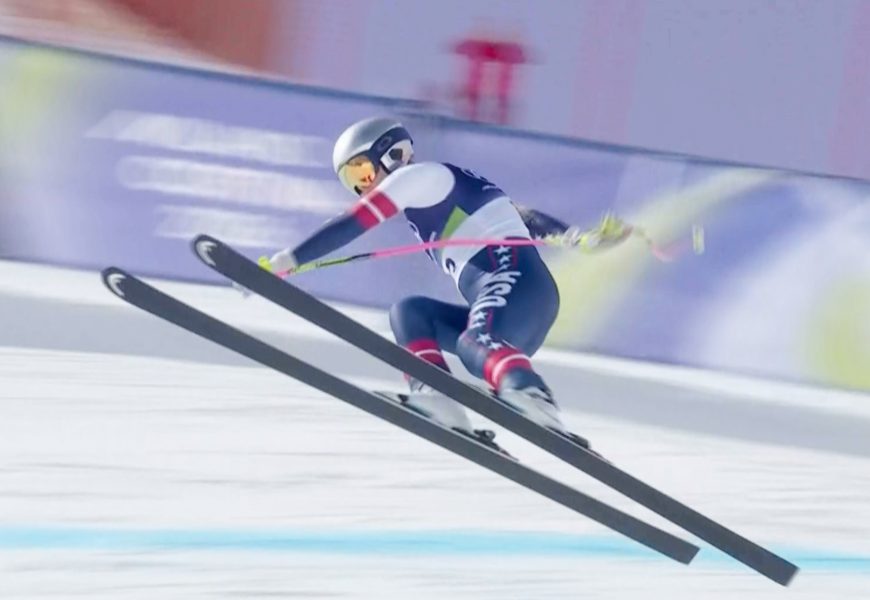
Three gates into the women's Olympic downhill in Cortina, the 41-year-old American and her surgically repaired and titanium-reinforced right knee and her waiting-to-be-surgically-repaired left knee were already in full-send territory.
If anything, Vonn was almost too perfect. Searching for every inch, every millisecond of an advantage, her right arm clipped the fourth gate. Her skis sailed out from under her. In a flash, the unlikely and stirring return that had captivated her sport was over. At least for now.
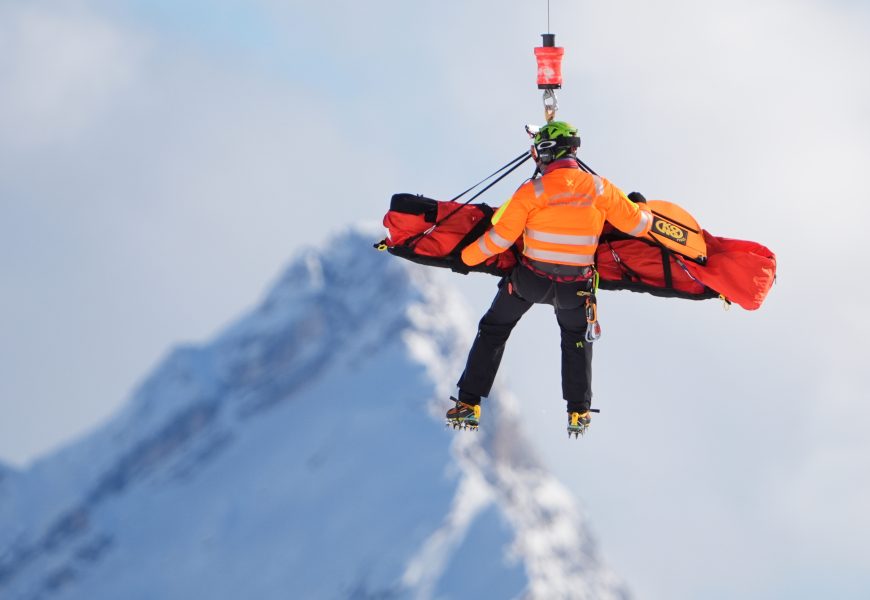
All that was left for the most decorated downhill racer - male or female - were tears, uncertainty and a helicopter lift to safety, a ride that included a sweeping turn above the grandstand at the finish, where the crowd that came to watch history instead let out an ovation neither side hopes doubled as a goodbye.
"Tragic," International Ski and Snowboard president Johan Eliasch said moments later. "But it's ski racing, right?"
It is. And perhaps no one is more familiar with how thin the line is between triumph and calamity than Vonn. It's not a coincidence that her memoir is called "Rise, My Story."
The thing that has long set Vonn apart from her peers - not that there are many left, not even on a stacked Team USA filled with women who were once little girls that grew up idolizing her - is a resiliency that borders on sheer defiance.
It's been that way nearly from the start. She was just 22 when a sprained knee ended her World Cup season early. She became the first American woman to win the Olympic downhill, barreling to the top of the podium in Vancouver despite microfractures in her arm and a busted pinky.
The list goes on and on. There have been concussions, and the right knee seemingly impervious to staying healthy. She tore the ACL in it - twice - in 2013. A tibial plateau fracture just below the kneecap in 2016. After 2018, when she sustained a sprained left knee and a nerve injury, it became too much.
She retired the following year, saying her body was screaming at her to "STOP," putting the words in all caps for emphasis on the Instagram post announcing her decision.
Yet that's the thing about Vonn. Stopping is never an option. She stepped away for a while, the fire to compete a little dimmer but nowhere close to burning out.
Her decision to have knee replacement surgery in April 2024 was based on the need to help her live a pain-free life. It also created an unexpected and unprecedented opportunity.
Some laughed. Most who knew her didn't. They weren't surprised when she returned to competition at 40. They knew it wasn't solely to have the victory lap her body wouldn't let her enjoy in 2019, but to step into the starting gate and push herself - and her sport - forward.
All she'd done in the 14 months before she arrived in Cortina was burnish a legacy that hardly needed burnishing. In December, she became the oldest person to ever win a World Cup race. Then she did it again two weeks later. Her presence, doubled with her brilliance, turned the women's downhill in Cortina into one of the most anticipated events of the Games.
And that was before she shredded the ACL in her left knee in late January, fewer than 10 days ago. Outsiders thought it was over. She insisted it wasn't, then laid down a series of solid training runs late last week, looking every bit the threat to bookend the gold she won in Vancouver 16 years ago.
Vonn's choice rattled some. Yet she insisted it wasn't driven by vanity but in service to a higher purpose: to inspire others to not be burdened by anyone's expectations but their own. It set the stage for what she called her "most dramatic" comeback of all.
And while this last chapter is an unqualified success, no matter what happens next, the storybook Olympic finish was not to be.
It lasted all of 13 seconds for the icon in the No. 13 bib. Down at the finish line, the crowd hushed. Up on top of the mountain, U.S. teammates Isabella Wright and Jacqueline Wiles watched in shock as a familiar scene to anyone who chooses to do this for a living played out below.
"She deserved a better ending than that," Wright said.
Maybe she'll get one. The initial reports from Team USA included cautious optimism that Vonn would be OK. When, however, is anyone's guess.
Whether Vonn's balky left knee played a role in her crash is anyone's guess. Whether anyone outside of Vonn and her medical team needed to have had a say in whether she should have been out there is not, at least to those who have spent decades chasing her.
"It's her choice," veteran skier Federica Brignone of Italy said. "If it's your body, then you decide what to do, whether to race or not. It's not up to others. Only you."
So if Sunday really was it, maybe it was fitting in a way. Vonn wants to go out on her terms. Perhaps in a way she did, at least at these Games.
Vonn's story is the rare one that cuts through the noise in both sport and society that these days often drowns out what happens on the field of play. There was no agenda for Vonn other than pushing herself at an age where the pushing should have long since stopped.
It's why the outpouring in the immediate aftermath was so widespread. Everyone from teammate Mikaela Shiffrin to tennis legend Rafael Nadal to basketball Hall of Famer Pau Gasol to Texas Attorney General Ken Paxton voiced their support. All of them touched in some way by one woman's ageless quest to find her limits and go beyond them.
Whatever reason Vonn and her coaches might land on as to why she left Cortina hanging from a helicopter instead of with a gold medal hanging around her neck, the one they can rule out is that it wasn't because she was afraid to try.
Vonn tried. Vonn always tries. Even when things look bleak. Maybe especially when things look bleak.
They were bleak on Sunday. The tears shed, both by Vonn and those closest to her, were real.
"I mean the work that we put in, the careers, I think obviously my heart aches for her," gold medalist and American teammate Breezy Johnson said. "It's a tough road. It's a tough sport. That's the beauty and the madness of it, that it can hurt you so badly but you keep coming back for more."
If this really was Vonn's last stop on the Olympic stage, maybe the image to take with you isn't the crash, but of her as she approached that fateful gate: all gas, no brakes.
And perhaps most importantly, no regrets.
Related Stories
More Top Stories