°C
°C
 5
Min
5
Min
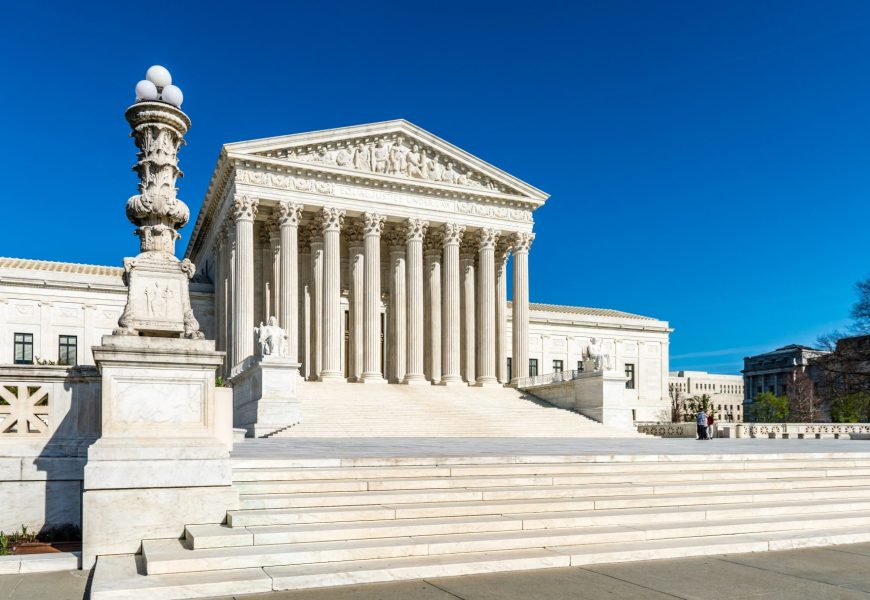
WASHINGTON (AP) – President Donald Trump’s vision of the Supreme Court, in which his three appointees are personally loyal to him, collided with the court’s view of itself Friday when six justices voted to strike down Trump’s signature economic policy – global tariffs imposed under an emergency powers law.
Trump seethes over Supreme Court justices who opposed him on tariffs, especially those he appointed
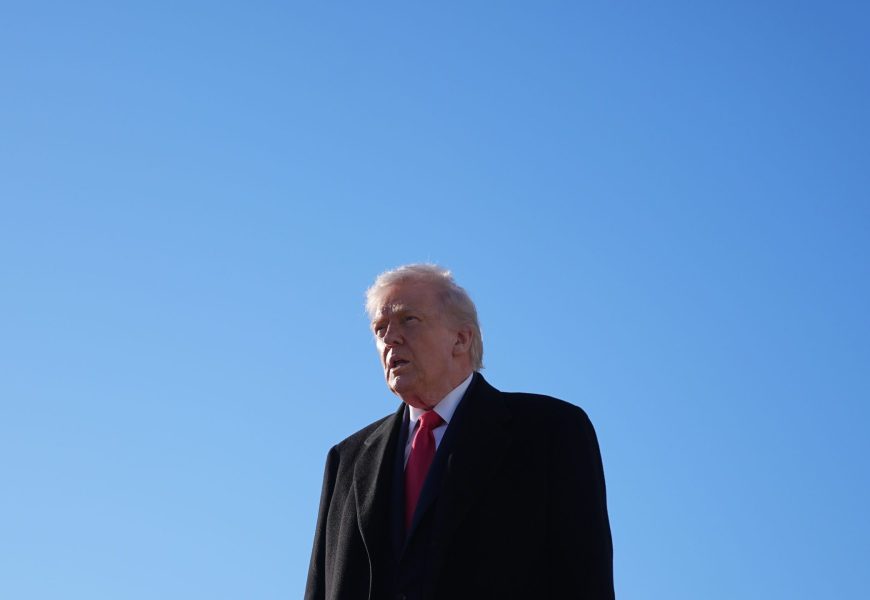
WASHINGTON (AP) - President Donald Trump's vision of the Supreme Court, in which his three appointees are personally loyal to him, collided with the court's view of itself Friday when six justices voted to strike down Trump's signature economic policy - global tariffs imposed under an emergency powers law.
The outcome led Trump to launch an unusually stark personal attack on the justices, with special rancor reserved for the two Trump appointees who defied him.
The case represented a challenge of Trump's many untested, yet forcefully stated imperatives on everything from trade to immigration policy and the court's ability to maintain its independence and, at times, act as a check on presidential authority.
"The Supreme Court's ruling on tariffs is deeply disappointing and I'm ashamed of certain members of the court, absolutely ashamed, for not having the courage to do what's right for the country," Trump said in the White House briefing room several hours after the court issued its decision, authored by Chief Justice John Roberts.
Trump said he expected as much from the three Democratic appointees on the court. "But you can't knock their loyalty," he said. "It's one thing you can do with some of our people."
Asked specifically about Justices Neil Gorsuch and Amy Coney Barrett, who were part of the majority, Trump said, "I think it's an embarrassment to their families, if you want to know the truth, the two of them."
Vice President JD Vance, whose wife, Usha, spent a year as a law clerk to Roberts, echoed the president's criticism, though he didn't make it personal. "This is lawlessness from the Court, plain and simple," Vance wrote on X.
Legal opposition to the tariffs crossed political lines, with a key challenge coming from the libertarian-leaning Liberty Justice Center and support from pro-business groups like the Chamber of Commerce.
Trump has had a checkered history with the court dating back to the start of his first White House term in 2017, though he won his biggest court battle in 2024, a presidential immunity ruling that prevented him from being prosecuted over efforts to undo his 2020 election loss.
In the first year of his second term, he won repeated emergency appeals that allowed him to implement major aspects of his immigration crackdown and other key parts of his agenda.
Presidential criticism of Supreme Court decisions has its own long history. President Thomas Jefferson was critical of the court's landmark Marbury v. Madison case, which established the concept of judicial review of congressional and executive action. President Franklin Roosevelt, frustrated about decisions he thought blunted parts of the New Deal, talked about older justices as infirm and sought to expand the court, a failed effort.
In 2010, President Barack Obama used his State of the Union speech, with several members of the court in attendance, to take aim at the court's just-announced Citizens United decision that helped open the floodgates to independent spending in federal elections. Justice Samuel Alito, who hasn't attended the annual address since, mouthed the words "not true" in response from his seat.
Trump, though, crossed a line in the way he assailed the justices who voted against him, Ed Whelan, a senior fellow at the Ethics and Public Policy Center and a former law clerk for Justice Antonin Scalia, wrote in an email.
"It's entirely fine for a president to criticize a Supreme Court ruling that goes against him. But it's demagogic for President Trump to contend that the justices who voted against him did so because of lack of courage," Whelan wrote.
Some presidents also have criticized justices they appointed for decisions they've made.
Following the seminal Brown v. Board of Education decision in 1954, President Dwight D. Eisenhower told friends that appointing Chief Justice Earl Warren had been his biggest mistake, according to biographer Stephen E. Ambrose.
Objecting to a dissenting vote in an antitrust case, President Theodore Roosevelt once allegedly said of Justice Oliver Wendell Holmes, wounded in action during the Civil War, that he "could carve out of a banana a judge with more backbone."
But these remarks were conveyed in private, not at a livestreamed presidential appearance in the White House briefing room.
On a personal level, Trump has had a sometimes tense relationship with Roberts, who has twice issued public rebukes of the president over attacks on federal judges.
Trump didn't mention Roberts by name on Friday, but he seemed to be assailing the chief justice when he said he lost the case because the justices "want to be politically correct," "catering to a group of people in D.C."
Trump used similar language when he criticized Roberts' vote in 2012 that upheld Obamacare.
Similar to the timing following the Citizens United ruling, the president and some members of the court, dressed in their black robes, are likely to be in the same room Tuesday when Trump delivers his State of the Union address.
Justice Ruth Bader Ginsburg once nodded off during a presidential speech in the House of Representatives, attributing her drowsiness to some fine California wine. No justice is likely to be napping Tuesday night.
More Top Stories