°C
°C
 4
Min
4
Min
BANGKOK (AP) – The Bhumjaithai party of Prime Minister Anutin Charnvirakul took a commanding lead in Thailand’s general election Sunday, with about 90% of the voting reported, according to unofficial results from the state Election Commission.
Thailand’s conservative Bhumjaithai party tops polls but may need partners to form government
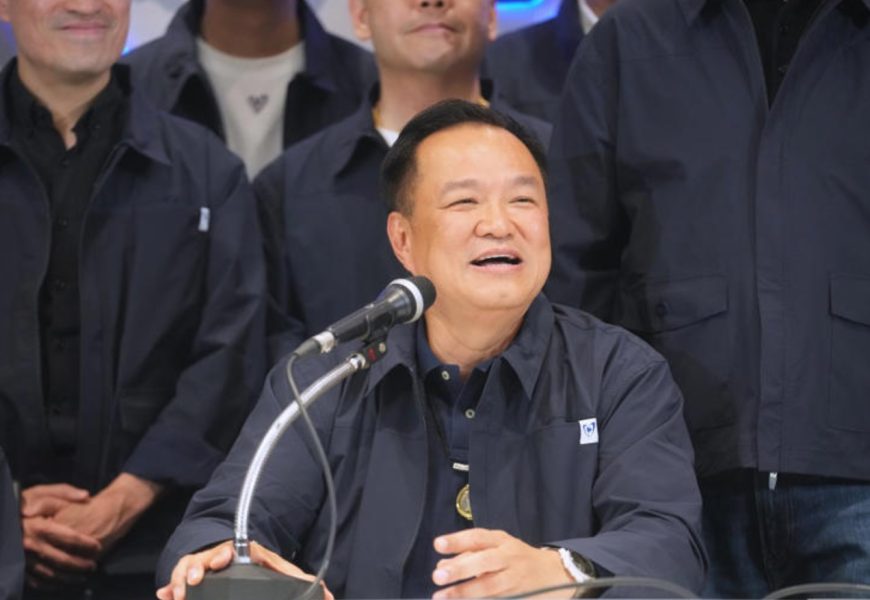
BANGKOK (AP) - The Bhumjaithai party of Prime Minister Anutin Charnvirakul took a commanding lead in Thailand's general election Sunday, with about 90% of the voting reported, according to unofficial results from the state Election Commission.
The commission's running count, shown on its website, indicated that the conservative Bhumjaithai party had just before midnight attained 195 seats in the 500-member House of Representatives.
A simple majority of 251 seats is needed for the body to elect a prime minister to form a new government. It was not clear if that was still within Bhumjaithai's reach, or whether it would have to seek partners in a coalition government.
The progressive People's Party, which had been tipped to win the most seats, was holding down second place with 114 seats.
Pheu Thai, the populist party representing the political machines of former Prime Minister Thaksin Shinawatra, followed behind with 78 seats.
The 500-member House of comprises 400 lawmakers directly elected based on constituencies, while 100 others are chosen from "party list" nominees, who gain seats according to each party's proportional share of the vote on a separate ballot indicating party preference.
The party list totals are subject to change until the vote count is completed
The battle for support from 53 million registered voters came against a backdrop of slow economic growth and heightened nationalist sentiment. While more than 50 parties contested the polls, only three - the People's Party, Bhumjaithai, and Pheu Thai - had the nationwide organization and popularity to gain a winning mandate.
Local polls had consistently projected that no single party would gain a majority, necessitating the formation of a coalition government.
It was also thought that even if the progressive People's Party had won a plurality, its reformist politics aren't shared by its leading rivals, making it nearly impossible for it to assemble a coalition government.
The People's Party, led by Natthaphong Ruengpanyawut, is the successor to the Move Forward Party, which won the most seats in the House of Representatives in 2023, but was blocked from forming a government by conservative lawmakers and then forced to dissolve.
Natthaphong on early Friday night acknowledged that his party wouldn't come in first, and said it would respect the results.
"We respect the parliamentary system, that we have to allow the winner to form the government first, and for now, we don't think we are going to form a government in competition with Bhumjaithai," he said, apparently referring to any attempt to form an alternative coalition when the House votes.
He also said his party would not support Bhumjaithai's candidate for prime minister.
Bhumjaithai's Anutin thanked voters for their support and vowed his party will work hard for Thai people.
"At this moment, our people have given us more than what we expected this morning. So we owe our voters a fortune and we will only repay them by working at our utmost to bring all the good things to them and our country," he said.
Pheu Thai party leader Julapun Amornvivat likewise thanked voters.
"It will be the duty of the party that wins the most votes to form a government later on. For the Pheu Thai Party, whichever role we end up in, we will do our best to work for the people, at our full capacity," he said.
It's widely assumed that Pheu Thai will accept if asked to join a coalition government led by Bhumjaithai.
Bhumjaithai is seen as the main defender and preferred choice of the royalist-military establishment.
Anutin has been prime minister only since last September, after serving in the Cabinet of his immediate predecessor, Paetongtarn Shinawatra, who was forced out of office for an ethics violation regarding mishandling relations with Cambodia. He dissolved parliament in December to call a new election after he was threatened with a no-confidence vote.
Subsequent border clashes with Cambodia allowed Anutin to recast himself as a wartime leader after his popularity initially slipped because of floods and financial scandals. His campaign focuses on national security and economic stimulus.
Bhumjaithai benefited from an electoral strategy employing old-style patronage politics and a machine skilled at grassroots organizing in the vote-rich northeast.
Sunday's voting includes a referendum asking voters whether Thailand should replace its 2017 military-drafted constitution.
The vote isn't on a proposed draft, but rather to decide whether to authorize parliament to begin a formal drafting process, which would require many further steps before coming to fruition. About 60% voted in agreement to the new draft, a clear majority.
Pro-democracy groups view a new charter as a critical step toward reducing the influence of unelected institutions such as the military and judiciary, while conservatives warn that it could cause instability.
More Top Stories