°C
°C
 6
Min
6
Min
TOKYO (AP) – Japan is barreling forward with efforts to significantly boost its military capabilities to stand up to China’s growing threats by doubling annual arms spending. The goal comes as Tokyo’s main ally, the United States, pushes for more military assistance in Asia and a military hawk and ultra-conservative takes over Japan’s leadership.
Pacifist Japan has slowly transformed from exclusively self-defense to a military buildup
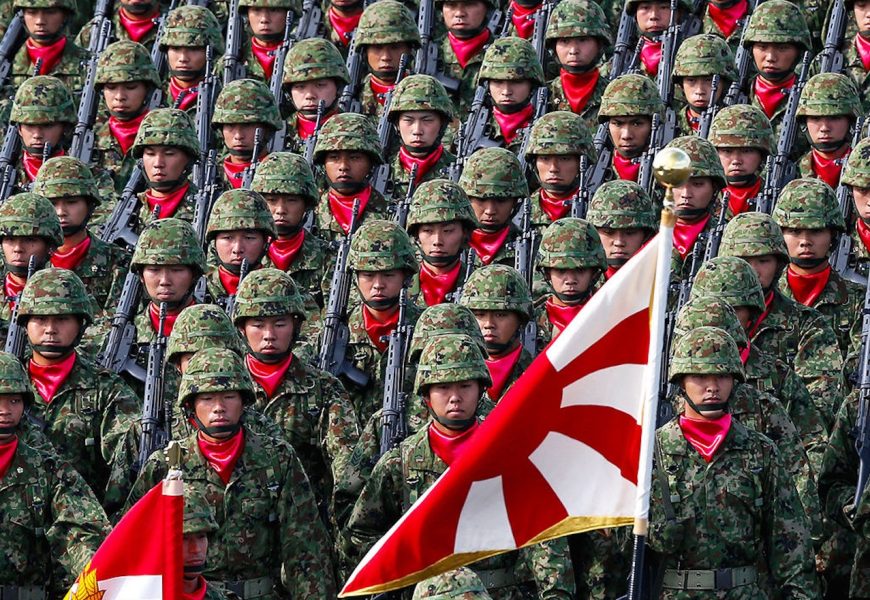
TOKYO (AP) – Japan is barreling forward with efforts to significantly boost its military capabilities to stand up to China’s growing threats by doubling annual arms spending. The goal comes as Tokyo’s main ally, the United States, pushes for more military assistance in Asia and a military hawk and ultra-conservative takes over Japan’s leadership.
Japan says it is still a peaceful nation and the buildup is necessary for a more self-reliant military that can better deter China. But Beijing and other critics see Japan as deviating from its postwar peace pledge, pointing to Prime Minister Sanae Takaichi’s statement soon after taking office that any Chinese military action against Taiwan could be grounds for a Japanese military response.
Japan’s transformation into one of the world’s major defense spenders has developed over decades and raises the question of whether the ongoing buildup is a violation of its pacifist constitution.
Here is a closer look.
After World War II, Japan was not supposed to have a military.
During the 1945-1952 U.S. occupation, American officials wanted to stamp out the militarism that led to Japanese aggression across Asia before and during the war.
Under Article 9 of the U.S.-drafted 1947 constitution, Japan renounced the use of force to settle international disputes, and the right to maintain land, sea and air forces for that purpose.
The U.S. changed its mind about Japanese militarism when the Korean War started in 1950. Japan became an ally, not a threat, leading to the creation of the Japanese Self-Defense Forces in 1954. Article 9 is now widely seen as the legal basis for Japan to have a sufficient military to defend itself.
Japan has since repeatedly stretched the definition of self-defense, allowing overseas dispatches of its troops as part of international peacekeeping operations, though mostly avoiding combat missions.
A big change came in 2014, under former Prime Minister Shinzo Abe, who wanted Japan to have a normal military. Abe newly interpreted Article 9 as legalizing collective defense. The following year, a security law allowed Japan to use force if the United States or other friendly nations come under enemy attack, even if Japan is not being attacked.
This was Abe’s attempt to have a normal military without formally changing the constitution.
Takaichi angered China by giving a hypothetical example of such a situation, a deviation from former leaders’ strategic ambiguity.
The flap with Beijing escalated in December when Chinese aircraft locked their radars, considered possible preparation for firing missiles, on Japanese planes during Chinese aircraft carrier drills near southwestern Japan.
Two Chinese aircraft carriers also were spotted in June operating near the southern Japanese island of Iwo Jima for the first time. This led to worry in Tokyo about Beijing’s rapidly expanding military activity far beyond its borders and in areas around islands claimed by both countries.
Takaichi’s Cabinet last week approved a record defense budget plan. It exceeds 9 trillion yen ($58 billion) for the coming year and aims to fortify its strike-back capability and coastal defense with cruise missiles and unmanned arsenals.
In Beijing later that day, Foreign Ministry spokesperson Lin Jian criticized the Takaichi government for accelerating the pace of its military buildup and expansion, and added: “Japan is deviating from the path of peaceful development it has long claimed to uphold and is moving further and further in a dangerous direction.”
China, which spends a huge amount on its own defense, may also see Takaichi as a defender of Japanese wartime aggression. Before taking office, she was a regular at Tokyo’s Yasukuni Shrine, which honors Japan’s 2.5 million war dead, including convicted war criminals. Victims of Japanese aggression, especially China and the Koreas, see visits to the shrine as tantamount to a lack of remorse about Japan’s wartime past.
Takaichi stayed away from Yasukuni in 2025 and sent a religious ornament marking the Aug. 15 anniversary of Japan’s defeat as a personal gesture instead of praying at the shrine.
A fundamental change came in December 2022 when former Prime Minister Fumio Kishida’s government adopted a security strategy stating the need for Japan to acquire strike-back capability with long-range missiles, a major break from Japan’s self-defense-only policy.
The strategy names China as Japan’s biggest strategic challenge and calls for a more offensive role for Japanese troops under its security alliance with the U.S as the allies work more closely together.
Masahiro Sakata, former head of the Cabinet Legislative Bureau, described the move as “the death of Article 9.”
After the war, Japan long prioritized economic development over defense while relying largely on the U.S. by hosting about 50,000 American troops who also serve the region.
Japan maintained a defense spending cap of 1% of GDP until the annual defense budget started to rise under Abe’s nearly decade-long leadership, to about 1.1%. Takaichi is certain to achieve a 2% target by March, two years earlier than planned, and is expected to push for more spending in coming years as Japan is under growing pressure after NATO adopted a new target of 5%.
Takaichi’s revised security and defense policy would aim to further bolster Japan with unmanned combative weapons and long-range missiles. It is expected to scrap remaining restrictions on arms exports to promote the development of Japan’s defense industry and cooperation with friendly nations.
Japan has long banned arms exports but has significantly eased restrictions in recent years and is now developing next-generation fighter jets with the UK and Italy while finalizing a deal to sell frigates to Australia. Japan also will to provide support for construction and maintenance for U.S. warships.
A government-commissioned panel has proposed Japan consider developing a nuclear submarine to achieve a more long-distance deterrence capability, a controversial idea for a country that has long maintained non-nuclear principles.
Japan has requested Washington ensure protection through the extended deterrence of nuclear weapons. A number of officials recently expressed support for Japan’s nuclear possession, which has led to criticism from Japanese atomic bomb survivors and other pacifist groups.
Japan stands by its three non-nuclear principles of not possessing, not producing and not allowing its presence, according to Defense Minister Shinjiro Koizumi, although he said Japan is considering all options for a possible new submarine.
More Top Stories