°C
°C
 6
Min
6
Min
DUBAI, United Arab Emirates (AP) – The Iran war’s targets widened dangerously into civilian infrastructure Sunday as Bahrain accused Iran of striking one of the desalination plants that are crucial for Gulf nations’ drinking water. While Israeli-struck oil depots smoldered in Tehran after a late-night strike, Iran’s president vowed to expand attacks on U.S. targets.
Iran war’s targets widen into civilian infrastructure and Saudi Arabia reports first deaths
DUBAI, United Arab Emirates (AP) - The Iran war's targets widened dangerously into civilian infrastructure Sunday as Bahrain accused Iran of striking one of the desalination plants that are crucial for Gulf nations' drinking water.
While Israeli-struck oil depots smoldered in Tehran after a late-night strike, prompting environmental warnings for citizens, Iran's president vowed to expand attacks on U.S. targets across the region on the ninth day of the war.
Saudi Arabia reported its first deaths, saying a military projectile fell onto a residential area and killed two people of Indian and Bangladeshi nationality. It said 12 other Bangladeshis were wounded. Foreign residents and workers have made up most of the war's deaths in Gulf nations.
Anger has grown in the region following hundreds of Iranian missile and drone strikes. Arab League chief Ahmed Abouel Gheit lashed out at Iran for a "reckless policy" of attacking Arab countries.
U.S. President Donald Trump and Israeli Prime Minister Benjamin Netanyahu have vowed to press ahead with the coordinated campaign against Iran, even as Washington's stated war aims have varied. Trump told ABC News he wants a say in who comes to power in Iran once the war is over, adding that new leader "is not going to last long" without his approval.
In Israel, the military reported the first soldier deaths since the war began, saying two were killed in southern Lebanon while Israel targets the Iran-backed militant group Hezbollah. Three people were injured in Israel in an afternoon strike.
The war, which Israel and the United States launched with airstrikes on Feb. 28 that killed Iran's supreme leader, has killed at least 1,230 people in Iran, at least 397 in Lebanon and at least 11 in Israel, according to officials. Six U.S. troops have been killed.
The conflict has rattled global markets, disrupted air travel and left Iran's leadership weakened by several thousand Israeli and U.S. airstrikes.
Iranian President Masoud Pezeshkian backtracked from conciliatory comments a day earlier in which he apologized for attacks on Gulf neighbors' soil. Iranian hard-liners had swiftly contradicted him, saying war strategy wouldn't change.
"The more pressure they impose on us, the stronger our response will naturally be," Pezeshkian said Sunday. "Our Iran, our country, will not bow easily in the face of bullying, oppression or aggression - and it never has."
Pezeshkian has urged neighboring states not to take part in U.S. and Israeli attacks.
The U.S. strikes have not come from the Gulf Arab governments but from U.S. bases and vessels in the region.
"The geography of some countries in the region - both overtly and covertly - is in the hands of the enemy, and those points are used against our country in acts of aggression. Intense attacks on these targets will continue," judiciary chief Gholam Hossein Mohseni-Ejei wrote on X on Saturday.
Mohseni-Ejei and Pezeshkian are part of the three-member leadership council overseeing Iran since Supreme Leader Ayatollah Ali Khamenei was killed.
Iran awaits the selection of a new supreme leader.
The Gulf nations of Bahrain, Kuwait and the United Arab Emirates also reported additional Iranian missiles launched toward them.
Bahrain accused Iran of indiscriminately attacking civilian targets and damaging one of its desalination plants, though its electricity and water authority said supplies remained online.
Desalination plants supply water to millions of residents in the region and thousands of stranded travelers, raising new fears of catastrophic risks in parched desert nations.
Home to the U.S. Navy's Fifth Fleet, Bahrain also has seen hotels, ports and residential towers hit, with at least one person killed.
The desalination plant strike came after Iran said a U.S. airstrike damaged a desalination plant there. Foreign Minister Abbas Araghchi said the strike on Qeshm Island in the Strait of Hormuz had cut into the water supply to 30 villages.
He warned that in doing so "the U.S. set this precedent, not Iran."
In response, CENTCOM spokesperson U.S. Navy Capt. Tim Hawkins said that "U.S. forces do not target civilians - period."
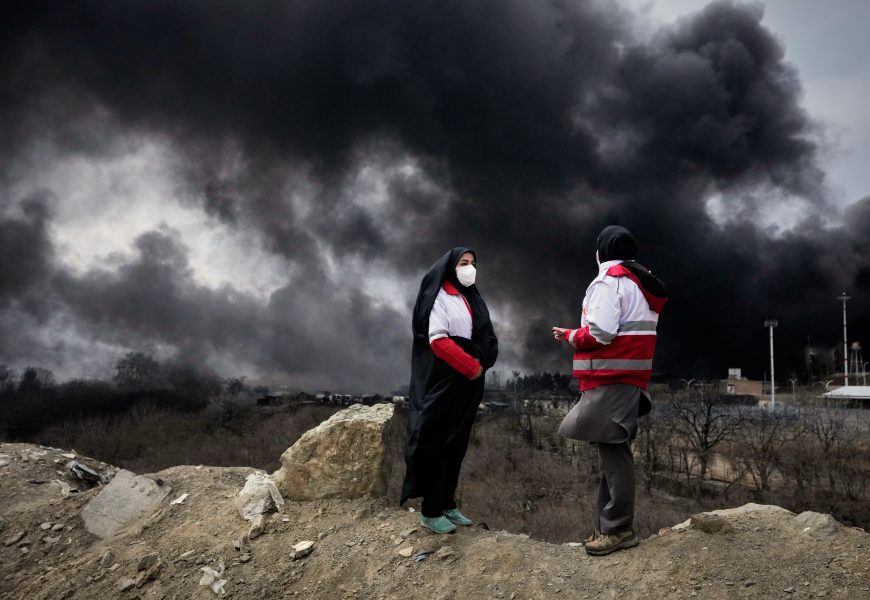
Iranian authorities also said Israel's overnight strikes on four oil storage tankers and a petroleum transfer terminal killed four people. Witnesses in Tehran said the smoke was so thick that it looked as if the sun had not risen.
Israel's military said the oil depots were being used by Iran's military for fuel to launch missiles.
The Iranian Red Crescent Society said about 10,000 civilian structures across the country had been damaged, including homes, schools and almost three dozen health facilities. It also warned Tehran residents to take precautions against toxic air pollution and the risk of acid rain after Israel's strikes.
Mohammad Bagher Qalibaf, the speaker of Iran's parliament, said the war's impact on the oil industry would spiral, warning it soon could become harder to produce and sell oil. Some regional producers, including in Iraq, have curbed output amid dangers in the Strait of Hormuz.
Iran maintains sufficient fuel, Veys Karami, managing director of the National Iranian Oil Products Distribution Company, told Iran's state-run news agency.
Lebanon said over a half-million people have been displaced in the week of fighting between Israel and Hezbollah.
The actual number is likely higher. Lebanon's count of 517,000 refers to those who registered on the government's online portal. Israel over the past week has called on residents in dozens of villages across southern Lebanon and the entirety of Beirut's southern suburbs to evacuate as fighting intensifies.
Health Minister Rakan Nassereddine said 83 children and 82 women have been among those killed.
In Beirut, sheltering families crammed into schools, slept in cars or in open areas near the Mediterranean Sea, where some burned firewood to keep warm. The government said it would open a sports stadium to shelter thousands more.
Israel's renewed offensive began last week after Hezbollah launched rockets toward northern Israel during the war's opening days. The strikes have been the most intense since a November 2024 ceasefire. Israel has continued near-daily strikes, primarily in southern Lebanon, saying Hezbollah had been trying to rebuild its positions there.
Hezbollah said last week that after more than a year of abiding by a ceasefire its patience has ended, leaving it with no option but to fight.