°C
°C
 3
Min
3
Min
TEHRAN, Iran (AP) – Iran appointed a new central bank governor on Wednesday as an economic crisis sparked mass protests following a record currency fall against the U.S. dollar. President Masoud Pezeshkian’s Cabinet appointed Abdolnasser Hemmati, a former economics minister, as the new governor of the Central Bank of the Islamic Republic of Iran, the official IRNA news agency reported.
Iran appoints new central bank governor after mass protests as currency hits record low
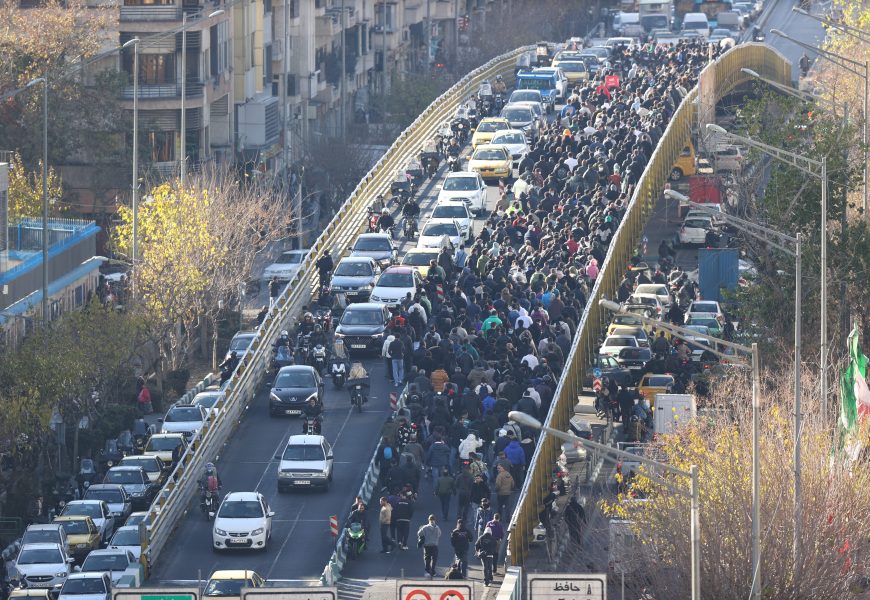
TEHRAN, Iran (AP) – Iran appointed a new central bank governor on Wednesday as an economic crisis sparked mass protests following a record currency fall against the U.S. dollar.
President Masoud Pezeshkian’s Cabinet appointed Abdolnasser Hemmati, a former economics minister, as the new governor of the Central Bank of the Islamic Republic of Iran, the official IRNA news agency reported.
Hemmati succeeds Mohammad Reza Farzin, who resigned on Monday, the day after the start of some of the largest protests in the country in three years sparked by the decline of the rial, Iran’s currency, to a record low.
Experts say a 40% inflation rate led to public discontent. The U.S. dollar traded at 1.38 million rials on Wednesday, compared with 430,000 rials when Farzin took office in 2022. Many traders and shopkeepers closed their businesses on Sunday and took to the streets of Tehran and other cities to protest.
Hemmati’s agenda will included a focus on controlling inflation and strengthening the currency, as well as addressing the mismanagement of banks, the government’s spokeswoman Fatemeh Mohajerani wrote on X.
Hemmati, 68, previously served as minister of economic and financial affairs under Pezeshkian. In March parliament dismissed Hemmati for alleged mismanagement and accusations his policies hurt the strength of Iran’s rial against hard currencies.
A combination of the currency’s rapid depreciation and inflationary pressure has pushed up the prices of food and other daily necessities, adding to strain on household budgets already under pressure due to Western sanctions on Iran over its nuclear program.
Inflation is expected to worsen with a gasoline price change introduced in recent weeks.
“Any effort to turn protests over economic issues to insecurity, damage to public properties or carrying out foreign scenarios, will face…strong reaction,” Prosecutor General Mohammad Movahedi Azad was cited by the Mizanonline news outlet as saying on Wednesday.
Iran’s currency was trading at 32,000 rials to the dollar at the time of the 2015 nuclear accord that lifted international sanctions in exchange for tight controls on Iran’s nuclear program. That deal unraveled after President Donald Trump unilaterally withdrew the United States from it in 2018, during his first term.
On Wednesday, Hamed Ostevar, a local judiciary official in the south of Iran, denied a young man had been killed during a protest, Mizanonline reported.
Ostevar, who is head of justice department of southern Iranian city of Fasa, said protests had turned violent after crowds broke into the governor’s office and injured three policemen. Four protesters were arrested he said.
Merchants and traders have kept their shops closed in the main bazaars of Tehran, as well as in the southern city of Shiraz and western city of Kermanshah, witnesses said Wednesday.
More Top Stories