°C
°C
 5
Min
5
Min
LONDON (AP) – European leaders remained on the sidelines of the U.S.-Israel war with Iran on Thursday but tried to make their voices heard to help shore up a shaky ceasefire, quell fighting in Lebanon and reopen the Strait of Hormuz. The war has put Europe in an uneasy position trying to maintain its support for the U.S. as a key NATO ally.
European leaders urge a negotiated settlement as Iran closes the Strait of Hormuz

LONDON (AP) - European leaders remained on the sidelines of the U.S.-Israel war with Iran on Thursday but tried to make their voices heard to help shore up a shaky ceasefire, quell fighting in Lebanon and reopen the Strait of Hormuz.
The war has put Europe in an uneasy position trying to maintain its support for the U.S. as a key NATO ally and also withstand occasional blowback from U.S. President Donald Trump for not joining in the fight and offering limited use of its military bases.
Some European leaders have been louder than others in distancing themselves from the war. French President Emmanuel Macron said last week that the U.S. can't complain about a lack of support "in an operation they chose to undertake alone" without consultation.
Trump agreed to a two-week ceasefire negotiated by Pakistan at the 11th hour Tuesday after he had been threatening that "a whole civilization will die tonight." The deal was supposed to halt fighting and reopen the strait that is vital to world oil supplies.
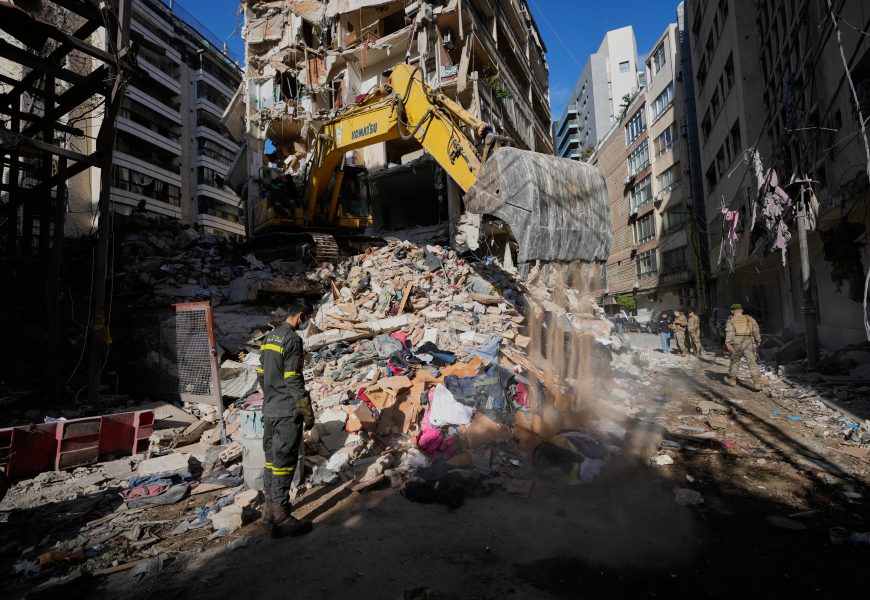
But Iran has reclosed the shipping channel after Israel pounded Lebanon with air strikes as it targeted Iranian-backed Hezbollah. Iran said the ceasefire included Lebanon while Israel and the U.S. disputed that claim.
Iran has also drawn pointed criticism for demanding the right to collect tolls as a precondition for reopening the Hormuz waterway.
Here's what European leaders are saying about the most important issues:
The leaders of France, Italy, Germany, the U.K., Canada, Denmark, the Netherlands, Spain and the European Union said on Wednesday that they "strongly encourage quick progress towards a substantive negotiated settlement." Leaders from Norway, Sweden, Greece and Finland were among others who joined in.
"This will be crucial to protect the civilian population of Iran and ensure security in the region," they said in a joint statement, and "can avert a severe global energy crisis."
Macron, who spoke Wednesday to both Iran President Masoud Pezeshkian and Trump, called for "each of the belligerents" to fully respect the ceasefire and open comprehensive negotiations.
The European leaders jointly called for the ceasefire to include Lebanon after the deadliest day of fighting there Wednesday when more than 200 people were killed.
German Chancellor Friedrich Merz said that "the severity with which Israel is waging war there could cause the failure of the peace process as a whole, and that must not happen."
British Prime Minister Keir Starmer, who was in the Middle East to build support for the ceasefire, said it was wrong of Israel to strike Lebanon regardless of the fine print of whatever agreement they had made.
"That shouldn't be happening," Starmer said. "That should stop. That's my strong view. And therefore the question isn't a technical one of whether it's a breach of the agreement or not. The one is actually a matter of principles as far as I'm concerned."
Spanish Prime Minster Pedro Sánchez, who has been Europe's loudest critic of the U.S. and Israel's military actions in the region, added that the European Union should suspend its association agreement with Israel.
"His contempt for life and international law is intolerable," Sánchez wrote on X about Israeli Prime Minister Benjamin Netanyahu. "The international community must condemn this new violation of international law."
French Foreign Minister Jean-Noël Barrot said Thursday that European and other partners were finalizing plans for naval vessels to escort ships through the strait once fighting effectively ends.
Macron said about 15 nations are ready to participate in such a mission.
Italian Premier Giorgia Meloni warned Parliament that any Iranian extra duties in the Strait of Hormuz would have "unpredictable economic consequences."
"Full restoration of freedom of movement in the Strait of Hormuz is needed, and it must not be subject to any restrictions, as appears to have happened in recent hours," she said.
British Foreign Secretary Yvette Cooper said it's "crucial" Iran is not allowed to apply tolls in the strait.
Merz said that Germany would contribute to ensure free shipping resumed but officials wouldn't elaborate on what that might entail.
Trump has spooked NATO members by suggesting - not for the first time - that the U.S. might leave the trans-Atlantic alliance. This time he's upset that the world's biggest military alliance has not come to America's aid.
Trump dubbed allies "cowards," and said NATO was "a paper tiger." After meeting with NATO Secretary-General Mark Rutte on Wednesday in the White House, Trump said NATO had not been there for the U.S. and wouldn't be there again if needed.
Merz said Thursday that the war had become a "trans-Atlantic stress test" and he didn't want it to further burden relations between the U.S. and its European NATO partners.
"We don't want, I don't want a split in NATO," Merz said. "NATO is a guarantor of our security, also and above all in Europe. We must continue to keep a cool head here."