°C
°C
 6
Min
6
Min
Problems at U.S. airports could worsen beyond hours-long security lines and missed flights if Congress does not agree on a way to pay Transportation Security Administration officers. Federal officials have warned that staffing shortages may close some smaller airports to passengers and commercial flights.
Closing some US airports due to TSA staffing would have big consequences, experts say
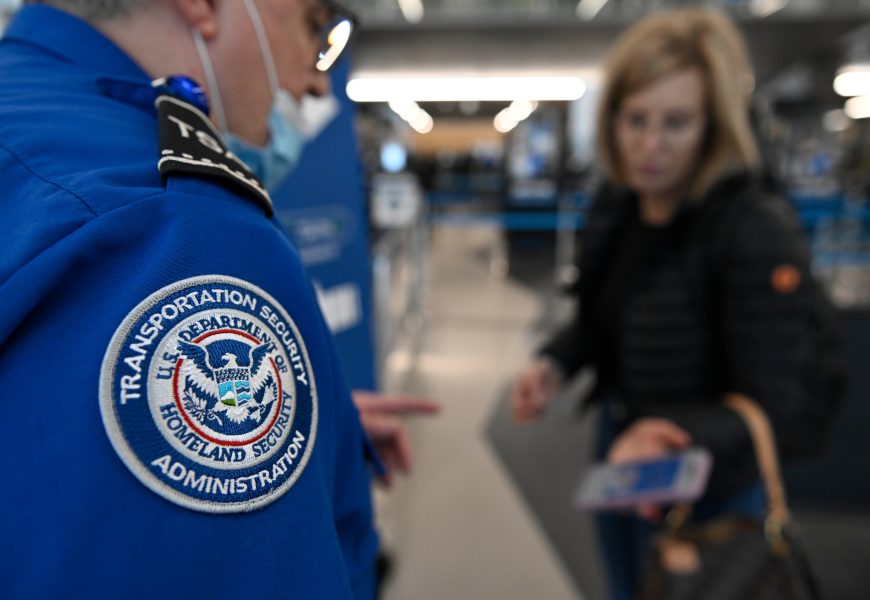
Problems at U.S. airports could worsen beyond hours-long security lines and missed flights if Congress does not agree on a way to pay Transportation Security Administration officers. Federal officials have warned that staffing shortages may close some smaller airports to passengers and commercial flights.
Transportation Secretary Sean Duffy and the TSA's acting leaders said they expected more airport screeners to quit or call out of work after Friday, when TSA personnel were set to miss their second full paychecks since mid-February.
Johnny Jones, the leader of the labor union that represents TSA officers, said Thursday that the agency created a list of about 75 airports that could be closed to free up officers to send to major hubs with long security wait times. Jones suggested that could mean that flights at decent-sized airports surrounding large hubs could be grounded if the security officers are reassigned. Previously most of the speculation had focused on tiny airports with only a few officers operating a single checkpoint.
Jones said he hasn't seen the list, and the airports on it haven't been made public.
But President Donald Trump said Thursday that he will sign an emergency order to pay TSA officers as Congress struggles to reach a deal to fund the Department of Homeland Security.
The officers have been required to work without pay since funding for DHS, which the TSA falls under, lapsed on Feb. 14. If Trump succeeds in finding a way to pay them, that may bring an end to the recent extreme security delays at airports.
"This level of disruption is unprecedented," Ha Nguyen McNeill, the agency's acting administrator, said of the financial strain on TSA workers leading to high absentee rates. "We are being forced to consolidate lanes, and may have to close smaller airports if we do not have enough officers."
McNeill, who spoke during a House committee hearing on Wednesday, did not specify at what point closures might occur. She said the TSA officer staffing shortages were "a fluid, challenging and unpredictable situation."
"The agency has to look at it as, 'Wow man, at the end of the day, we still have to do essential work and protect the American people.' It becomes very difficult to do when you have this going on," said Jones, the secretary and treasurer for Council 100 of the American Federation of Government Employees.
Jones added that officers who fear they could be reassigned are worrying about how they would adjust. It could mean spending more money on longer commutes, or temporarily upending their lives to stay in a faraway city.
About 11% of officers nationwide missed scheduled shifts this week, but at some airports, the share has topped 40% on some days, according to DHS. Passengers standing in massive security lines have filled terminal lobbies and stretched out the door at times in Houston, New Orleans and Atlanta.
Here are some things to know about the DHS funding lapse's impact on air travel and the questions that remain:
With few confirmed details, it's hard to say. But officials have suggested that the possibility of closing airports will become more likely the longer TSA workers go without pay.
Aviation security expert Sheldon Jacobson, whose research contributed to the design of TSA PreCheck, said that Trump administration officials appear to be floating the possibility of closed airports in an effort to pressure Congress to reach an agreement on funding DHS.
"This is a situation that, once again, the politicians are trying to move the needle to get people to compromise by making threats. Are these threats realistic? Yes. Are they a good idea? No," Jacobson said.
Jacobson and other aviation experts said the messaging also suggests that sending federal immigration officers to help out at airports with security staffing problems hasn't been a successful solution.
The White House has said ICE officers helped reduce lines by monitoring crowds and checking IDs. TSA union leaders and other critics have called the move ineffective, arguing that immigration officers don't have the required expertise and experience.
Larger airports with hundreds of officers can close some of their checkpoints and even their TSA PreCheck lanes and continue operating. The smallest of the 440 U.S. airports with security screeners don't have that option.
Smaller airports that only have a single checkpoint might have to shut down temporarily if they can't get enough officers to operate them. That could happen if a number of their officers don't report for any given shift.
Small airports have "a smaller pool of people that you can draw from to keep the airport open," explained Eric Chaffee, a Case Western Reserve law professor who studies risk management, including in the aviation industry. Larger airports, by contrast, are often "much better able to absorb a handful of people calling out."
The closing of these airports would likely be "uneven," Chaffee said - potentially affecting facilities ranging from airports with just a few gates to small regional hubs. But, he warned, that any temporary closure of small airports could cascade through the broader air traffic network because it is a "highly interconnected web."
Experts stressed there would be consequences for the aviation system as a whole.
"Every airport, no matter its size, has some impact to the National Airspace System," said airport security expert Jeff Price.
Jacobson, who is a professor at the University of Illinois, said airlines rely on passengers from small airports to fill out their flights at major hubs.
Others point to ripple effects for the communities smaller airports serve.
"Despite the fact that we're talking about small regional airports, this is a big deal," Chaffee said, pointing to disruptions for both businesses and travelers. "Ultimately, if this does occur, having to drive a half hour to an airport is a lot different than having to drive three hours to an airport."
If flights stop operating at some smaller airports, it could hit nearby communities and their economies hard, especially businesses operating in hospitality and tourism. It could also jeopardize airport workers' jobs, such as janitors and employees of restaurants and shops that serve travelers.
Meanwhile, financial strains would continue to pile up for TSA officers going without pay.
With there being a slew of potential economic repercussions from air travel disruptions, Jacobson said "We are playing with fire right now when we are threatening such a large contributor to our GDP."
More Top Stories