°C
°C
 5
Min
5
Min
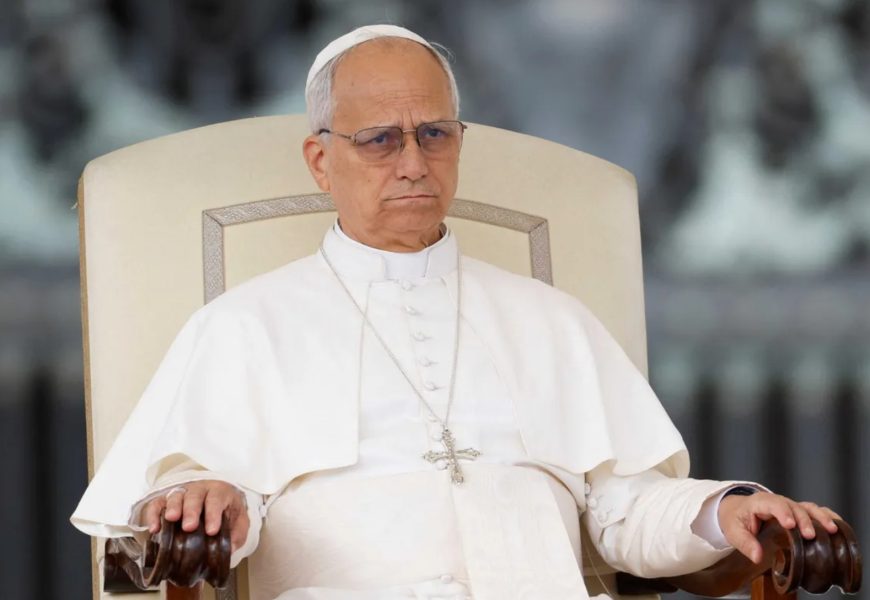
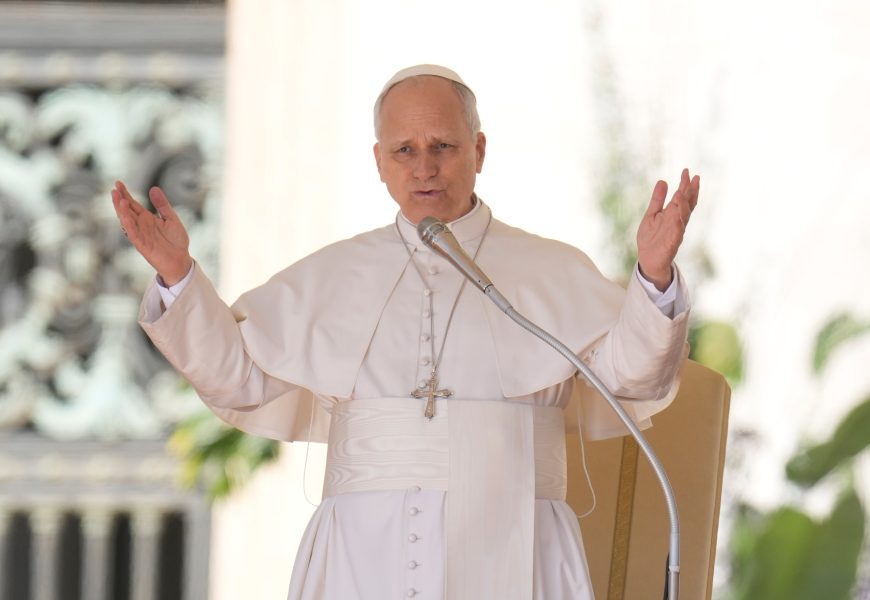
ALGIERS, Algeria (AP) – Pope Leo XIV called for peace and the end of “neocolonial tendencies” in world affairs on Monday during the first papal visit to Algeria, all while facing an extraordinary broadside by President Donald Trump over his criticism of the U.S.-Israeli war with Iran.
Pope starts Africa tour in Algeria and calls for peace against Iran war’s backdrop

ALGIERS, Algeria (AP) - Pope Leo XIV called for peace and the end of "neocolonial tendencies" in world affairs on Monday during the first papal visit to Algeria, all while facing an extraordinary broadside by President Donald Trump over his criticism of the U.S.-Israeli war with Iran.
Leo's arrival in Algiers marks the start of an 11-day tour of four African nations - Algeria, Cameroon, Angola and Equatorial Guinea - that will bring the first U.S.-born pope deep into the growing heart of the Catholic Church.
Leo is in Algeria to promote Christian-Muslim coexistence in the majority Muslim nation at a time of global conflict, and to honor the locally born inspiration of his religious spirituality, St. Augustine.
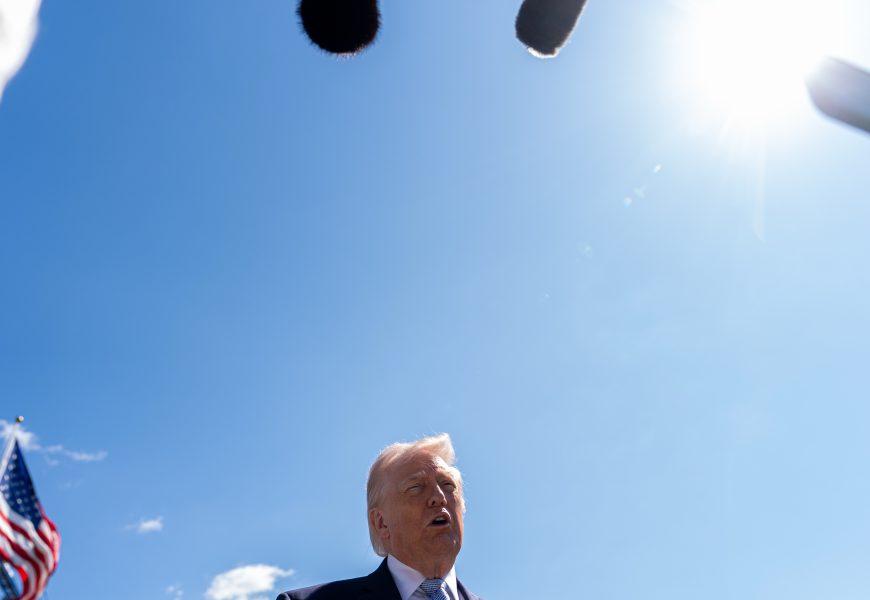
The trip began, however, against the backdrop of a growing feud between the Leo and Trump over the Iran war. Trump overnight said he didn't think Leo was doing a good job as pope and suggested he should "stop catering to the Radical Left."
Leo responded by saying his appeals for peace and reconciliation are rooted in the Gospel, and that he didn't fear the Trump administration.
In his first remarks in Algiers, Leo tied his current appeal for peace to the country's struggle for independence from France, obtained in 1962. Hundreds of thousands of people died in the revolution during which French forces tortured detainees, disappeared suspects and devastated villages as part of a strategy to maintain a grip on power.
"God desires peace for every nation, a peace that is not merely an absence of conflict but one that is an expression of justice and dignity," Leo told a crowd of several thousand people at the monument to Algeria's martyrs.
At a later meeting with President Abdelmadjid Tebboune and other government authorities, Leo praised Algerians for their solidarity and respect for one another, which he said provided an important perspective today "on the global balance of power."
"Today, this is more urgent than ever in the face of continuous violations of international law and neocolonial tendencies," he said without elaborating, though he has previously spoken about Russia's war in Ukraine, the Iran war and Israel's invasion of southern Lebanon.
Leo's visit dominated news headlines in Algeria, where a tiny Catholic community of around 9,000 people made up mostly of foreigners exists alongside the Sunni Muslim majority of about 47 million.
El Moudjahid, a state-run daily newspaper, declared that "the planet is staring at Algeria," while Arabic-language daily Echorouk wrote that "the land of peace and coexistence speaks to the world."
Leo visited the country's Great Mosque and stood silently with his hands clasped in front of him, as if in prayer. He thanked the mosque rector for receiving him in this "divine space, space of God" that is also a study center.
"Through this place of prayer, through the search for truth, including through study and through the ability to recognize the dignity of every human being, we know - and today's gathering is proof of this - that we can learn to respect one another, live in harmony, and build a world of peace," Leo said in Italian in a rare, off-the-cuff comment.
Tebboune hailed the historic nature of Leo's visit and the pride Algerians felt over St. Augustine, "a cherished son of this land."
But others downplayed the significance of the visit.
"God's religion is Islam, which has illuminated this land for 14 centuries," said Lamia Sellimi, a literature teacher at a high school near the Basilica of Our Lady of Africa. "Algerians are deeply attached to their religion, which is one of the foundations of our identity. As such, this visit is merely a circumstantial event."
Algeria fought a civil war in the 1990s that is known locally as the "black decade," when around 250,000 people were killed as the army fought an Islamist insurgency. Among them were 19 Catholics, including seven Trappist monks from the Tibhirine monastery south of Algiers, who were kidnapped and killed in 1996 by Islamic fighters. Also among them were two nuns from Leo's Augustinian religious family.
All 19 were beatified in 2018 as martyrs for the faith in what was then the first such beatification ceremony in the Muslim world.
Leo paid homage to the 19 martyrs and visited the remaining Augustinian nuns who run a social services project out of the Algiers basilica that helps people of all faiths.
The Algiers archbishop likes to remind audiences that Leo was elected on May 8, the Catholic feast day of the 19 martyrs. Immediately after Leo's election, Vesco invited him to visit.
Leo has also made a mantra out of one of the sayings of the martyred prior of the Tibherine monastery, Christian de Chergé, who spoke of an "unarmed and disarming peace." Leo has cited the line starting from the night of his election.
Leo's Augustinian religious order was inspired by the teachings of St. Augustine of Hippo, the fifth-century theological and philosophical titan of the early Christian church who was born in what is today Algeria and spent all but five years of his life there.
On Tuesday, Leo will visit Annaba, the modern-day Hippo where St. Augustine was bishop for three decades, and will literally walk in the footsteps of the saint.
From his first public words as pope, Leo proclaimed himself a "son of St. Augustine," and he has repeatedly cited the church father in speeches and homilies.
"I don't know if I have seen a statement, a homily, an apostolic letter or exhortation that doesn't reference Augustine," said Paul Camacho, associate director of the Augustinian Institute at Villanova University, Leo's Augustinian-run alma mater outside Philadelphia. "The shadow that he casts on Western thought, not just the Roman Catholic Church but on Western thought more broadly, is very, very long indeed."
More Top Stories