°C
°C
 3
Min
3
Min
GUATEMALA CITY (AP) – Guatemala President Bernardo Arévalo on Thursday said that after the United States’ removal of Venezuela’s president, his country, which has also felt the sting of U.S. intervention, is focused on maintaining what he described as a “good” relationship with the U.S., while working to support international law and peaceful dispute resolution.
Guatemala’s balancing act: Navigating US relations in a chaotic world
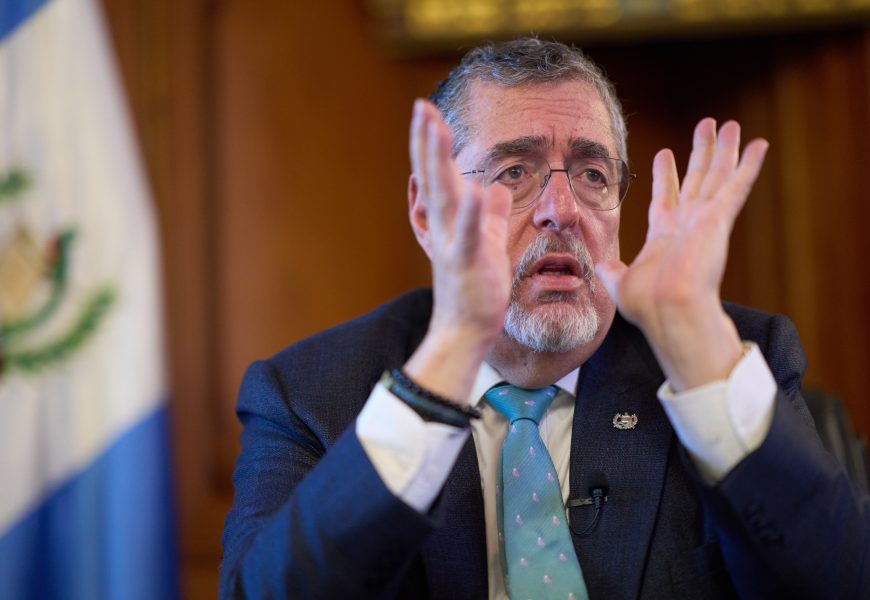
GUATEMALA CITY (AP) - Guatemala President Bernardo Arévalo on Thursday said that after the United States' removal of Venezuela's president, his country, which has also felt the sting of U.S. intervention, is focused on maintaining what he described as a "good" relationship with the U.S., while working to support international law and peaceful dispute resolution.
"The world in general is experiencing a phase of disorder, disorder in the sense that the norms of the old order are breaking," Arévalo said in an interview with The Associated Press. "The problem is how do we recover that sense of order to get the world to fit together again."
Arévalo was born in Uruguay, where his father, former Guatemalan President Juan José Arévalo, was in exile four years after the CIA precipitated a 1954 coup that forced out Guatemalan President Jacobo Arbenz. Military dictatorships and decades of civil war followed.
Before taking office two years ago, Arévalo worked in international dispute resolution. Like Guatemala's neighbor Mexico, Arévalo is walking a fine line of eagerly cooperating with the United States on shared interests like combating drug trafficking while trying to preserve its sovereignty at a moment that the Trump administration is threatening more interventions.
"We have right now a level of relations so strong and strategic that we don't even consider that scenario," he said.
U.S. Secretary of State Marco Rubio lauded that relationship during a visit to Guatemala last year, and combatting drug trafficking and controling immigration continue to be central to the two countries' cooperation. That relationship allowed Guatemala to be one of the few countries to negotiate relief from Trump administration tariffs, Arévalo said.
"We don't have to hold back or limit our actions against (drug traffickers)," the president said. "We don't have a historic relationship with drug trafficking or an arrangement with any cartel."
Arévalo noted that deportations of Guatemalans from the United States have not increased compared to previous U.S. administrations. He declined to comment on the U.S. immigration crackdown, beyond saying it was an internal matter for the U.S. and not part of the countries' bilateral relationship.
Domestically, Arévalo was looking ahead to the upcoming selection process for the Constitutional Court justices and the attorney general.
Guatemala's current top prosecutor Consuelo Porras has pursued Arévalo's party since before he won election. International observers have characterized her investigations as politically motivated and she refused Arévalo's request to step down when he took office. The United States government has sanctioned her for allegedly undermining democracy by obstructing corruption investigations.
Noting that there were 121 days remaining until Porras' term ends, Arévalo said, "The democratic development of the country is on the line, the possibility of having democratic institutions."
More Top Stories