°C
°C
 16
Min
16
Min
Excerpts from recent editorials in the United States and abroad:
Editorials from The Washington Post, The Wall Street Journal, The Guardian and others
Excerpts from recent editorials in the United States and abroad:
___
Nov. 19 - The Washington Post on the National Guard ambush
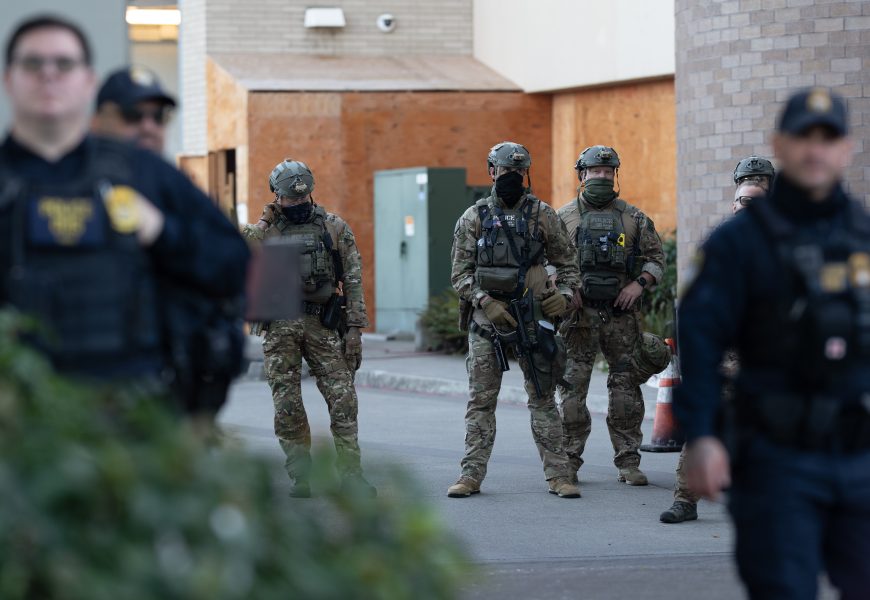
Sarah Beckstrom, 20, and Andrew Wolfe, 24, were sworn in as National Guard members on Tuesday. The following day, they were ambushed by an Afghan refugee while on patrol near the White House. As their families spend Thanksgiving at the hospital, it's worth considering what the tragedy says about the state of the country.
The National Guard's presence in the capital has been controversial since it began this summer. But blaming the (backslash) presence for provoking this monstrous act is inappropriate. The Guard has helped reduce and deter violent crime and is far from menacing. At worst, deploying soldiers to pick up trash is a poor use of resources. President Donald Trump's decision to call up 500 additional Guard members to patrol D.C. is a symbolic gesture, not a prelude to fascism.
At the same time, America's political class has shown little interest in lowering the temperature.
Trump used a televised address to the nation to blame his predecessor Joe Biden for the shooting. The alleged shooter came to the United States in 2021 amid America's disastrous withdrawal from Afghanistan. He had cooperated with the CIA in his home country and had been vetted by the American intelligence community. He was granted asylum this year and had a pending application for a Special Immigrant Visa but had not yet been granted lawful permanent residence.
The U.S. Citizenship and Immigration Services immediately and indefinitely paused all immigration from Afghanistan. The president announced he will "reexamine every single alien who has entered our country from Afghanistan under Biden." As more details emerge, investigating what signs were missed will be essential. It's been obvious for years that vetting was insufficiently thorough. The Biden team's failure to prepare for the fall of Kabul inevitably brought some dangerous people into the country. They should be identified and repatriated.
Yet threatening the status of all 77,000 Afghan refugees who have made America their home is morally bankrupt. Many are people who put their lives and their family's lives at risk to help the United States, working as interpreters and fighting alongside U.S. troops during the two-decade war.
Helping them secure permanent status in America, which would include further vetting and checks, has been a bipartisan issue in the House and Senate. To punish law-abiding refugees who risked everything to help America is not going to inspire foreign friends in the future. Many deserving Afghans have been waiting for years to get the right paperwork to enter the U.S., and some of their strongest supporters are U.S. veterans.
It was also disingenuous for the president to use a moment of national trauma to draw parallels between new Afghan arrivals and the fraud scheme being perpetrated by Somali immigrants in Minnesota. The nearly 80 people charged with pocketing hundreds of millions of taxpayer dollars intended to feed needy children took advantage of this country's most vulnerable cohort.
"If they can't love our country," Trump said of immigrants, "we don't want 'em." It's not unreasonable to expect new arrivals to be enthusiastic about their adopted country, and the reality is that most are. Using this incident to suggest otherwise does a disservice to the country.
A week after Sept. 11, 2001, President George W. Bush visited a D.C. mosque to explain that Islam was not America's enemy, and the religion wasn't represented by the terrorists who flew planes into the World Trade Center and the Pentagon. Those attacks prompted the U.S. invasion of Afghanistan. That became the country's longest war, and it continues to have a long tail. Neither of Wednesday's victims was alive on 9/11.
ONLINE: https://www.washingtonpost.com/opinions/2025/11/27/national-guard-shooting-afghanistan-siv-trump/
___
Dec. 1 - The Wall Street Journal on Congress, Hegseth and drug boats
Congress is mostly a media circus these days, so credit the members who take their duties seriously. Lawmakers are doing a public service by trying to get to the truth on whether the Trump Administration killed defenseless survivors of a drug-boat strike.
The controversy involves a Washington Post report that Defense Secretary Pete Hegseth ordered that no one survive a Sept. 2 missile strike on an alleged drug boat in the Caribbean. The story cites unidentified sources claiming that the U.S. military, on Mr. Hegseth's orders, conducted a second strike to finish off survivors clinging to the destroyed boat.
Mr. Hegseth called the story "fabricated, inflammatory and derogatory," and said U.S. actions have been "in compliance with the law of armed conflict-and approved by the best military and civilian lawyers, up and down the chain of command."
President Trump added Sunday that the Secretary "said he did not say that, and I believe him, 100%." Mr. Trump added that he'll "look into it, but no, I wouldn't have wanted that, not a second strike."
The Pentagon is certainly full of people who might leak a derogatory story because they'd like to see Mr. Hegseth fired. The U.S. campaign against drug boats has also riled civil libertarians and progressives who want to constrain the President's ability to conduct military action.
But the charge of deliberately killing the defenseless is serious enough to warrant a close look from Congress. That includes Mr. Hegseth giving an account under oath. The Administration so far seems to think it can ride out the story with ritual denunciations of the media.
If Mr. Hegseth is right, then the factual record will support him. There are layers of bureaucracy between the Secretary of Defense and the business end of a missile. You can bet senior military officers bought insurance on their own careers by recording the advice they gave and the directions they received.
Our view is that the Commander in Chief deserves legal latitude as part of his constitutional war powers. But that doesn't extend to shooting the wounded in violation of U.S. and international rules of war. The Pentagon's own law of war manual prohibits "hostilities on the basis that there shall be no survivors." Such excesses will also turn the public against allowing a President the power he may someday need to defend the country's interests quickly.
The Hegseth story has additional currency because the Administration isn't explaining its aims in the Caribbean with either voters or Congress. Sens. Roger Wicker and Jack Reed of the Senate Armed Services Committee, have been writing to the Pentagon asking for more details on the legal rationale for its drug-boat strikes. They seem to get mostly a stonewall.
That's all the more reason for Congress to learn the truth about the Hegseth story, and some are ready to do so. Reps. Mike Rogers (R., Ala.) and Adam Smith (D., Wash.), the top members on the House Armed Services Committee promised in a statement over the weekend "bipartisan action to gather a full accounting of the operation in question." The Senate Armed Services Committee also promised an inquiry.
The drug-boat war is presenting questions of presidential power and America's role in the world that will continue long after President Trump leaves Washington, and good for lawmakers who appreciate the stakes.
___
Nov. 30 - The St. Louis Post-Dispatch on the Senate and legislation that would fleece taxpayers
There is bipartisan fury in Congress today over stealth legislation offering million-dollar windfalls to a handful of senators whose office phone records were accessed as part of the federal investigation into the Jan. 6 melee. The idea, quietly slipped into the government reopening measure approved earlier this month, is so patently offensive that even the deeply divided House has voted unanimously to repeal it.
The Senate has, predictably enough, dragged its feet on taking up that repeal. Upon returning to Washington on Monday, senators should all feel the wrath of their constituents until they do.
The awfulness of this idea isn't just that, as regular Americans struggle with inflation and service cuts, a few privileged senators would land seven-figure payouts from the government that already employs them. Pretty much everyone not in line for one of those payouts agrees that the very notion is an obscenity.
But what's just as bad is that this measure is yet another attempt by MAGA allies to falsely rewrite the history of Jan. 6. They are, not for the first time, trying to minimize the crimes of the thugs who attacked the Capitol that day - and the president who egged them on - while villainizing those who subsequently and reasonably sought justice.
Jan. 6, 2021, marked the worst domestic attack on American democracy since the Civil War. Thousands of President Donald Trump's supporters, primed by his relentless lies about a "rigged" 2020 election that he clearly lost, broke into and overran the Capitol, costing lives, for the specific purpose of preventing the peaceful transition of power.
The House impeached Trump. When the Republican-controlled Senate, to its eternal shame, refused to convict him, then-Majority Leader Mitch McConnell explained that it was up to the criminal justice system to hold Trump accountable. Trump "didn't get away with anything yet," McConnell predicted back then.
He was wrong. Special counsel Jack Smith, appointed by President Joe Biden's Justice Department to investigate the Jan. 6 attack, had to end the investigation when Trump was reelected to office last year, due to a standing policy prohibiting prosecution of a current president.
It was during his investigation in 2023 that Smith obtained subpoenas for the office phone logs of eight senators with potential involvement in Trump's attempt to prevent certification of the election. The senators, including Sen. Josh Hawley, R-Mo., were formally informed of the subpoenas earlier this year.
The subpoenas were signed by a federal judge, along with orders that the phone services postpone any notification of the targeted senators. Such information-gathering is commonplace in criminal investigations. And the information consisted only of call logs showing dates and phone numbers, not the content of phone conversations.
Nonetheless, the senators whose records were obtained have alleged nefarious intent, in keeping with the ironic MAGA trope of "lawfare" against Trump and his allies while Biden was president.
It's ironic because Biden properly stayed out of the legitimate probe into the crimes of Jan. 6. Trump, conversely, has openly abused his power this year to deploy retribution, firing lawyers involved in the Jan. 6 investigation and publicly demanding (and getting) contrived criminal charges against other perceived enemies such as former FBI Director James Comey. Trump and his movement are nothing if not projectionists.
Earlier this month, as Congress cobbled together an agreement to reopen the government, Senate Majority Leader John Thune added a provision based on that phony allegation of Democratic "lawfare": It would smooth the path for the eight senators whose records were obtained to sue the government for $500,000 per "instance" of having their records obtained without notification. It could be an effective payday of $1 million each, depending on the definition of "instances."
Hawley is arguably more responsible for the Jan. 6 outrage than any other member of Congress, having filed the first election objection and then giving that infamous raised-fist salute to the insurrectionists. So it was good to see he recognizes, at least in part, how appalling this payout proposal is.
"I think the Senate provision is a bad idea," Hawley said in a statement to Politico. "There needs to be accountability for the Biden DOJ's outrageous abuse of the separation of powers, but the right way to do that is through public hearings, tough oversight, including of the complicit telecomm companies, and prosecution where warranted."
The second sentence is bogus. The crimes here were committed by the Jan. 6 mob and its allies, not the investigators who sought justice in the years after. But Hawley is correct about this being a bad idea - even if he doesn't fully grasp why.
Senate members' offices can be reached through the Capitol switchboard at (202) 224-3121.
ONLINE: https://www.stltoday.com/opinion/editorial/article_a3173dc7-eed9-4dd5-94db-2ff93f691f6d.html
___
Nov. 28 - The Guardian says Putin is taking Trump for a ride
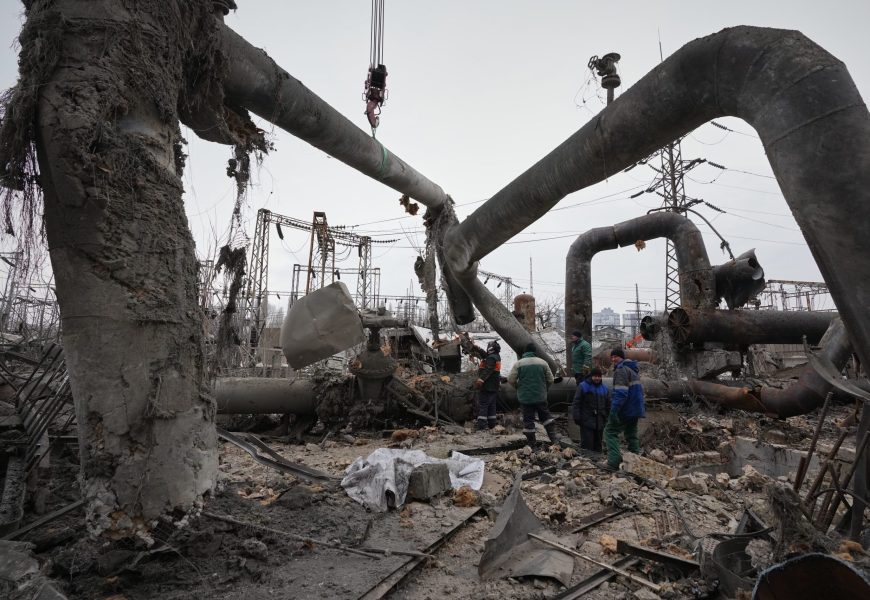
As Donald Trump's Thanksgiving Day deadline for a Ukraine peace agreement came and went this week, the Russia expert Mark Galeotti pointed to a telling indicator of how the Kremlin is treating the latest flurry of White House diplomacy. In the government paper Rossiyskaya Gazeta, a foreign policy scholar close to Vladimir Putin's regime bluntly observed: "As long as hostilities continue, leverage remains. As soon as they cease, Russia finds itself alone (we harbour no illusions) in the face of coordinated political and diplomatic pressure."
Mr Putin has no interest in a ceasefire followed by talks where Ukraine's rights as a sovereign nation would be defended and reasserted. He seeks the capitulation and reabsorption of Russia's neighbour into Moscow's orbit. Whether that is achieved through battlefield attrition, or through a Trump-backed deal imposed on Ukraine, is a matter of relative indifference. On Thursday, the Russian president reiterated his demand that Ukraine surrender further territory in its east, adding that the alternative would be to lose it through "force of arms". Once again, he described Volodymyr Zelenskyy's government as "illegitimate", and questioned the legally binding nature of any future agreement.
The simultaneous assertion that a peace plan discussed by the US and Ukraine this week could "be the basis for future agreements" is therefore as bogus as Mr Putin's empty praise for Mr Trump's previous diplomatic efforts. The plan - which emerged as a counter to White House proposals effectively copied and pasted from a Kremlin wish list - reportedly calls for an end to the fighting as a precondition for talks over territory. This is precisely the route that the Kremlin remains determined to resist. News that Mr Zelenskyy's chief of staff, Andriy Yermak, has resigned after being placed under investigation by anti-corruption authorities - a damaging development that could scarcely come at a worse moment for Ukraine's president - makes it still less likely that Mr Putin will be persuaded to make concessions he has never before contemplated.
Mr Trump is being strung along again. But the clear and present danger is that a combination of " peacemaker-in-chief " presidential vanity, a desire to do business with Russia and Mr Zelenskyy's sudden political vulnerability will tempt him to do Mr Putin's dirty work for him. After four years of resistance, sacrifice and suffering, Ukraine must not be bullied into a cynical carve-up, which would leave it permanently vulnerable to Russia's aggression, jeopardise Europe's future security and inspire authoritarian regimes worldwide.
Responsibility for ensuring this does not happen lies with Europe. Though Russian forces continue to make small, incremental gains in Ukraine's east, their advance is painfully slow and at enormous cost. By signalling a commitment to provide Kyiv with sufficient financial and military resources to resist in the medium term, European leaders can begin to alter the dynamic of negotiations in the present.
Whether such aid is to come through a "reparations loan" underwritten by frozen Russian assets, from the EU budget, or via common borrowing by member states, must be resolved quickly after months of delay. A signal needs to be sent to both Mr Putin and Mr Trump that Europe will resolutely defend Ukraine's right to a just peace. As the Kremlin seeks leverage via the killing fields of eastern Ukraine and within the corridors of the White House, Mr Zelenskyy must urgently be given some of his own.
___
Nov. 30 - The Seattle Times on the relationship between the U.S. and Canada
On a Friday in September, more than 100 Americans boarded boats in the San Juans and set sail for British Columbia's Salt Spring Island. The flotilla had a simple goal: to connect with their island neighbors that happen to be separated by an international border. A three-day festival spurred conversation and sparked new friendships.
In a time when President Donald Trump's trade war has pushed the United States and Canada apart, the flotilla brought Canadians and Americans together. It showed that grassroots efforts can enhance the deeply cross-stitched cultural ties between the U.S. and Canada.
The Canadians of Salt Spring, for their part, were happy to oblige a request from the all-volunteer Orcas Island Yacht Club to come for a visit. An "overwhelming yes," was the Salt Spring Chamber of Commerce's answer, said its president, Jason Roy-Allen.
The resulting " Hands Across the Water " was like the inverse of an international incident. Panel discussions highlighted shared challenges like housing affordability, the health of the Salish Sea and the plight of Indigenous peoples who existed here long before a U.S.-Canada border. Yoga classes, soccer games and bike rides fueled the camaraderie.
"This is a moment where showing friendship is actually a pretty radical act," Ross Newport, an Orcas Island resident and conceiver of the flotilla idea, said during the festival's closing ceremony Sept. 21.
Newport noted chambers of commerce, yacht clubs and other local organizations might not be what people "normally think of as leading the fight for decency."
But here we are.
This kind of citizen diplomacy is what's needed if there is any hope in maintaining the bonds that created the world's longest undefended border in the first place.
The political backdrop is stalled trade talks between U.S. and Canadian officials. Trump terminated them about a month ago over an anti-tariff advertisement funded by Ontario's government.
But Sen. Angus King, I-Maine, a politician on the other end of the 5,525-mile U.S.-Canada border, said recently he was less worried about the trade spat.
"The deeper problem is the cultural break," King said at the Halifax International Security Forum, as quoted by CBC. "The idea that Canadians don't think of Americans as their friends and neighbors, but as adversaries."
It is the U.S. president who's running point on " the dumbest trade war in history, " declared The Wall Street Journal's editorial board. Trump has hiked tariffs on many Canadian goods by 25% while at times threatening to annex the country. Those aren't just existential threats: many in Canada have responded by boycotting American goods. Citizens are afraid they could be detained at the border.
The result is plummeting border crossings - down 25% overall this year, a particularly damaging trend for communities situated along the economically interdependent borderlands.
President Ronald Reagan once said that "peace is not the absence of conflict, but the ability to cope with conflict by peaceful means." The U.S.-Canadian relationship, which built the longest peaceful border in human history, can endure. The question is who among us will rise to the occasion and form new bonds that can last beyond today's political whims.
The onus is on Americans - and those of us in Washington state - to reach out to our northern neighbors. It might be as simple as planning a B.C. visit or as grand as connecting to a new sister city. Either way, the cultural bonds between the U.S. and Canada mustn't be severed. It will take work - and more hands across the border.
Related Stories





More Top Stories