°C
°C
 17
Min
17
Min
Excerpts from recent editorials in the United States and abroad:
Editorials from The New York Times, The Washington Post, The Wall Street Journal and others
Excerpts from recent editorials in the United States and abroad:
___
July 24 - The Washington Post on the new tariffs imposed by Donald Trump
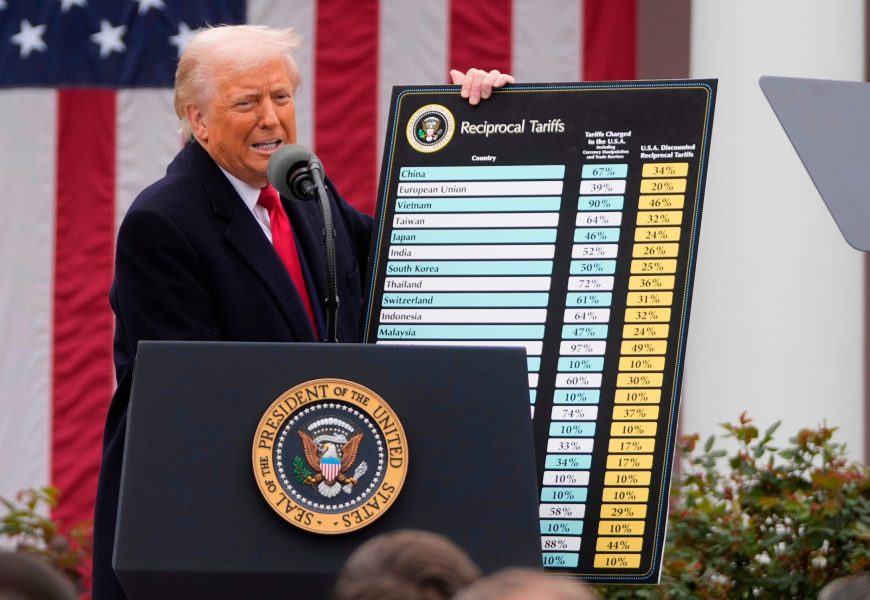
If President Donald Trump were sincere that the tariffs he imposed on Friday are aimed at cracking down on the use of forced labor, Japan and New Zealand would not be subject to the same new import taxes as China. Nor would there be a carveout for oil and gas imports.
These new import taxes are unmistakably pretextual. It's no coincidence that they were timed to go into effect at 12:01 a.m. on Friday. That's the day another legal authority Trump has been using to impose 10 percent tariffs expired.
The Trade Representative's announcement applies tariffs from 10 percent to 12.5 percent on 60 countries, covering 99 percent of imports.
The new duties fall under Section 301 of the Trade Act of 1974, which is meant to tackle discriminatory trade practices abroad and crack down on countries that turn a blind eye to forced labor in their supply chains.
Forced labor is barbaric, and efforts to combat it are noble. But that's not what's going on here. Put aside the president's rhetoric, and these are taxes that are predominantly paid by American businesses and get passed along to their customers.
The president's fixation on raising taxes so close to the midterm elections remains befuddling, but his decision to use executive power is unsurprising. Trump does not have the votes to get his tariffs approved by Congress, despite Republican majorities in the House and Senate. Otherwise he wouldn't need to use this disingenuous rationale.
ONLINE: https://www.washingtonpost.com/opinions/2026/07/24/trumps-cynical-pretext-imposing-new-tariffs/
___
July 27 - The New York Times says the U.S. mustn't squander its lead in the global A.I. race
Americans often hear about China's having surpassed the United States in the manufacturing of emerging technologies, including clean energy, electric vehicles and drones. Semiconductors are an important exception. In partnership with its allies in Europe and Asia, America designs and makes by far the best computer chips in the world.
Those chips are crucial to America's economy and national security. They have enabled the development of the world's leading technology companies and allowed the military to create advanced weapons. With artificial intelligence, these chips have become even more important. They are the engines that power frontier A.I. models.
China is working hard to catch up, and the United States should take steps to keep its advantage. Most important, it should continue to prohibit American companies from selling the most advanced chips and equipment to China. Over the past decade, presidents of both parties have worked with Congress to enact export controls. Those controls have been "existentially important," Dario Amodei, the chief executive of Anthropic, the A.I. company, has said.
In his second term, however, President Trump has gone the opposite direction. He has relaxed controls on some advanced semiconductors and suggested he may go further. Nvidia, an American company that makes the most advanced chips, has lobbied for the ability to sell more to China and is likely to continue pushing. Yet this is a classic case in which a company's interest runs counter to the national interest.
The new A.I. model Mythos, from Anthropic, is a clear example of why it is so important for the United States to remain in the lead in the artificial intelligence race.
Mythos is so powerful that many experts believe that it presents a cybersecurity threat to governments, companies and individuals. Hackers could potentially use it to penetrate banks, hospitals, energy grids and communication networks. In response, Anthropic has released Mythos to some government agencies and a small number of companies, giving them a chance to understand their vulnerabilities and improve their defenses. Developers for the Firefox web browser said they were able to fix more security bugs in one month with the help of Mythos than they did in all of 2025.
Now imagine that a Chinese company had obtained a model like Mythos first. Over the past decade, hackers linked to China have broken into the computer systems of the U.S. government, Microsoft, a large health insurer and a major credit agency. A proxy group known as Volt Typhoon has attempted to install malware inside American water and electricity systems to give China the ability to disrupt them. Mythos could have expanded these efforts, which ultimately serve the authoritarian aims of the Chinese Communist Party.
The A.I. race between China and the United States has recently narrowed. On July 16, a Chinese start-up, Moonshot AI, released a model that matched Anthropic's best publicly available model in some capabilities even though it remains behind overall. Tellingly, Michael Kratsios, the current White House science adviser, accused Moonshot of illicitly gaining access to Nvidia technology in Thailand as part of developing the new model.
China has two advantages in the semiconductor race: far more people, including scientists, than the United States; and abundant electricity for data centers, thanks to its rapid build-out of energy infrastructure. Chips are China's main choke point. Its best semiconductors remain well behind Nvidia's best publicly available line of chips, known as Blackwell, and also behind even Nvidia's next most powerful line, the H200.
The gap reflects both America's scientific capabilities and the success of federal policy. Mr. Trump deserves some credit for that success. In his first term, he imposed new export controls against China. President Joe Biden significantly strengthened the controls. Members of both parties in Congress backed the actions, and some House Republicans criticized Mr. Biden for being too soft.
China's leaders and technology executives understand how effective the export controls have been. "Money has never been the problem for us," said Liang Wenfeng, the chief executive of DeepSeek, one of China's most advanced A.I. companies. "Bans on shipments of advanced chips are the problem." Chinese Premier Li Qiang similarly acknowledged that "insufficient supply of computing power and chips" was slowing A.I. development.
Nvidia and other critics of the export controls make an unpersuasive counterargument. They claim that the policy encourages China to build its own semiconductor industry instead of remaining dependent on America's chips. But China's leaders obviously recognize the importance of developing their own industry. They lack not the motivation to do so, but the technical ability. Giving them the world's most advanced chips, as they desire, would enhance their ability to develop their own version and beyond.
Some analogies expose the weakness of the counterargument. During the Cold War, Washington did not provide the Soviet Union with nuclear technology to prevent it from developing its own weapons. Nor does the United States today share other forms of the most advanced and sensitive technology, such as weapons systems, with China, even though doing so could increase the sales of the American companies that make the technology.
Fortunately, Mr. Trump's softening of American policy has not yet had significant real-world effects. He has allowed China to buy H200 chips, Nvidia's second-best line, but no sales have yet gone through. China seems to be holding out for access to the top line, and American officials would still need to approve each sale individually.
The best policy going forward would be a strengthening of the controls. Regulators should avoid approving any H200 requests unless they become confident that H200 would not strengthen China's A.I. capabilities. The Trump administration should maintain the ban on Blackwell sales and should extend it to the next generation of chips, known as Rubin.
The administration should also fix loopholes that China has occasionally used to get around the controls. One example is the construction of data centers with advanced chips in countries that do not face export controls, such as Malaysia and Singapore. Working with Congress, the administration should increase budgets and staff at the Bureau of Industry and Security to closely track American-made chips.
And the Trump administration should stop its destructive approach to American alliances. This country's semiconductor advantage depends on an intricate supply that involves Japan, the Netherlands, South Korea and Taiwan. Without these partners, the United States would lack the ability to turn innovative American designs into actual products.
At a time of national self-doubt, Americans can feel pride about our world-leading semiconductors. During the Cold War, the United States fell behind the Soviet Union in the space race and needed the 1957 launch of Sputnik to inspire a comeback. Another way to look at that story, however, is that the Soviets took their lead for granted and lost it.
This time, America has produced its own kind of Sputnik. We should not squander it.
ONLINE: https://www.nytimes.com/2026/07/27/opinion/chips-ai-china-trump.html
___
July 25 - The Houston Chronicle says the Feds are still blocking an independent investigation into ICE shooting death
More than two weeks after U.S. Immigration and Customs Enforcement shot Lorenzo Salgado Araujo dead on a Houston street, the U.S. federal government stands in the way of an independent, transparent investigation.
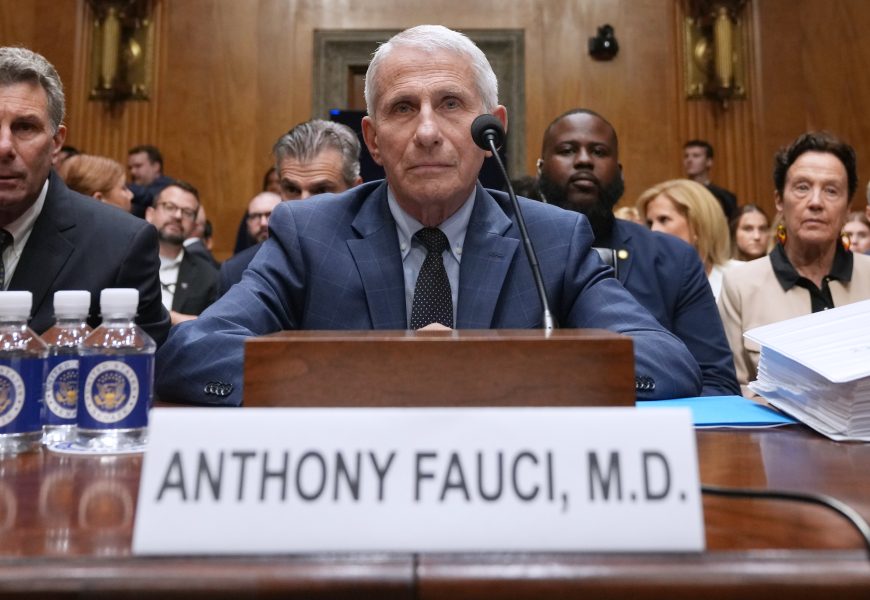
ICE hasn't cooperated with local law enforcement, Harris County District Attorney Sean Teare told a Congressional forum in Houston on Friday. In fact, at the same time that Teare was answering representatives' questions, his key witness was in a federal hearing about whether or not he'd even get to stay in the country.
Salgado's brother, Victor, is "by all accounts the most material witness in this shooting," according to Teare.
Victor Salgado's account of the shooting directly contradicts what the Department of Homeland Security claims happened July 7 on Canal Street. DHS says that Salgado used his white van as a weapon and officers fired in self-defense. Victor tells a very different story.
Teare and his investigators, though, haven't been able to interview Victor the way they'd like -well-rested and free. Victor and the other two witnesses are locked up, detained by the agency that shot Victor's brother.
Normally, when there's a witness like Victor who might be deported, law enforcement agencies help them secure a special visa allowing them to stay, so that the investigation and any trial can proceed. Teare's office has moved to do that for Victor and the other two witnesses.
Teare said it's essential that ICE release Victor, along with the two other witnesses who were in Salgado's van. Such detention of witnesses is "unheard of," he told the members of Congress.
From the get-go with this case, federal officers haven't cooperated with local law enforcement. Normally, when law enforcement officers from any agency kill someone, Teare is alerted and his investigators are invited onto the scene. That's to promote transparency and accountability. But it didn't happen this time.
"I've never seen behavior like this," Teare said.
Though the Houston FBI field office has met with Teare's investigators, DHS has not responded.
Weeks after the shooting, the federal government hasn't even named the ICE agents involved. It hasn't produced the weapon. ICE hasn't released reports about what happened.
ICE officials have already admitted that Salgado wasn't their intended target. They claim it was a case of mistaken identity, that they were originally looking for a pair of Guatemalan nationals. According to Teare, that means there should be a field operational worksheet, or FOW, saying as much. Then the officers would have written an offense report documenting what happened when they aggressively chased down Salgado's white van.
Why won't the feds release those documents?
These are "standard things that we get from any law enforcement agency we're investigating," Teare said. But in this case, "we've been given nothing."
Instead, the feds shared a dubious warrant alleging Salgado may have had drugs in his van. Those "drugs" turned out to be electrolyte powder, Rep. Sylvia Garcia later confirmed.
This behavior is unacceptable. Our federal government has abandoned accountability. It has abandoned transparency. It has abandoned our safety.
Friday's hearing yielded no new answers in this case that has ripped open Houston's heart. But the hearing did make clear how hard the federal government is fighting to keep the truth from coming to light.
It also made clear that the Trump administration's mass deportation campaign isn't making Houstonians safer. It's putting us all in more danger. Not only are our communities subject to unmarked vehicles, masked agents, aggressive quotas and apparent racial profiling, but the feds are stopping our own local law enforcement officers from doing their jobs.
That's not just in Salgado's case. "The tactics being used by ICE are threatening public safety overall," Teare testified.
He told the congressional representatives that in one case, a material witness in a pending murder case was "literally on a plane to El Salvador" when his team was able to intervene. If the witness had been deported, Teare's team would have had a much harder time prosecuting - and possibly, a murderer would have continued to walk free.
There have been cases - violent crimes in our city - that Teare cannot solve because immigrants are too fearful to share information, afraid that the deportation machine will find them or their loved ones. Victims of robberies, assault, domestic violence are too scared to dial 911. According to Houston City Council Member Joaquin Martinez, calls for police services are down across the city's immigrant-rich neighborhoods, including the East End, and especially in southwest Houston.
Community safety, many said Friday, is a nonpartisan issue. We cannot tolerate a violent and unaccountable force loose on our streets, blocking the work of our own law enforcement professionals.
Houston Rep. Lizzie Fletcher asked whether the current administration's policies have made us safer. Teare was unequivocal:
"They've had the complete opposite effect."
Lorenzo Salgado is not the first person killed by ICE since Donald Trump took office 18 months ago. At least 10 people have been fatally shot at the hands of immigration agents. And just in the first 500 days of Trump's term, 52 people died in detention. That is the agency's highest mortality rate in over a decade. Yet only a single ICE agent - one out of a force of approximately 22,000 - has been disciplined for abuse of use of force, said Rep. James Walkinshaw from Virginia.
The federal government disputed none of this. Predictably, nobody from ICE or DHS attended Friday's hearing or responded to the representatives' written questions.
Perhaps they are hoping that Rep. Garcia and Houston will stop demanding answers. But it's not just Garcia. And it's not just Houston.
Friday's hearing showed that the entire country is watching Salgado's case. Representatives from California, Virginia and New York came to Houston. They heard from Salgado's sons. They learned about the hard-working part of town where Salgado was killed. They demanded the answers we need.
They won't stop when they return to D.C. Neither should we.
___
July 27 - The Wall Street Journal on a reported U.S. missile shortage
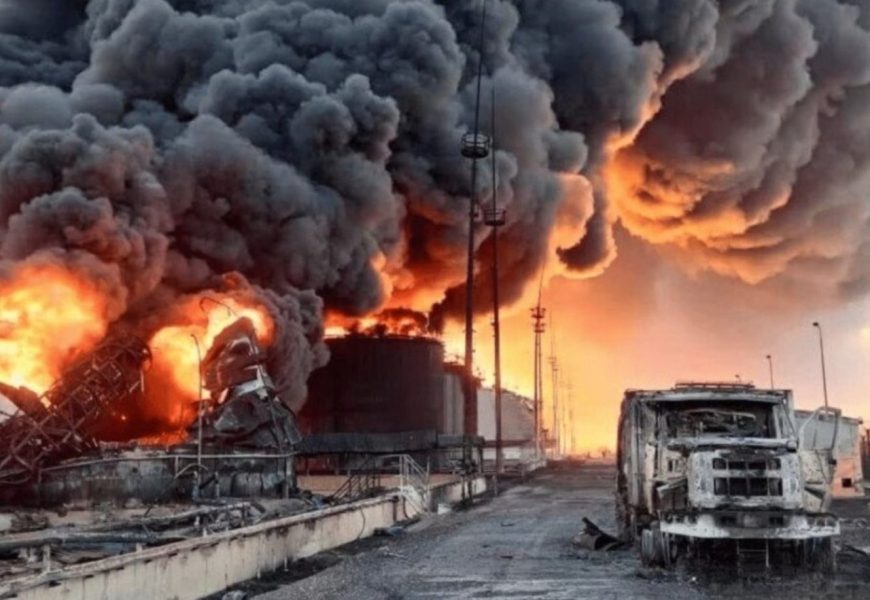
A remarkable thing happened this weekend with too little attention: In the middle of a war with Iran, officials in the Trump Administration leaked to the press that the U.S. is running out of ammunition. That was the explanation officials offered CNN and other news outlets for President Trump's decision to stop his nightly bombing of Iran over its closure of the Strait of Hormuz.
Mull over that one. Mr. Trump was saying all last week he is prepared for a major military escalation. But, suddenly, the leakers undermine the credibility of that U.S. resolve by telling the press-and thus the Iranians-that the U.S. can't sustain the fight.
Do the leakers think this public admission of weakness will make the Iranians more likely to open the Strait? Do they think it's wise to tell enemies trying to kill U.S. soldiers not to worry about a sustained American response? This is an astonishing display of incompetence, or disloyalty, or both.
If the U.S. really is running out of missiles and interceptors, that should be a five-alarm fire. Mr. Trump should be calling on Congress to skip its recess and do something about it immediately, and rallying industry for the effort. But if the missile gap is being floated for political purposes by officials who want Mr. Trump to stand down, then the President should banish those voices from the Situation Room. Either way, they're laughing in Tehran.
___
July 26 - The Guardian says the US-Saudi nuclear agreement further erodes international safeguards
Even as he threatened to escalate an unlawful war sold in part as preventing Iran from gaining a nuclear weapon, Donald Trump opened the door to proliferation in the region on Wednesday. The US announced that it had signed a deal with Saudi Arabia which would potentially allow the kingdom to enrich uranium in future and to avoid the fullest inspection rights for the international watchdog.
Experts have long warned that a civilian nuclear programme could create a path towards a nuclear-armed Riyadh. Mohammed bin Salman, the Saudi crown prince and de facto leader, has said that if Tehran gets a nuclear weapon, "we will have to get one". Concerns are magnified by the agreement's terms. Washington previously argued that the "gold standard" was the United Arab Emirates' agreement to permanently forgo enrichment and accept full monitoring by the UN's International Atomic Energy Agency. Weakening it sets a precedent that Russia or China could also cite in nuclear deals in future.
The turmoil that Mr Trump has created in the Middle East is encouraging governments both to hedge their bets and to tool up. The US paused attacks on Iran at the weekend, after 13 successive days of strikes, amid reports that it is concerned about declining interceptor stockpiles, but no exit is in sight. As António Guterres, the UN secretary general, said on Thursday, the region "is teetering on the edge of (the) unimaginable ... One crisis feeds another. One escalation triggers the next."
Gulf states premised their security on American-guaranteed order. But Benjamin Netanyahu's strike on Hamas leaders in Qatar last year showed that the US shield would not protect them from Israel (itself an undeclared nuclear power). The reckless war on Iran has made US military presence an invitation to damage. Washington may be looking to bind Riyadh closer with a reactor deal, though the billions of dollars involved is probably a bigger incentive for Mr Trump. The crumbling of the region's internal architecture - most visibly with the UAE's departure from Opec - adds to the dangers of proliferation. Players are acting less predictably.
The US president threw the Saudi deal into doubt within hours by declaring it contingent on Riyadh recognising Israel. That had long been a precondition for an agreement, but Israel's war of annihilation in Gaza has shored up the Saudi position that recognition cannot happen without a Palestinian state. Yet even if no reactors are built, the announcement itself acts as legitimation of and encouragement for the pursuit of nuclear capabilities by others. Negotiations produced an Obama-era nuclear deal with which Tehran complied - until Mr Trump trashed the agreement. His war appears to have produced a more aggressive, risk-taking Iranian regime, as foretold; further military action is more likely to spur than end nuclear threat. The prospect of Riyadh acquiring a bomb is further encouragement.
Look further afield. The last US-Russia nuclear arms control treaty expired in February. China is rapidly expanding its arsenal. Asian and European states which counted on the US nuclear umbrella prior to Mr Trump are discussing acquiring or enhancing their own capabilities. Most of them at least understand that diplomacy, multilateralism and global standards are a better choice than a race for the bomb. Mr Trump does not believe in international institutions. But upholding existing nuclear safeguards would be in US interests too as we enter a new age of proliferation.
Related Stories


More Top Stories