°C
°C
 7
Min
7
Min
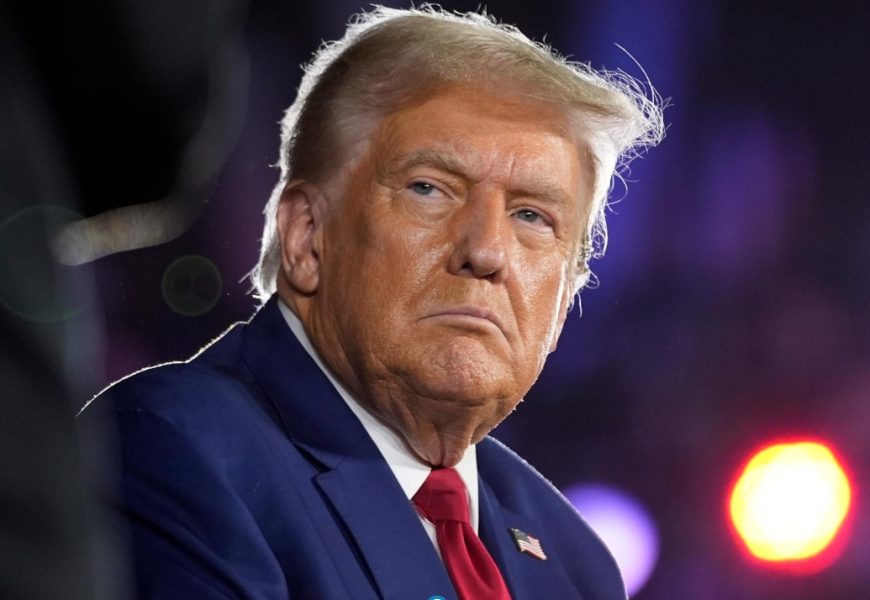
WASHINGTON (AP) – President Donald Trump had no qualms about a government takeover of Spirit Airlines, so long as the terms could be portrayed as a financial victory in what would have been the latest addition to a taxpayer-backed conglomerate of business interests.
Trump likes the idea of the government owning some US companies but took a pass on Spirit Airlines


WASHINGTON (AP) - President Donald Trump had no qualms about a government takeover of Spirit Airlines, so long as the terms could be portrayed as a financial victory in what would have been the latest addition to a taxpayer-backed conglomerate of business interests.
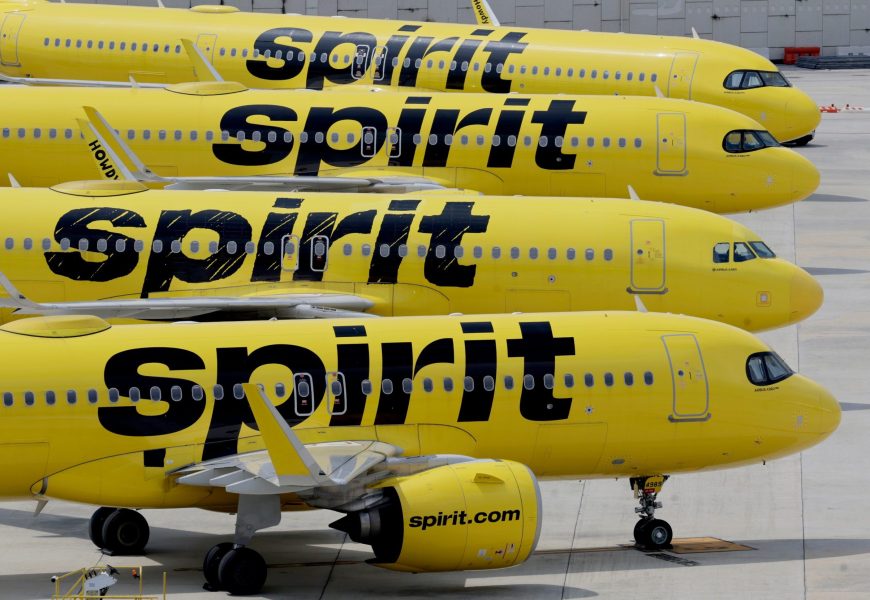
But the budget carrier ceased operations on Saturday after reaching an impasse with an administration that increasingly sees the government as an activist investor that will shape the path of the U.S. economy.
While Trump has long railed against Democrats and other opponents as communists - the antithesis of the free market ethos that helped America grow into a superpower - he has taken a shine to the government owning some of the means of production since he has been back in the Oval Office.
Trump sees opportunities in preserving legacy brand companies such as Intel and possibly making a tidy profit for Uncle Sam. The Republican president views the investments as critical for economic security and emblematic of his own dealmaking skills, overturning what had been GOP dogma that government should avoid picking winners and losers.
In the case of Spirit, a cash-strapped budget airline that faced surging fuel costs caused by the Iran war, Trump told reporters on Friday that the government would buy a stake in the company " only if it's a good deal." His objection to a bailout was not ideological as much as it was about the upside.
"If we can help them, we will," Trump said. "But we have to come first." Trump did not immediately address the shutdown of the carrier.
He had compared the potential acquisition to an earlier move to buy a stake in Intel. Trump has watched the computer chip manufacturer's stock closely. "I'm very proud of that Company in that I am responsible for making the United States of America over 30 Billion Dollars in the last 90 days on that stock alone," Trump posted on social media this week.
Communism wields big influence in countries such as China, Vietnam, North Korea and Cuba, where governments play a central role in providing goods and services. The ideology has morphed over its history from the premise that government should own all property to a system in which the government might own or control major companies.
In the United States, major government interventions in the private sector have been unusual outside of a recession. Trump aides say his interventions are necessary to compete against China's industrial heft, yet the president has frequently tethered corporate America to his administration.
He has used his tariffs to solicit foreign investments and claimed that he controls how the money is being spent. The government has a "golden share" to limit what Japan's Nippon Steel can do after buying U.S. Steel. His administration brokered an agreement to take a cut of computer chip sales to China by Nvidia and AMD.
Under Trump, the government has invested in rare earths company MP Materials to break China's control of the metallic elements needed for smartphones, autos and other technologies. Add to that agreements for stakes in Lithium America, Trilogy Metals and Vulcan Elements as well as preferential financing for Westinghouse and ReElement Technologies.
The administration backed off ending the government conservatorship of the mortgage companies Fannie Mae and Freddie Mac. Trump says they are worth more now because he held on instead of privatizing the companies in his first term. "If I would have sold it, I would have felt like a schmuck," he said Friday.
He is accessible to CEOs, speaking regularly on the telephone with them, yet he also can be demanding of them to support his agenda. He has told Walmart to not raise prices because of his tariffs and suggested he would favorably "remember" companies that decline to seek refunds after the Supreme Court ruled his tariffs were illegal.
To critics, Trump's desire to fund and hold ownership stakes in private business is a byproduct of an id in overdrive.
"This is entirely a reflection of a transactional-minded president who wants unilateral control of the economy," said Tad DeHaven, a policy analyst at the Cato Institute, a libertarian think tank. "At the end of the day, it is about power, it is about leverage and it is about control."
Others see some logic in competing against Chinese manufacturers that can churn away without regard to profits, undercutting factories in other industrialized nations and putting America's preeminence as a military power and technological innovator at risk.
The investment in Intel was "a strategic move, necessitated by the growth of China as an economic peer and rival," said Sujai Shivakumar at the Center for Strategic and International Studies, a Washington-based think tank.
"The key point is that we should not sacrifice our national economic and industrial framework in the name of 'free markets' or other ideologies," he said. "Pragmatism, in various forms of industrial and innovation policy, have always been a feature of our economic system since the very beginning of our republic."
During the 2024 campaign, Trump portrayed the administration of Democrat Joe Biden as communist and socialist.
"We will cast out the communists," Trump said at an April 13, 2024, speech in Pennsylvania. "We will liberate our country from these tyrants and villains once and for all."
Biden often stressed his belief in the power of free markets to help the middle class and he believed his efforts to raise corporate tax rates would help achieve that. "I'm a capitalist," he said in his last State of the Union address, saying he was not opposed to companies making profits. "That's great - just pay your fair share in taxes," he said.
The Biden administration extended loans and grants to chipmakers and sought to leverage the government's role as a customer of American businesses. But a key difference was that the investments were based on laws passed by Congress.
Trump's unilateral approach is more nimble, his White House argues, saying that funding for his investments come from sources previously approved by Congress.
Trump specifically took loans and grants from Biden's 2022 CHIPS and Science Act and converted them into a $11.1 billion purchase of Intel stock. In his 2025 address to Congress, Trump called the CHIPS Act a "horrible, horrible thing" and suggested the Republican majorities claw back funding to pay down the budget deficit.
With Spirit Airlines in Chapter 11 bankruptcy, his administration had been weighing a $500 million deal that would have given the government a stake in the Florida-based discount airline. Other budget carriers have been interested in similar packages.
That possibility drew objections from Republicans such as Sens. Ted Cruz of Texas and Tom Cotton of Arkansas. Trump had told reporters in the Oval Office that he wanted to save the jobs at Spirit Airlines and that "when the prices of oil goes down, we'll sell it for a profit."
Government investment can help to even the playing field for American companies competing against subsidized foreign businesses, said Monica Gorman, a managing director at Crowell Global Advisors who helped lead manufacturing and industrial policy in the Biden White House.
But Gorman said that it was unclear whether the Trump administration had fully grasped the risks of "making some bad bets." She stressed the importance of formalizing the process through legislation instead of relying on Trump's whims.
"Congress really needs to step in and design a legislative framework for U.S. industrial policy that governs equity stakes as well as other mechanisms such as loans and grants," she said. "All of these are important tools in the U.S. industrial policy toolkit, but we need more guidance on when and how to use them."
More Top Stories