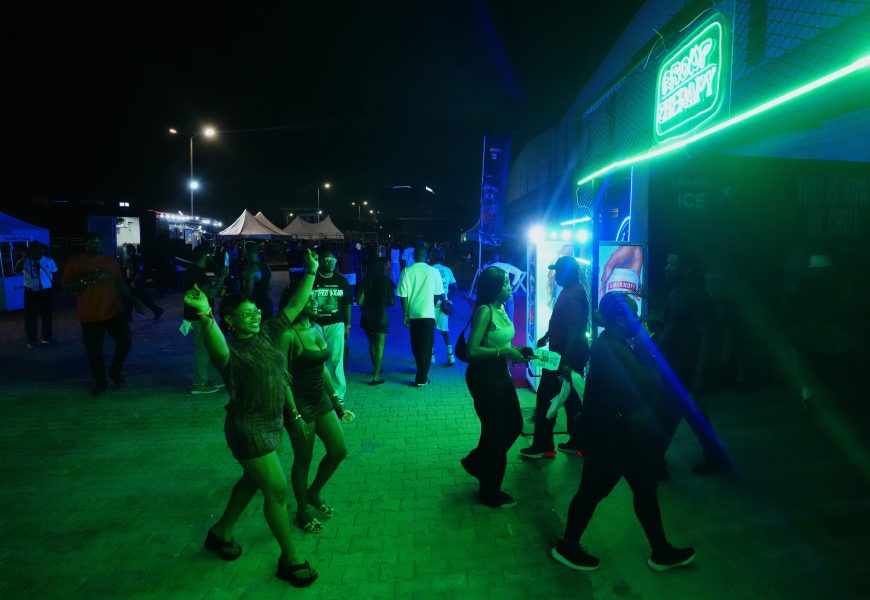
Each DJ worked their decks from the late night to early morning, blaring out an endless loop of high-tempo beats that electrically charged the hall, rising to a pulsating crescendo before dovetailing into another loop. The sea of heads bopped rhythmically and bodies swayed wildly.
Since around 2022 after the post-pandemic crossover of South African music genres, DJs have infused African sonic elements into house music, a subgenre of electronic dance music that has been a choice for raves in Lagos. The raves, deemed more inclusive than clubs, have become prominent among the younger generation, who have railed against Nigeria's conservative society.
House music "evokes feelings," said Zia Yusuf, a content writer and creator who attended. "You just connect to the music, and you connect to the music with other people who connect to the music with you."
Culture experts regard it as one of the crossovers of South African musical influence, similar to amapiano.
Nigeria has, in recent years, taken the spotlight at global stages with an explosive rise of its artists, exporting its music across the world, but it has also, in turn, imported several genres in recent years. The choice of house music is deliberate, according to Aniko. Aniko doesn't want musicians to control Group Therapy like they often do in big clubs, sometimes previewing unreleased songs or dictating the audience's choice for the night.


 °C
°C
 4
Min
4
Min