°C
°C
 14
Min
14
Min
U.S. President Donald Trump said Monday that the war with Iran began because that country was starting work on a new site for developing material for nuclear weapons. Trump told reporters that Iran was “going to take over the Middle East” if he hadn’t acted and that he was disappointed with the selection of Mojtaba Khamenei to succeed his father.
The Latest: Trump says Iran had a new site for developing nuclear weapons
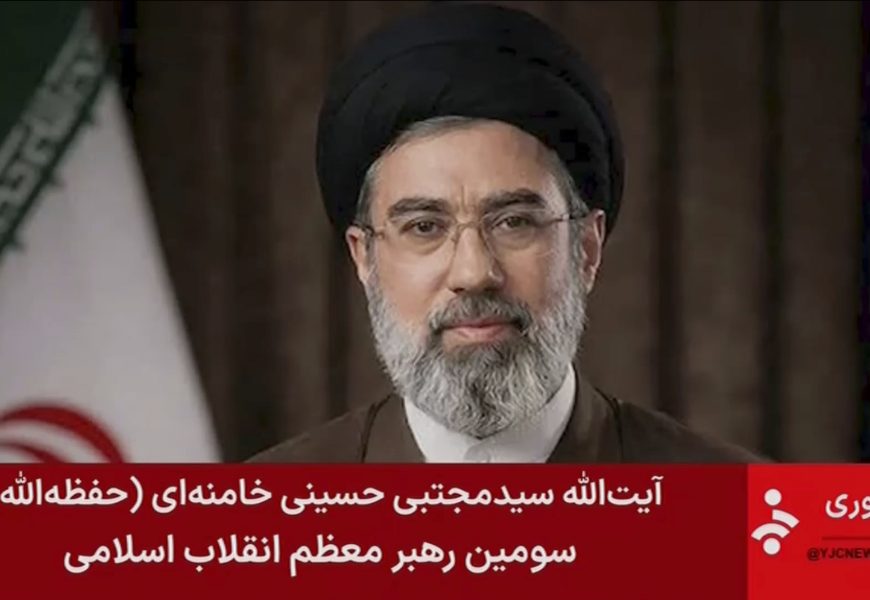
U.S. President Donald Trump said Monday that the war with Iran began because that country was starting work on a new site for developing material for nuclear weapons. Trump also told reporters at a news conference that Iran was "going to take over the Middle East" if he hadn't acted and that he was disappointed with the selection of Mojtaba Khamenei to succeed his father, Ayatollah Ali Khamenei, as Iran's supreme leader. Ali Khamenei was killed in U.S. and Israeli strikes. Trump also had a call Monday with Russian President Vladimir Putin to discuss the war and other issues. The Kremlin says the two leaders had a "frank and businesslike" conversation that lasted about an hour.
Here is the latest:
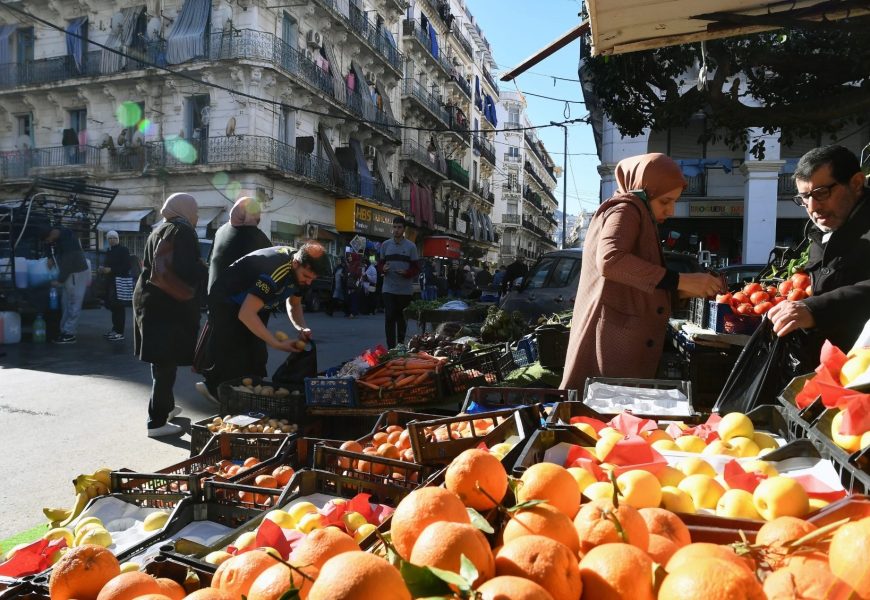
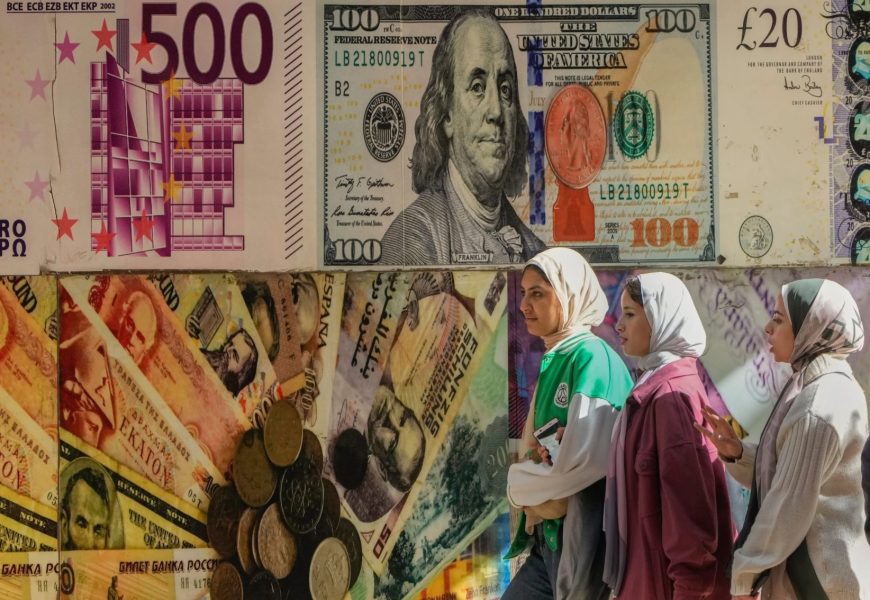
Egypt hiked fuel prices by up to 17% on Tuesday as the war in the Middle East sent prices of oil soaring.
According to the Petroleum Ministry the cost of a liter of diesel, which is heavily relied on for public transport, increased by more than 17%. The price of the 92-octane gasoline rose by 15% and 95-octane gasoline increased by 14%.
The war has hit Egypt hard. The most populous Arab country, Egypt depends heavily on imported fuel. The Egyptian pound fell to a record low, trading at over 52 to the US dollar on Monday.
To mitigate impact of the war, the government announced a series of measures ,including reducing official overseas trips and tightening fuel consumption across sectors.
The paramilitary Revolutionary Guard said on Tuesday that the end of the war will be determined by Iran.
Spokesperson Ali Mohammad Naini said in a statement published in various Iranian state media and apparently in response to Trump's remarks Monday that "Iran will determine when the war ends."
The U.S. president pledged aggressive action against Iran if it continues to block the shipment of oil in the Strait of Hormuz.
"If Iran does anything that stops the flow of Oil within the Strait of Hormuz, they will be hit by the United States of America TWENTY TIMES HARDER than they have been hit thus far," Trump posted on social media. "Additionally, we will take out easily destroyable targets that will make it virtually impossible for Iran to ever be built back, as a Nation, again - Death, Fire, and Fury will reign upon them - But I hope, and pray, that it does not happen!"
The president said his threat was a "gift" to China, among other nations, because it relies on oil from the Middle East.
A handful of Senate Democrats are threatening to impede the Senate's work unless the Trump administration provides public hearings on the war with Iran.
A vote on a war powers resolution, which would have required congressional approval for any further attacks on Iran, failed last week mostly along party lines. But a group of Democratic senators has filed several similar pieces of legislation and could potentially force repeated votes on them if they choose.
New Jersey Sen. Cory Booker said they were going to "use every lever that we have to stop business as usual" unless there is an agreement from Republicans.
The tactic showed how Democrats are desperate to force a debate on the Iran war, but because they have minorities in both chambers of Congress, they are getting creative to force the issue into the public view.
The president erroneously claimed that Iran has access to the American Tomahawk cruise missile, the weapon likely used to strike a girls' school in Iran, killing 165 people.
Asked if the U.S. would accept responsibility for the strike, Trump argued that the cruise missile, which is made by the American defense contractor Raytheon, is "sold and used by other countries" and that Iran "also has some Tomahawks."
"Whether it's Iran or somebody else ... a Tomahawk is very generic," he said.
While Raytheon sells the missile to allied countries like Japan and Australia, there is no evidence to suggest that Iran has gotten its hands on the cruise missile.
When asked why he was the only person in his administration making the claim, Trump replied: "Because I just don't know enough about it." He added that "whatever the report shows, I'm willing to live with that report."
"If I didn't hit them first, they were going to hit our allies first. I believe upon information and belief," the president told reporters, before adding, "They were going to take over the Middle East."
"Upon information and belief" is a phrase often used in legal settings, including in affidavits.
It is usually meant to denote declarations that a statement is based on secondhand information, but is also believed to be true by the speaker.
Trump was indicted in four criminal cases, and also faced civil charges related to his business practices, before returning to the White House. He's no stranger to being in court or talking to lawyers.
Israel's military announcement just minutes before midnight of more missiles fired at the country from Iran closed a Monday marked by relentless waves of attacks.
In all, Israel's military alerted the population 12 times throughout the day about incoming missile salvos from Iran. From Lebanon, Iran-backed Hezbollah also fired rockets into Israel on Monday.
One man was killed by Iranian missile fire, raising the country's death toll to 11. More were injured - at least two of them seriously - in the attacks and as they made their way to shelters, according to Israel's emergency services.
Sirens alerting the population in different parts of Israel to seek shelter immediately have been wailing at intervals throughout the day and night since the war started.
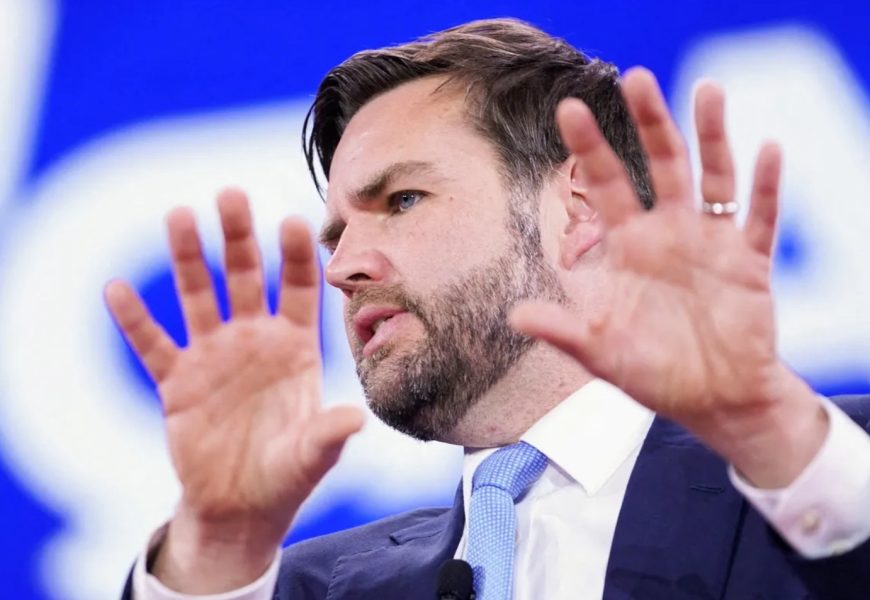
Trump said he and Vice President JD Vance "get along very well" on issues related to Iran, but the president noted that his No. 2 was "maybe less enthusiastic about going" than he was.
Vance, Trump also noted, is "philosophically a little bit different from me."
Vance has largely opposed U.S. intervention abroad. While still in the U.S. Senate and before Trump tapped him as his running mate, Vance cited Trump's lack of foreign military entanglement as part of why he backed him for president in the 2024 campaign.
The president told reporters that he thought the pick of Mojtaba Khamenei to succeed his father as Iran's supreme leader would lead to "more of the same" for a country that he seeks to change.
Trump said it "would be inappropriate" to say whether Iran's new leader would be targeted for a lethal assault as was his father, Ayatollah Ali Khamenei.
Trump said he liked "the idea" of a leader drawn from an "internal" group of candidates, saying that this process "works well" with Venezuela's new leader, Delcy Rodriguez, following the capture by U.S. forces of Nicolas Maduro to face drug trafficking charges in the U.S.
Trump also elevated his expectations by saying he would like a candidate in Iran who was "internal and eternal."
The president was asked about his comments earlier Monday in which he told a reporter that the war was "very complete," while the Pentagon on Monday said on social media: "We have Only Just Begun to Fight."
Trump was asked whether it was the end or the beginning and said, "It's the beginning of building a new country," a comment that seemed to suggest the U.S. might be engaged in the building of a new Iran.
Though the president has long professed an "America First" policy prioritizing the U.S., Trump suggested at his news conference that the war was for the benefit of other nations, especially those dependent on oil that's shipped through the Strait of Hormuz.
"I mean, we're doing this for the other parts of the world, including countries like China," Trump said.
Trump told reporters at a news conference that the war with Iran began because that country was starting work on a new site for developing material for nuclear weapons.
Trump said the new site was meant to replace facilities bombed last year by the U.S.
"But they were starting work at another site, a different site, different kind of a site - and that was protected by granite," Trump said.
The president added that Iran wanted to use the "exponentially growing ballistic missile threat to make it virtually impossible to prevent them from obtaining a nuclear weapon," claiming that Iran would have otherwise been able to take over the Middle East.
Citizens in Iran's capital heard more than 20 heavy explosions as many rushed to safer places.
The strikes around midnight were the heaviest air raids on Tehran since beginning of the war.
The sound of bombers and warplanes flying overhead was constant for about half an hour. Witnesses reported explosions in western areas of the city. Electricity was cut off in some neighborhoods.
Similar explosions in other Iranian cities were reported on social media.
Iranian media did not report on damage and casualties from the strikes.
The U.S. president told House Republicans that he's beaten inflation, even as swings in the oil market have gasoline costs rising in America after the start of the war with Iran.
Trump said that Democrats before his second term caused affordability to be a problem, "but we're really bringing down prices."
Gas prices have risen 20% in the past month to a national average of $3.48 a gallon, according to AAA.
Trump didn't bother to address that, saying of prices that, "We're even bringing them down further. They'll be way down."
The move comes as the State Department is under increasing but historically familiar criticism for not doing enough to prepare embassies, consulates and American citizens living abroad for conflict.
The department on Monday ordered the departure of nonessential staff and families from Saudi Arabia and the consulate in Adana, Turkey, in response to escalating Iranian retaliation to U.S.-Israeli attacks.
That means 10 U.S. embassies and consulates in the region have reduced staffing, although only two have fully suspended operations. The reductions are the largest since the Iraq War began in 2003.
- By Matthew Lee
The president dismissed criticism from some Democratic officials that there was no reason for the U.S. and Israel to strike Iran.
"Well, I'll give you the best reason of all. Within a week they were going to attack us, 100%. They were ready," Trump said.
He did not offer any information to support that statement but said Iran had "all these missiles, far more than anyone thought."
However, Trump administration officials told congressional staff in private briefings that U.S. intelligence did not suggest Iran was preparing to launch a pre-emptive strike against the U.S.
- By Michelle L. Price
Saudi Arabia's Defense Ministry said Monday night it downed the drones over the Empty Quarter desert that were fired toward its massive Shaybah oil field.
The 12 drones arrived in two waves; the first had three drones and the second had nine, the ministry's spokesperson said.
The Defense Ministry has repeatedly posted in recent days that it intercepted drones heading toward the Shaybah field.
The U.S. president briefly recounted what family members of soldiers killed as part of the ongoing war with Iran told him during the dignified transfer of their remains Saturday in Dover, Delaware.
"But they all said one thing to me: 'Make sure you win, sir. Make sure you win,'" Trump said.
Trump called the dignified transfer "a beautiful thing, but it's also a very sad thing."
Trump opened his address to the lawmakers by talking about Iran, saying "we took a little excursion" to the Middle East "to get rid of some evil. And, I think you'll see it's going to be a short-term excursion."
The legislators met earlier in the day at Trump's golf club near Miami.
There was no immediate word on casualties or damage, but a statement from the Kuwaiti army said the sound of explosions late Monday were from interception efforts.
Hours earlier, Kuwait's ruling emir gave a speech saying the country has been attacked by a "neighboring Muslim country," without naming it.
The emir insisted that Kuwait's territory, air space and coasts have not been used in any military operations against that neighboring country, and "this was repeatedly conveyed through our diplomatic channels."
Kuwait, a small, oil-rich Gulf nation, has carefully managed its relationship with Iran.
The National Intelligence Council's assessment in February concluded that neither limited airstrikes nor a larger, prolonged military campaign would be likely to result in a new government taking over in Iran, even if the current leadership was killed.
That's according to two people familiar with the finding, who spoke on condition of anonymity to describe the classified report.
The determination undercuts the administration's assertion that it can complete its objectives in Iran relatively quickly, perhaps in a matter of weeks.
A spokesperson for the Office of the Director of National Intelligence declined to comment on the assessment on Monday and referred questions to the White House.
- By Michelle L. Price and Mary Clare Jalonick
▶ Read more about the intelligence assessment on Iran.
The Iranian athletes, who were visiting the country for a tournament, were transported from their hotel "to a safe location" by federal police officers in the early hours of Tuesday morning local time, Australia's Home Affairs Minister Tony Burke said.
There, they met with Burke and the processing of their humanitarian visas finalized, the minister told reporters in Brisbane hours later.
Trump had said Monday that Australia's prime minister was helping the Iranian team after Trump urged the U.S. ally to grant the players asylum rather than send them back to Iran.
The U.S. stock market careened through a manic Monday, going from a steep early loss to a solid gain as worries turned into hope that the war with Iran may not last that long.
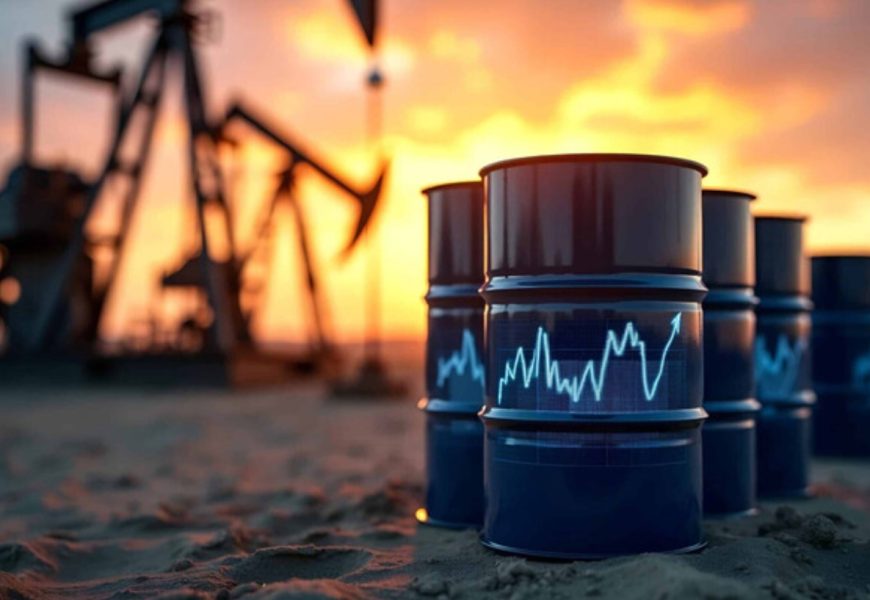
Oil prices whipped from nearly $120 per barrel, their highest since 2022, back toward $90.
The S&P 500 fell as much as 1.5% before flipping to a gain of 0.8%. The Dow Jones Industrial Average rose 239 points, and the Nasdaq composite climbed 1.4%. They're the latest hour-to-hour swings to pummel markets because of uncertainty about how high oil prices will go and how long they will stay there.
The European Union's economic chief is warning of the threat of stagflation if the war in the Middle East drags on, but says it's too early to know how great the conflict's impact will be.
"Stagflation" is a toxic combination of still-high inflation and a weak or stagnant economy. It bedeviled the U.S. in the 1970s, when even deep recessions didn't kill inflation.
"Persistent targeting of shipping and energy infrastructure risks exposing the global economy to a stagflationary shock over the longer term," EU Economy Commissioner Valdis Dombrovskis told reporters after a meeting of Eurogroup finance ministers.
But he said that "should the conflict quickly de-escalate, contain disruptions to energy supplies and infrastructure (it) would likely have limited impact."
"We need to keep a cool head, so to say, and continue to monitor the situation," he said.
Trump commented as rising oil and gasoline prices caused by the war spark international concern.
CBS News White House reporter Weijia Jiang posted on X that Trump told her over the phone Monday that the war is "very far ahead of schedule."
"I think the war is very complete, pretty much," Jiang quoted Trump as telling her. "They have no navy, no communications, they've got no Air Force."
Trump had said the war could last about four weeks. It was launched on Feb. 28.
Asked about the Strait of Hormuz, Trump told Jiang that ships continue to move through the vital shipping channel but that he is "thinking about taking it over."
Putin's foreign affairs adviser Yuri Ushakov described the conversation as "frank and businesslike" and said it lasted about one hour.
He said the Russian president "voiced a few ideas aimed at a quick political and diplomatic settlement" of the conflict following his conversations with Gulf leaders and Iran's president.
Trump offered his assessment of the developing situation, Ushakov said, "in the context of the ongoing U.S.-Israeli operation." The two leaders had a "specific and useful" exchange of views, and they touched on Venezuela "in the context of the situation in the global oil market," he said.
More Top Stories