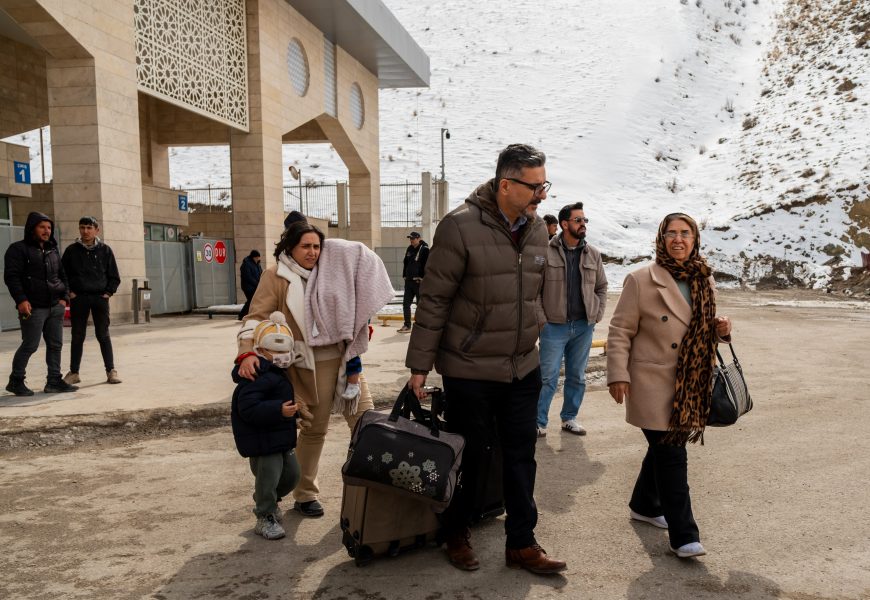
If Iran's critical infrastructure is destroyed, that could lead to waves of people trying to cross into one of Iran's neighbors: Pakistan, Afghanistan, Turkmenistan, Azerbaijan, Armenia, Turkey and Iraq.
"If Tehran, a city of 10 million people, doesn't have water, they're going to go somewhere," said Alex Vatanka, a fellow at the Middle East Institute in Washington.
Iran is already grappling with one of the world's largest refugee populations: roughly 2.5 million forcibly displaced people mostly from Afghanistan and Iraq.
If the crisis deepens, aid groups say the most likely destinations for refugees are Iran's borders with Iraq and Turkey, which stretch roughly 2,200 kilometers (1,367 miles) through rough alpine terrain that is home to many Kurdish communities and are difficult to police.
Turkey had a so-called open-door policy that allowed millions of Syrian refugees to enter the country during their country's long civil war. But it has abandoned that approach for various reasons.


 °C
°C
 5
Min
5
Min