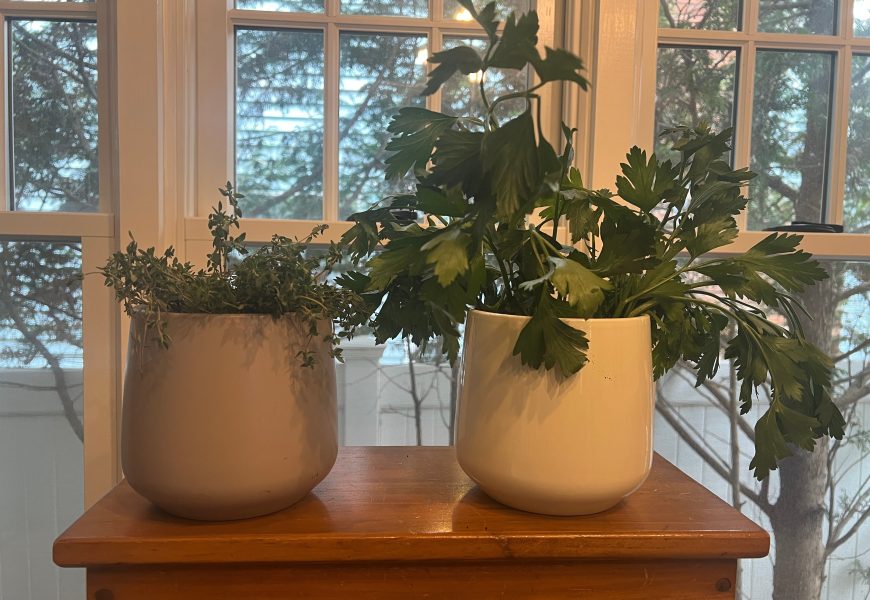
Rosemary, sage, oregano, thyme and bay laurel, however, will get by indoors if cared for properly. Parsley may grow well, too, but only if planted in a deep pot, provided with supplemental artificial lighting and fertilized regularly. Cilantro is hit or miss, but there's no harm in giving it a try.
Potted herbs are susceptible to root rot, so it's important that containers have drainage holes at their bottoms and that you fill them with well-draining potting mix.
Place plants near the brightest light source available. In the home, that typically means near a south-facing window; west-facing is second-best.
Providing artificial lighting for 14-16 hours a day would be even better: Set fluorescent lights 5-10 inches above the tops of plants, or LED lights 15-20 inches above them, adjusting their heights as plants grow. If using grow lights, apply a balanced liquid fertilizer diluted to half-strength every two weeks.
Monitor moisture levels closely. Underwatering is preferable to overwatering, so if you're not sure if your plants need a drink, plunge your finger into the soil up to your second knuckle and feel around for moisture. Water only when the soil starts to feel dry near the roots, but don't let the soil remain dry for long.


 °C
°C
 3
Min
3
Min