°C
°C
 20
Min
20
Min
Jan. 19 – The Washington Post says Congress has dropped the ball regarding oversight of ICE, DHS. Geraldo Lunas Campos died at a Texas detention center on Jan. 3 while pleading for air as guards choked him, according to a fellow detainee. The local medical examiner’s office is considering classifying his death as a homicide, The Post reports.
Editorials from The Washington Post, New York Times, The Wall Street Journal and others
Excerpts from recent editorials in the United States and abroad:
___
Jan. 19 - The Washington Post says Congress has dropped the ball regarding oversight of ICE, DHS
Geraldo Lunas Campos died at a Texas detention center on Jan. 3 while pleading for air as guards choked him, according to a fellow detainee. The local medical examiner's office is considering classifying his death as a homicide, The Post reports. Yet a spokesperson for the administration tells a different story, contending that Campos attempted to take his own life and died while "violently" resisting staff.
This is exactly the sort of case that the Office for Civil Rights and Civil Liberties (CRCL) at the Department of Homeland Security should investigate, so that the public can trust the government's version of events. Unfortunately, the administration has hobbled that office.
Before President Donald Trump took office, CRCL had a staff of about 150 people and was investigating more than 500 allegations of civil rights violations by the department. Today, that office, which Congress established when it created DHS, has just a handful of employees. The administration attempted to shutter CRCL entirely, alongside two ombudsman offices at DHS, but backed off that plan after advocacy groups sued. DHS officials have repeatedly insisted that CRCL remains "fully operational," despite its slashed workforce.
The need for independent oversight of the administration's immigration enforcement agencies has become irrefutable in the past few weeks. The killing of Renée Good in Minneapolis is just the most high-profile incident of a confrontation getting out of hand. Officers have also been accused of using chokeholds while making arrests and pointing their guns at bystanders. At least 10 people have been shot by officers during DHS operations over the last year, including two people this month in Portland, Oregon.
The administration's recruitment strategy for Immigration and Customs Enforcement officers is clearly designed to attract people who are ideologically aligned with its goal of mass deportation. The administration is even rewarding officers for the number of arrests they make, even if those detainees are later released without charges.
Just as concerning is the state of detention centers, which are not supposed to be punitive yet have received complaints of overcrowding, lack of food and limited access to health care. The administration has long denied claims of poor conditions, yet troubling accounts from detainees persist. The American Immigration Council reported last week that some facilities have rationed toilet paper to four squares per person.
Already, six people have died in ICE custody in 2026. Last year's count reached 32, the highest number in more than two decades. That includes one person being held at an Arizona facility who succumbed to tuberculosis. Multiple detention facilities have reported outbreaks of the disease, which is often associated with poor living conditions.
The administration will not change direction on its own. If anything, the public's angry response to its policies has prodded the president to double down. The only real solution, it seems, will need to come from Congress.
Democrats have already threatened to hold up the spending bill for DHS that must pass before the end of this month to extract concessions on Trump's immigration policies. As the public increasingly sours on the crackdown and the scenes from Minneapolis, Republican appropriators would be wise to force a course correction while avoiding another government shutdown. Restoring DHS's watchdog offices would be a good first step to ensure that bad behavior has real consequences.
ONLINE: https://www.washingtonpost.com/opinions/2026/01/19/ice-immigration-enforcement-oversight-dhs/
___
Jan. 19 - The New York Times says, for Trump, justice means vengeance
President Trump is celebrating the anniversary of his return to power by accelerating his attack on the rule of law. He has spent the week leading up to Jan. 20 using the mighty powers of the Justice Department as an extension of his personal and political interests. The department has started a fabricated criminal investigation of the Federal Reserve chair, searched the home of a Washington Post reporter and created a White House-controlled fraud unit that would streamline partisan prosecution.
Mr. Trump does not attempt to hide his use of law enforcement powers for vengeance. He glories in it. Last week, The Wall Street Journal reported, he hosted federal prosecutors at the White House and complained that they were not moving fast enough to punish the rivals, critics and truth tellers he wished to target. This followed months of pressure by the president on his attorney general to do more to prosecute those who oppose his actions and those who tried to hold him accountable under the law in the past.
These efforts have become a defining feature of Mr. Trump's second term, and it can be easy to become numb to them. We urge you not to. His usurpation of law enforcement power threatens us all. His meddling with the independence of the Fed undermines the economy. His attacks on members of Congress and the news media threaten people's right to speak freely and hold the government accountable. His move to control investigation and prosecution from the White House portends an America where the state uses force to promote the political interests of its leaders, rather than uphold the laws passed by our representatives.
One year into his second term, America risks losing a central feature of our democracy: that we are a country ruled by laws, not by one man.
Among the many corrosive consequences of Mr. Trump's actions is a loss of faith in almost anything that his Justice Department does. Consider the situation in Minnesota that attracted so much of the nation's attention in recent days. On Jan. 7 an Immigration and Customs Enforcement agent shot to death Renee Good, who was protesting ICE's raids in Minneapolis. Under any other modern president, the next steps would have been clear. The government would have conducted a sober-minded inquiry about whether the agent had acted appropriately.
Under Mr. Trump, the verdict was preordained. The ICE agents on the scene prevented a bystander who identified himself as a doctor from treating Ms. Good as she sat slumped and bleeding in her car. The ICE agent who shot her sped away shortly afterward, videos suggest. Mr. Trump quickly posted a misleading description of the confrontation on social media. Later that day, the F.B.I. barred state investigators from joining them in collecting and analyzing evidence from the scene.
Senior Trump officials accused Ms. Good of "domestic terrorism," and the Justice Department made a mockery of itself by opening an investigation into Ms. Good and her partner for their political activism. At least 10 federal lawyers in Washington and Minnesota have since resigned or retired. Their response is honorable, although it leaves even fewer principled officials to stand up to future abuses.
The Justice Department was hardly perfect before Mr. Trump took the oath of office a year ago. Still, between Richard Nixon's resignation in disgrace and Mr. Trump's second term, the department under both political parties took steps to remain independent from the White House so that Americans could have confidence that federal law enforcement was nonpartisan. If the government investigated somebody - or decided not to - the reasonable assumption was that it was on the merits. That assumption is in tatters, as the events in Minneapolis demonstrate.
After hollowing out the functions of the federal government's system of justice that ensure fairness and guard against misconduct, the Trump administration has turned what remains into the agent of Mr. Trump's personal and political impulses. If you are on the president's side, you will be protected and even pardoned of crimes. If you threaten his interests, you risk retribution from federal law enforcement.
On Sunday, Jerome Powell, the Fed chair, said the Justice Department had served him with subpoenas in a bogus criminal investigation. The department claimed it was looking into whether he had misled Congress about the cost of renovations to the Fed's headquarters, but he said he had provided exhaustive details to Congress and had the bank's internal watchdog examine the construction costs. Mr. Trump's real motive is obvious. He wants to replace the Fed's leadership with officials who betray its tradition of independence from partisan politics and rapidly cut interest rates to goose the economy before midterm elections this year. The targeting of Mr. Powell, who will leave his role in May, serves to remind his successor that there is a cost to independence.
Three days after Mr. Powell's announcement, federal agents took the extraordinary step of searching the home of Hannah Natanson, a reporter for The Washington Post, and seizing her phone as part of a leak investigation. This violates traditional government policy and appears designed to chill valuable reporting by making sources nervous about talking to journalists. Ms. Natanson had helped expose some of the negative consequences of the Trump administration's policies.
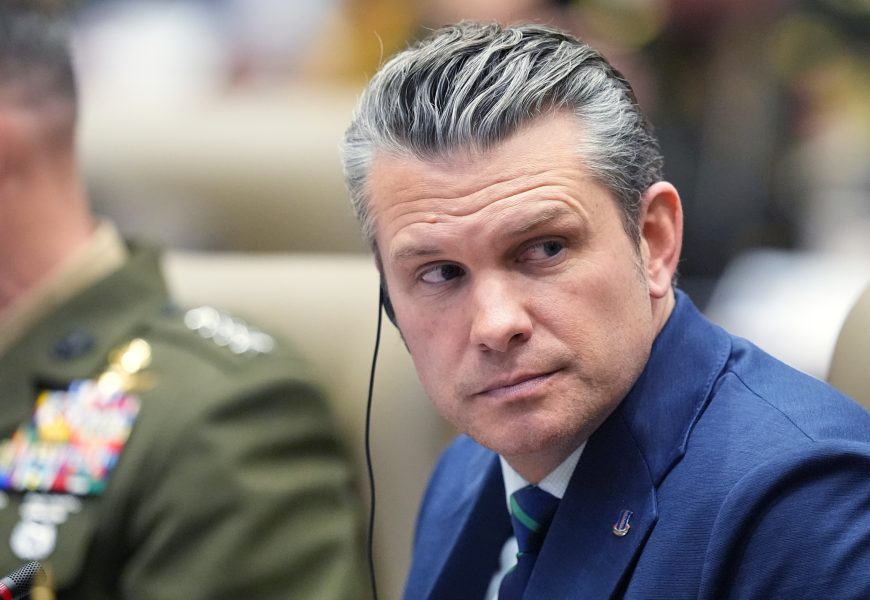
The list of Trump critics and opponents who face or have faced legal action by the administration also includes another Fed governor, Lisa Cook; the former F.B.I. director James Comey; Attorney General Letitia James of New York; Senator Adam Schiff, Democrat of California; and Representative Eric Swalwell, Democrat of California. This month Defense Secretary Pete Hegseth said he would begin administrative proceedings against Senator Mark Kelly, Democrat of Arizona - which could result in the reduction of Mr. Kelly's military retirement rank and pension - after the senator participated in a video urging military service members to resist illegal orders. The five other Democratic lawmakers who participated in the video said they are also under federal investigation. On Monday, Mr. Kelly sued Mr. Hegseth and the Pentagon on free-speech grounds.
At the same time, a parade of actual criminals who curry Mr. Trump's favor receive clemency, and investigations into suspicious behavior by his cronies are canceled or never opened. Many of the president's uses of the pardon power seem partly aimed at diminishing confidence in legitimate past prosecutions - and trying to make previous administrations look as unethical as the current one.
Janet Yellen, a former Fed chair and Treasury secretary, summed up this inversion of the basic principles of American justice: "If you can bring charges for no reason whatsoever against your enemies, we're no longer living in a society governed by the rule of law," she said.
More than 200 of the department's career lawyers have been fired, and thousands more have resigned. "I wouldn't even call it the Justice Department anymore," Dena Robinson, a lawyer who formerly worked in the civil rights division, said last year. "It's become Trump's personal law firm."
The administration crossed another line last week when Vice President JD Vance announced that the White House would run an unnecessary new Justice Department division on fraud. The department already has an anti-fraud section, but it has been depleted by administration cutbacks; what's different about this new division is that the White House controls it directly. The new outpost is particularly suspicious, given Mr. Trump's loose and expedient definition of fraudulent behavior as occurring only in states run by Democrats. The announcement suggests it will be another piece of his partisan use of legal powers. For now, the new division is centered on the social-service fraud that has occurred in Minnesota, though he has his eyes on other Democratic states as well.
The Minnesota fraud is real, and the people who perpetrated it deserve to face charges. Many already have; one of the prosecutors who resigned Tuesday over the response to the ICE shooting had overseen the sprawling investigation. But Mr. Trump's interest in fraud is selective, applying exclusively in jurisdictions that have opposed him. As KFF Health News reported, he gave pardons or commutations to at least 68 people convicted of fraud-related crimes during his first and second terms. And he fired or demoted more than 20 inspectors general responsible for rooting out fraud.
As the second year of Mr. Trump's second term begins next week, there are some modestly encouraging signs of resistance - but not nearly enough. Several Republicans in the House and Senate have said they do not believe Mr. Powell is a criminal, and Senator Thom Tillis said he would oppose the confirmation of any Fed governor until the investigation is concluded.
But the Republican Party has largely been a silent partner as its leader removes all sense of justice from the Justice Department. Some seem to grasp the danger to the economy of having Trump control the Fed, but they need to see the larger picture and grasp the danger to democracy of controlling law enforcement, too. On behalf of Americans who are now living without a functioning system of federal law and order, Congress should step up and end this self-interested destruction.
ONLINE: https://www.nytimes.com/2026/01/17/opinion/editorials/trump-second-term-vengence.html
___
Jan. 15 - The Wall Street Journal says obstructing ICE is a crime, but doesn't warrant military intervention
In better times with better political leaders, the tragic shooting of Renee Good in Minneapolis would have caused each side in the fight over Immigration and Customs Enforcement to de-escalate and try to calm the furies. Instead, both sides are courting more confrontation that could end in even more bloodshed.
Mr. Trump's latest move Thursday was to threaten to invoke the Insurrection Act to quell protests in the Twin Cities. He has the authority to do this under the Insurrection Act of 1807, which means he could call on the military to restore public order.
But events in Minnesota are so far nowhere near the standard for riots and destruction that would justify such a move. George H.W. Bush invoked the law in 1992 to put down the riots in Los Angeles.
In Minneapolis the protests are largely peaceful, marred by some individual acts of obstruction or violence against ICE agents. These can be met with arrests and prosecutions case by case, which ICE and other agents seem capable of handling.
Triggering the Insurrection Act might be White House aide Stephen Miller 's fondest wish, or so it seems. But it could incite more protests, and it might cause more voters to wonder why the country is so unhappy in the second Trump term. It would surely motivate more Democrats to vote in November unless there is a broad threat to public safety that law enforcement can't handle.
Yet there is no denying that some ICE opponents seem eager to incite agents into a belligerent response. They are taunting ICE agents in the street, recording them on their phones, and often using their own SUVs to obstruct ICE vehicles. Obstructing a federal officer in the course of doing his duty is illegal and deserves to be prosecuted. Acts of civil disobedience have a long and sometimes noble history, but the actors must also face the legal consequences.
We should add that Minnesota Gov. Tim Walz has lived down to expectations. His video on Wednesday night urging residents to leave their homes, and then monitor and record ICE agents to stop "atrocities" against the people of the state is courting more ugly incidents. What "atrocities" is he talking about? The shooting of Renee Good was awful, but whether it was a crime is far from clear based on the video evidence.
We believe Mr. Trump's policy of mass deportation is unwise. Targeting criminal migrants has popular support for obvious reasons. But too often his ICE sweeps are catching otherwise law-abiding migrants who are awaiting their asylum hearing or have been in the U.S. for years.
When Mr. Miller set his target for ICE of 3,000 migrant arrests a day, he set in motion enforcement that was bound to result in overkill and family breakups. Americans dislike it when police have to meet parking-ticket quotas, much less body counts for arrests.
But Mr. Trump won the election in part as a response to Joe Biden's de facto open-border immigration policy. The President has the legal authority to unleash ICE, and the agents are doing what they are told to do. The way to defeat the Trump policy is at the ballot box, not by obstructing agents in violation of the law. There's an election in nine months.
___
Jan. 14 - The St. Louis Post-Dispatch says Powell probe is a new low for Trump's criminal justice system
One of the most insidious aspects of the Trump era is how quickly the public gets used to what should be unacceptable scenarios - such as the use of federal criminal prosecutions for political retribution.
Having already watched as Trump's Justice Department launched baseless, vengeful criminal cases against former FBI Director James Comey and New York Attorney General Letitia James, it's tempting for Trump's supporters and opponents alike to shrug at the newly revealed criminal investigation against Federal Reserve Chair Jerome Powell as just more of the same.
It's not; it's worse. This time, it's less a tantrum driven by retribution than a calculated attempt to expand presidential power in ways it shouldn't be expanded. Trump wants the Fed, an independent entity, to lower interest rates, and his administration is holding Powell's feet to the fire with the threat of a personal criminal prosecution to make that happen. Period.
Spare us the inevitable MAGA bothsiderism that claims former President Joe Biden and other Democrats engaged in "lawfare" against Trump in the four years between his two terms. Trump was criminally charged because of his own criminal or allegedly criminal acts. These included falsifying business records to hide hush-money payments to a porn star (convicted on 34 counts), as well as more serious cases of election interference and obstruction of justice related to classified documents that had to be dropped upon his return to office.
The Trump administration's prosecutions of Comey and James, conversely, were clearly baseless attempts at vengeance against both of them for doing their jobs, by a president who views the Justice Department as his own personal police force. Trump's constant social-media bellowing against his targets and his removal of prosecutors who declined to do his bidding made that much clear. He was barely even pretending those cases were about anything but retribution.
What makes the move against Powell so much more dangerous is that, this time, the criminal justice system is being weaponized not to punish a critic or a political adversary - that's dangerous enough - but to gain control over what is supposed to be an independent governmental entity.
It's understandable for any president to want interest rates to be as low as possible. Low rates make regular Americans happy when they buy houses or cars or use their credit cards. But the lowest possible rates aren't always the best scenario for the broader economy. That's why the Fed is structured as an independent agency, out of reach of presidential politics.
As this president has demonstrated again and again, he can't stand not having full control over every aspect of the federal government. That is the obvious explanation for the extraordinary and seemingly unwarranted criminal probe against Powell for supposedly misleading Congress about cost overruns in a renovation project at the Fed's headquarters.
Trump has routinely expressed his anger at Powell for not lowering interest rates to his liking, but the administration claims Trump didn't direct federal investigators to target Powell. To anybody in America who truly believes that Trump's Justice Department would undertake this provocative, radical action without Trump's nod, please contact us here in St. Louis - we have a big steel arch to sell you.
Powell has long been notably careful about not publicly criticizing Trump, but in this case, he apparently understood that diplomacy is no longer in order.
"The threat of criminal charges is a consequence of the Federal Reserve setting interest rates based on our best assessment of what will serve the public, rather than following the preferences of the president," Powell said in a video statement. "This is about whether the Fed will be able to continue to set interest rates based on evidence and economic conditions - or whether instead monetary policy will be directed by political pressure or intimidation."
Kudos to Powell for standing up to that thuggish intimidation. Even if Trump were the economic genius he thinks he is (his destructive tariff policies alone debunk that), the nation's economic levers must never be subject to the political needs and whims of any president.
ONLINE: https://www.stltoday.com/opinion/editorial/article_be1f78e8-aca1-46fb-a1e4-ea785444db2d.html
___
Jan. 18 - The Guardian says Trump's threats regarding Greenland are bullying, not strength
For all Donald Trump's bluster about restoring American strength, his attempt to bully European allies over Greenland reveals a deeper weakness: coercive diplomacy only works if people are afraid to resist. Increasingly, they aren't. And that is a good thing. Bullies often back down when confronted - their power relies on fear. Mr Trump's threat to impose sweeping tariffs on Europeans unless they acquiesce to his demand to " purchase " Greenland has stripped his trade policy bare. This is not about economic security, unfair trade or protecting American workers. It is about using tariffs as a weapon to force nations to submit.
The response from Europe has been united and swift. That in itself should send a message. France's Emmanuel Macron says plainly " no amount of intimidation " will alter Europe's position. Denmark has anchored the issue firmly inside Nato's collective security. EU leaders have warned that tariff threats risk a dangerous downward spiral. Even Italy's prime minister, Giorgia Meloni, seen as ideologically close to Mr Trump, publicly called the tariff threat a " mistake " - adding that she has told him so.
What Mr Trump did not reckon with was that intimidating Europe would carry institutional consequences. The European parliament is now moving to pause ratification of the EU-US trade deal that European leaders were pressured by the US to accept last summer. The three largest parliamentary blocs in Strasbourg - conservatives, social democrats and liberals - are marching together. In Brussels, this is not theatre. The EU runs trade policy, not individual capitals, as Britain found out during Brexit. Mr Trump can threaten governments; he cannot browbeat European institutions designed to withstand coercion.
The UK is speaking up. Though outside the EU, the country issued a joint statement with allies saying that Mr Trump's threat risks a "dangerous downward spiral" and "undermines transatlantic relations". On his own Sir Keir Starmer was reduced to pleading for better behaviour. Britain is like Greece to America's Rome - with the added trauma of having once been Rome itself.
But there are signs of a rules-based system being built without the US. Canada, one of America's closest allies, is hedging its bets. The country's trade deal with Beijing shows how middle powers shift when Washington becomes erratic. Diversifying away from Mr Trump's America is the right route to take. The US president ought to drop his tough talk and get on with bolstering Greenland's defences and, if necessary, building proper commercial partnerships that benefit both the US and the island's population.
Some point to Richard Nixon's " madman theory " as a historical precedent. But there is a difference between unpredictability that creates leverage and recklessness that destroys trust. Nixon shocked the system in 1971 because the system was coming apart. Today we have disorder, but Mr Trump shocks the system because he seems to enjoy the spectacle. That matters because coercive foreign policy requires domestic legitimacy. Polling shows a majority of Americans think Mr Trump's presidency a failure. A president who lacks consent at home cannot credibly demand submission abroad. What he projects instead is desperation. Mr Trump believes influence comes through ultimatums and coercion. But power, in the real world, rests on trust, predictability and persuading others to follow. Yet allies are pushing back. The more Mr Trump resorts to bullying, the more the world will learn how to live without him.
Related Stories

More Top Stories