°C
°C
 4
Min
4
Min
JERUSALEM (AP) – Iran’s parliament speaker warned on Thursday that attacks on the Persian Gulf islands that form Iran’s southern maritime frontier would provoke a new level of retaliation, underscoring how central they are to the country’s economy and security.
The islands off Iran’s southern coast are key to its economy and security. What to know about them
JERUSALEM (AP) - Iran's parliament speaker warned on Thursday that attacks on the Persian Gulf islands that form Iran's southern maritime frontier would provoke a new level of retaliation, underscoring how central they are to the country's economy and security.
In a social media post, Mohammad Bagher Qalibaf said Iran "will abandon all restraint" if the islands come under attack and said U.S. President Donald Trump will be responsible for "the blood of American soldiers."
Although they account for only a small share of Iran's territory, the islands carry outsized importance because of their oil facilities and strategic location.
It was not clear what prompted Qalibaf's remarks, but he was not the first to raise the possibility of an attack on the islands since the Iran war began Feb. 28.
The U.S. and Israel both have suggested expanding their list of targets beyond military and nuclear sites. Officials in Israel's government haven't publicly referenced the island, but opposition leader Yair Lapid has called for striking energy infrastructure on Kharg Island.
"That is what will cripple Iran's economy and topple the regime," he wrote on X last Sunday.
Here's what to know about Iran's islands in the Persian Gulf up to the Strait of Hormuz:
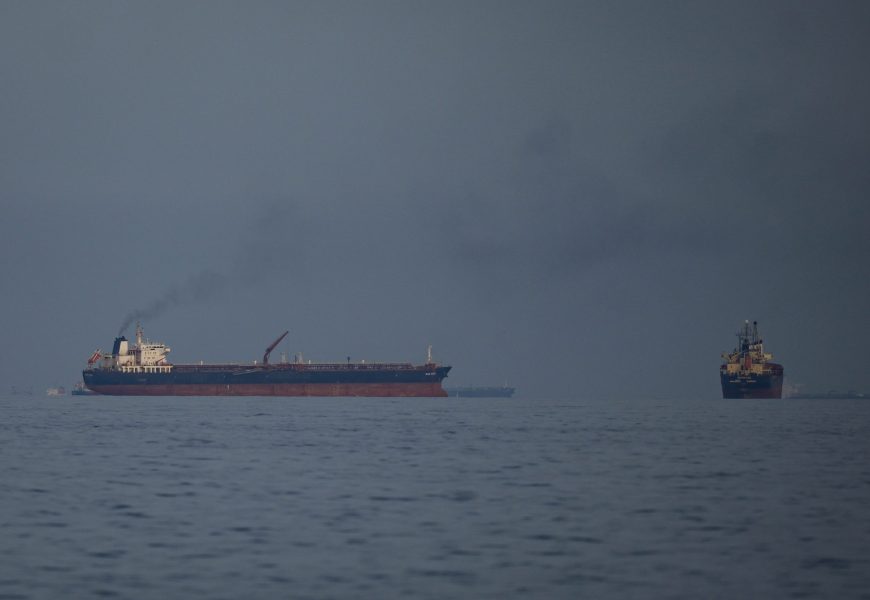
The small coral island about 21 miles (33 kilometers) off Iran's coast is the primary terminal through which nearly all of Iran's oil exports pass. Iran has exported 13.7 million barrels since the war started, and multiple tankers were seen on satellite imagery Wednesday loading at Kharg, according to TankerTrackers.com, maritime intelligence company.
Iran gets a significant share of its revenue from oil, with shipments flowing to countries like China. A strike on Kharg would not only damage Iran's current government but also could undermine the viability of whatever might eventually replace it.
The island has storage tanks in the south, along with housing for thousands of workers. Gazelles roam freely near the refineries and depots that make Kharg one of Iran's most valuable - and sensitive - assets.
Petras Katinas, an energy researcher at the Royal United Services Institute, said Kharg Island was critical to funding Iran's government and military.
If Iran were to lose control of Kharg, it would be difficult for the country to function, even though the island isn't a military or nuclear target, he said.
"It doesn't matter which regime is in power - new or old," Katinas said. A takeover would give the U.S. leverage over negotiations with Iran because the island is "the main node" of its economy.
JPMorgan's global commodity research team warned this week in an investment note that a strike on the island would have major economic implications.
"The island has often been viewed as a critical vulnerability, yet it has rarely been directly targeted," it said. "A direct strike would immediately halt the bulk of Iran's crude exports, likely triggering severe retaliation in the Strait of Hormuz or against regional energy infrastructure."
The three tiny islands have long been a front line in tensions between Iran and Gulf states allied with the United States.
Iranian forces seized the islands in November 1971, days after the United Kingdom withdrew from the Gulf and just before the sheikhdoms joined to form the United Arab Emirates. Iran maintains military assets and garrisons on the islands.
The territorial dispute over the islands remains one of the Gulf's most persistent flashpoints.
The largest island in the Persian Gulf sits near the Strait of Hormuz and is home to about 150,000 residents. Iranian Foreign Minister Abbas Araghchi said the U.S. struck a desalination plant on the island on March 8 - a claim not acknowledged by Washington.
"Attacking Iran's infrastructure is a dangerous move with grave consequences," Araghchi warned in a March 7 post on X. "The U.S. set this precedent, not Iran."
The desalination plant supplies water to about 30 villages.
In Bahrain - home to the U.S. Navy's 5th Fleet - the Interior Ministry said an Iranian drone had "caused material damage" to a desalination plant there the next day, although water supplies were never disrupted.
More Top Stories