°C
°C
 3
Min
3
Min
HONG KONG (AP) – Some commercial ships near or in the Strait of Hormuz and Persian Gulf have declared themselves as China-linked since the Iran war began, marine traffic data show, as their operators apparently try to reduce risks of being targeted in attacks.
Ships identify themselves as Chinese around Strait of Hormuz during Iran war to avoid attacks
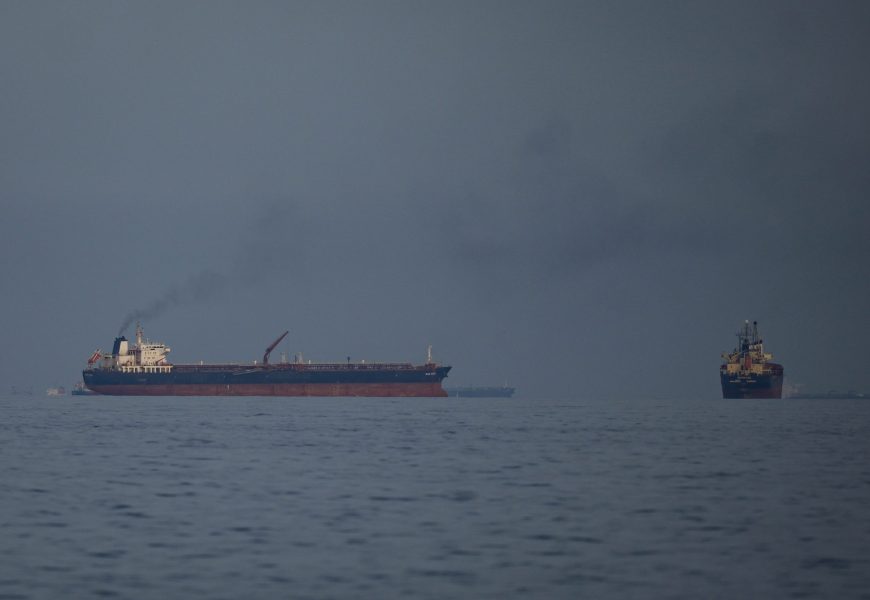
HONG KONG (AP) - Some commercial ships near or in the Strait of Hormuz and Persian Gulf have declared themselves as China-linked since the Iran war began, marine traffic data show, as their operators apparently try to reduce risks of being targeted in attacks.
At least eight vessels in or near the Persian Gulf and the Gulf of Oman changed their declared destination signals to short messages such as "CHINA OWNER" or "CHINA OWNER&CREW," according to data on the ship tracking platform MarineTraffic analyzed by The Associated Press.
"The main goal of vessels publicly identifying themselves as 'Chinese' while transiting the Gulf or the Strait of Hormuz is primarily to reduce the risk of being attacked rather than to facilitate passage through the strait itself," said Ana Subasic, a trade risk analyst at data and analytics firm Kpler, which owns MarineTraffic.
Some of the vessels passed through the strait and headed for their destinations. Others were still in the area.
Iran and affiliated groups have generally avoided targeting ships linked to China, Subasic said, given China's relatively neutral stance and stronger economic ties with Iran.
"The message is more like 'do not mistake me for the kind of ship you said you would hit,'" said Kun Cao, client director at consulting firm Reddal.
Iranian attacks on vessels in the Persian Gulf and the wider region have particularly raised concerns among shippers. At least 19 commercial ships around the region had been damaged in the war as of Thursday.
Most of the eight vessels identified by MarineTraffic were not China flagged. Their flag states included Panama and the Marshall Islands, although Reddal's Cao noted that a vessel's flag often "has little to do with the ship owner's nationality" in commercial shipping.
While many bulk carriers have strong links with China in terms of ownership, operation and cargo, the actual effectiveness of declaring themselves as China-linked in avoiding attacks is unclear, said Rico Luman, a senior economist at the Dutch bank ING who focuses on transport and logistics.
Destination signals are short notes or messages manually entered by a ship's crew into a vessel's transponder, a global positioning system locator, and broadcast publicly, Subasic said. They typically show the ship's intended next port and are usually intended to help with navigation safety, traffic awareness and port planning.
Because destination signals are not strictly verified in real time, "some vessels occasionally use it to display additional information or signals, such as references to ownership or nationality," she said.
During earlier Houthi attacks in the Red Sea, some vessels adopted a similar approach by declaring themselves or their crew as having links to China, which appeared as an effort to try to reduce risks of attacks from the Iranian-backed Houthis.
More Top Stories