°C
°C
 5
Min
5
Min
WASHINGTON (AP) – The Trump administration on Monday suspended leases for five large-scale offshore wind projects under construction along the East Coast due to what it said were national security risks identified by the Pentagon.
Trump administration suspends 5 wind projects off the East Coast
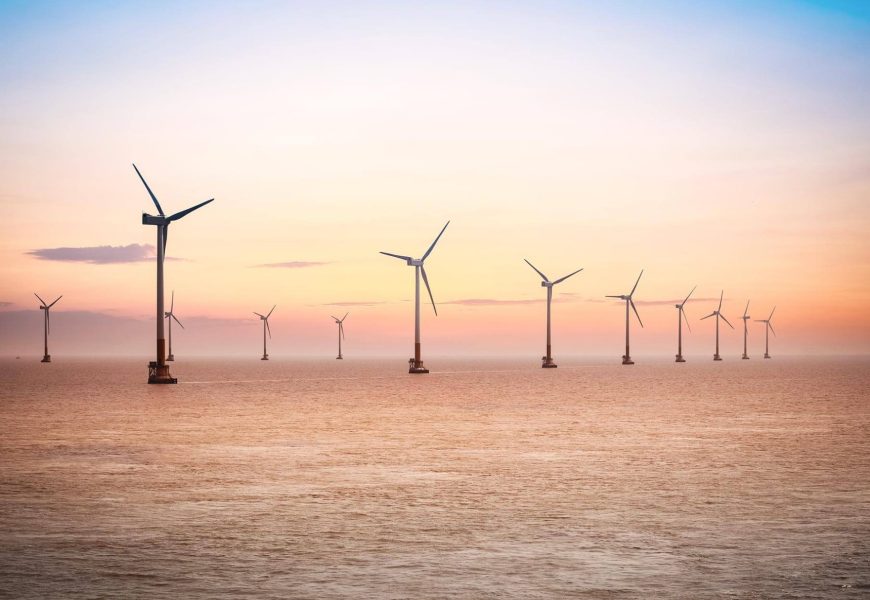
WASHINGTON (AP) - The Trump administration on Monday suspended leases for five large-scale offshore wind projects under construction along the East Coast due to what it said were national security risks identified by the Pentagon.
The suspension, effective immediately, is the latest step the administration has taken to hobble offshore wind in its push against renewable energy sources. It comes two weeks after a federal judge struck down President Donald Trump's executive order blocking wind energy projects, calling it unlawful.
The administration said the pause will give the Interior Department, which oversees offshore wind, time to work with the Defense Department and other agencies to assess the possible ways to mitigate any security risks posed by the projects. The statement did not detail the national security risks. It called the move a pause, but did not specify an end date.
"The prime duty of the United States government is to protect the American people," Interior Secretary Doug Burgum said in a statement. "Today's action addresses emerging national security risks, including the rapid evolution of the relevant adversary technologies, and the vulnerabilities created by large-scale offshore wind projects with proximity near our east coast population centers."
Wind proponents slammed the move, saying it was another blow in an ongoing attack by the administration against clean energy. The administration's decision to cite potential national security risks could complicate legal challenges to the move, although wind supporters say those arguments are overstated.
The administration said leases are paused for the Vineyard Wind project under construction in Massachusetts, Revolution Wind in Rhode Island and Connecticut, Coastal Virginia Offshore Wind, and two projects in New York: Sunrise Wind and Empire Wind.
The Interior Department said unclassified reports from the U.S. government have long found that the movement of massive turbine blades and the highly reflective towers create radar interference called "clutter." The clutter caused by offshore wind projects obscures legitimate moving targets and generates false targets in the vicinity of wind projects, the Interior Department said.
National security expert and former Commander of the USS Cole Kirk Lippold disputed the administration's national security argument. The offshore projects were awarded permits "following years of review by state and federal agencies," including the Coast Guard, the Naval Undersea Warfare Center, the Air Force and more, he said.
"The record of decisions all show that the Department of Defense was consulted at every stage of the permitting process," Lippold said, arguing that the projects would benefit national security because they would diversify the country's energy supply.
The administration's action comes two weeks after a federal judge struck down Trump's executive order blocking wind energy projects, saying the effort to halt virtually all leasing of wind farms on federal lands and waters was "arbitrary and capricious" and violates U.S. law.
Judge Patti Saris of the U.S. District Court for the District of Massachusetts vacated Trump's Jan. 20 executive order blocking wind energy projects and declared it unlawful.
Saris ruled in favor of a coalition of state attorneys general from 17 states and Washington, D.C., led by New York Attorney General Letitia James, that challenged Trump's Day One order that paused leasing and permitting for wind energy projects.
Trump has been hostile to renewable energy, particularly offshore wind, and prioritizes fossil fuels to produce electricity.
Wind supporters called the administration's actions illegal and said offshore wind provides some of the most affordable, reliable electric power to the grid.
"For nearly a year, the Trump administration has recklessly obstructed the build-out of clean, affordable power for millions of Americans, just as the country's need for electricity is surging," said Ted Kelly of the Environmental Defense Fund.
"Now the administration is again illegally blocking clean, affordable energy," Kelly said. "We should not be kneecapping America's largest source of renewable power, especially when we need more cheap, homegrown electricity."
The administration's actions are especially egregious because, at the same time, it is propping up aging, expensive coal plants "that barely work and pollute our air," Kelly said.
Connecticut Attorney General William Tong called the lease suspension a "lawless and erratic stop-work order" that revives an earlier failed attempt to halt construction of Revolution Wind.
The wind project has been vetted and approved through every layer of federal and state regulatory process, including a careful review of security issues raised in the latest announcement, he said.
"Every day this project is stalled is another day of lost work, another day of unaffordable energy costs, and other day burning fossil fuels when American-made clean energy is within reach," Tong said. "We are evaluating all legal options, and this will be stopped just like last time."
A New Jersey group that opposes offshore wind hailed the administration's actions.
"Today, the president and his administration put America first," said Robin Shaffer, president of Protect Our Coast New Jersey, a nonprofit advocacy group.
"Placing largely foreign-owned wind turbines along our coastlines was never acceptable," he said, arguing that the projects posed serious national security risks.
But the Conservation Law Foundation, a Boston-based environmental group, called the pause "a desperate rerun of the Trump administration's failed attempt to kill offshore wind," noting that courts have already rejected the administration's arguments.
"Trying again to halt these projects tramples on the rule of law, threatens jobs and deliberately sabotages a critical industry that strengthens - not weakens - America's energy security," said Kate Sinding Daly, senior vice president for law and policy at the law foundation.
Related Stories
More Top Stories