°C
°C
 13
Min
13
Min
The war in the Middle East spiraled further Monday as Israel and the U.S. pounded Iran. Tehran and its allies hit back against Israel, neighboring Gulf states, and targets critical to the world’s production of oil and natural gas. The intensity of the attacks, the killing of Iranian Supreme Leader Ayatollah Ali Khamenei, indicated the conflict would not end anytime soon.
The Latest: War spirals further as US and Israel exchange strikes with Iran and its allies
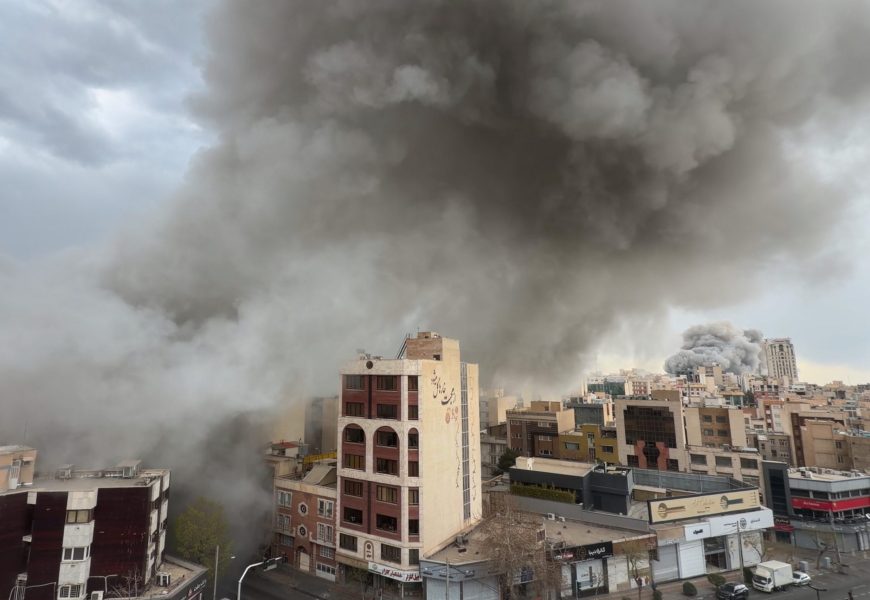
The war in the Middle East spiraled further Monday as Israel and the U.S. pounded Iran. Tehran and its allies hit back against Israel, neighboring Gulf states, and targets critical to the world's production of oil and natural gas.
The intensity of the attacks, the killing of Iranian Supreme Leader Ayatollah Ali Khamenei, and the lack of any apparent exit plan indicated the conflict would not end anytime soon.
Iran has long threatened to drag the region into total war, including targeting Israel, the Gulf Arab states and the flow of crude oil crucial for global energy markets. All of these came under attack on Monday.
At least 555 people have been killed in Iran so far by the U.S.-Israeli campaign, the Iranian Red Crescent Society said, and more than 130 cities across the country have come under attack. In Israel, 11 people have been killed, with 31 in Lebanon, according to authorities.
Here is the latest:
Vladimir Putin held a phone call Monday with Saudi Crown Prince Mohammed bin Salman to discuss "the escalation in the Middle East as a result of American-Israeli armed aggression" against Iran, the Kremlin said.
Both "expressed serious concern over the real risks of the spreading of the conflict, which has already affected several Arab countries and is fraught with catastrophic consequences," the Kremlin said in the readout of the call.
Putin "emphasized the urgent need to resolve the current extremely dangerous situation through political and diplomatic means," and Prince Mohammed "expressed the opinion that Russia could play a positive, stabilizing role in these times, given its friendly relations with both Iran and the Persian Gulf countries," the readout said.
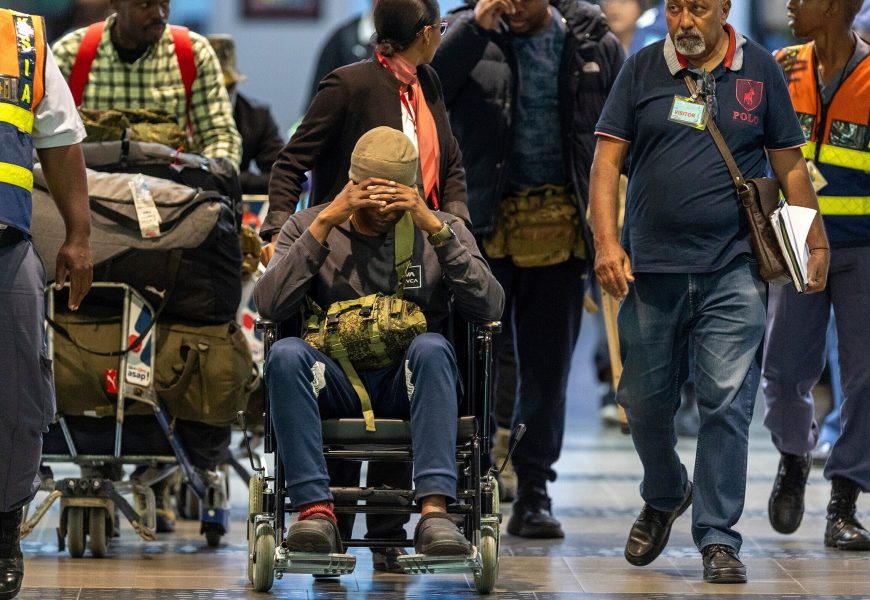
Former U.S. Open tennis champion Daniil Medvedev has indicated he's one of what the ATP Tour calls "a small number of players and team members" it is trying to help leave Dubai. A widespread travel shutdown has also caused issues for athletes heading to the Paralympics.
Medvedev's Instagram account reposted on Monday a report from a Russian-language tennis outlet, Bolshe, which said he was safe and staying at a friend's apartment in Dubai, amid flight cancellations after winning the ATP event there last week.
Medvedev and others are due to play at the BNP Paribas Open at Indian Wells, California, where main-draw matches start Wednesday.
The Winter Paralympics open in Italy on Friday and some athletes are facing travel difficulties, the International Paralympic Committee said. Iran has one cross-country skier expected to compete at the March 6-15 Paralympics.
The president said U.S. forces are out to destroy Iran's missile capabilities, wipe out its naval capacity, stop the country from obtaining a nuclear weapon and "ensuring that the Iranian regime cannot continue to arm fund and directors armies outside of their borders."
He said U.S. attacks have already "knocked out" 10 ships, and that attacks on Iran's missile capacity is ensuring they is destroyed while stopping "their capacity to produce brand ones."
"This was our last, best chance to strike - what we're doing right now - and eliminate the intolerable threats posed by this sick and sinister regime," Trump said.
The president said during an unrelated event at the White House that from the beginning, the U.S. has projected that time frame but "we have the capability to go far longer than that."
He then said he wouldn't get "bored" of continuing the operation over such time. "I don't get bored. There's nothing boring about this."
Trump said the U.S. had also projected it would take four weeks to get rid of Iran's military leadership, but that was quickly accomplished "so we're ahead of schedule there."
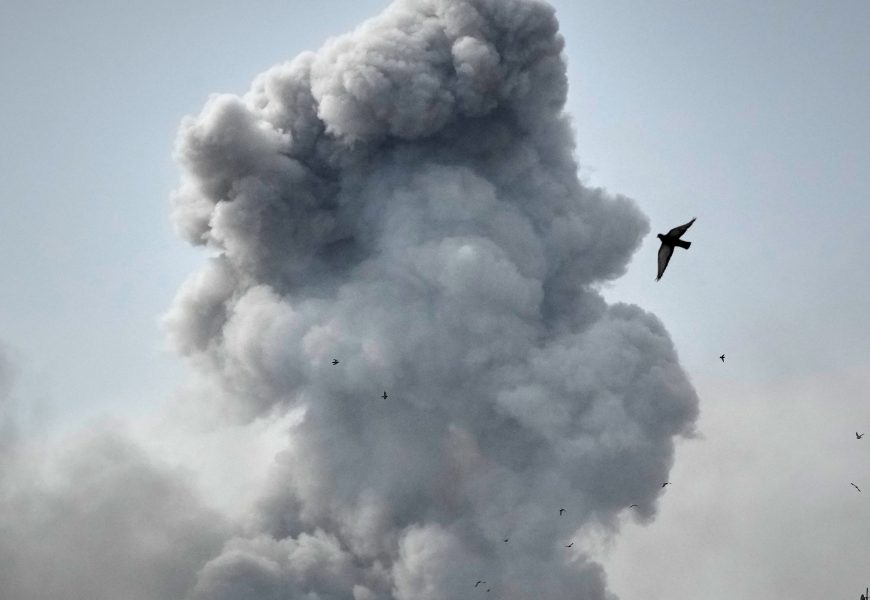
Iranian missiles drew straight lines of smoke across clear Jerusalem skies Monday afternoon. the conflict's third day.
Interceptions by Israel's advanced aerial defense system could be seen as the projectiles flying overhead suddenly lost course and began haphazardly falling before disappearing from view, leaving circles of smoke behind where they'd been hit by the interceptor missiles.
Loud booms could be heard, intermingled with the barking of dogs and chirping of birds.
Jerusalemites were told to take shelter three times Monday morning and early afternoon, but sirens didn't ring for much of the afternoon.
An Israeli airstrike in the Lebanese capital heavily damaged a building as the Israeli military said it targeted a senior Hezbollah official.
The strike occurred near the old compound of the Iranian embassy in Beirut's Beir Hassan neighborhood.
Trump is attending with top members of his administration. The event began with a prayer.
Four Greek F-16 fighter jets landed in Cyprus on Monday to bolster the country's security, after a drone struck a U.K. military base.
The drone strike caused minor damage, according to Cyprus President Nikos Christodoulides. Another two drones flying in the direction of RAF Akrotiri shortly after midday Monday where intercepted after two British Typhoon fighter jets and another pair of F-35 warplanes were scrambled from the base.
Cyprus government spokesman Constantinos Letymbiotis posted on X that the arrival of the F-16s was done in close cooperation with Greece, which was also sending two navy frigates equipped with an anti-drone system.
The five reported casualties from Iranian strikes in Gulf nations have been foreign nationals. The countries hit - including the United Arab Emirates, Bahrain and Kuwait - rely heavily on labor from South and Southeast Asia.
Migrant workers in Gulf states are often housed in employer‑provided accommodations on the outskirts of cities or near industrial zones.
The Philippines' Department of Foreign Affairs on Monday upgraded its travel advisory for the United Arab Emirates, placing it along with Bahrain, Kuwait, Qatar and Saudi Arabia at a level that automatically triggers a deployment ban on newly hired workers.
The Emirates reported three deaths, one each from Nepal, Bangladesh and Pakistan. Kuwait's Health Ministry said a strike killed one person and wounded 32 others, all foreign nationals. Bahrain's Interior Ministry said a post-strike fire killed an Asian worker and wounded two others.
The International Labor Organization estimates more than 24 million foreign workers were employed across the Gulf states in 2024, forming a backbone of the region's economy while often remaining among its most vulnerable.
Trump is attending with top members of his administration. The event began with a prayer.
An Israeli airstrike in the Lebanese capital heavily damaged a building as the Israeli military said it targeted a senior Hezbollah official.
The strike occurred near the old compound of the Iranian embassy in Beirut's Beir Hassan neighborhood.
The Gulf state of Qatar, home to a key U.S. military base, said its air force had shot down two Iranian Sukhoi Su-24 bombers.
Meanwhile, the United Arab Emirates said it intercepted nine ballistic and six cruise missiles and 148 drones on Monday. The Defense Ministry said it has repelled hundreds of Iranian drones and missiles since the attacks began on Saturday, in response to U.S.-Israeli bombardment.
No fatalities were reported Monday in the UAE. Three people were killed in Iranian attacks on Sunday.
In a brief phone interview with the New York Post, the president said he wasn't ruling out U.S. forces in Iran if "they were necessary."
"I don't have the yips with respect to boots on the ground. Like, every president says, 'There will be no boots on the ground.' I don't say it," Trump told the newspaper. "I say, 'Probably don't need them,' (or) 'if they were necessary.'"
Trump has said since the start of U.S.-Israeli strikes on Iran that American military casualties were likely, as they are in any war, but he hasn't committed to having U.S. forces on the ground long term. Before the strikes began, Vice President JD Vance told The Washington Post that there was "no chance" the U.S. would be pulled into a drawn out war in the Middle East.
The Israeli army said it had completed "a broad wave of strikes" on dozens of targets in southern Lebanon, including weapons storage facilities and missile launchers that it said belong to the militant group Hezbollah.
At least 31 people were killed in overnight Israeli strikes in Lebanon after Hezbollah launched rockets into Israel for the first time in more than a year.
U.K. Prime Minister Keir Starmer on Monday defended his decision to allow the U.S. to use British bases to launch defensive strikes against Iran, saying the country had to support its allies in the region and British citizens who were at risk due to indiscriminate attacks by Iran.
Speaking to the House of Commons, Starmer said that the government was focused on looking "at all options to support our people."
"We want to ensure that they can return home as swiftly and safely as possible, for their lives are on the line."
Starmer also defended his decision not to join U.S and Israeli offensive actions against Iran, saying the U.K. had learned the lessons of the Iraq War and that any military action must be legally justified. Britain can legally take part in defensive action to protects its own citizens and allies, but it will not participate in offensive actions aimed at regime change, he said.
Pakistan's President Asif Ali Zardari on Monday condemned what he described as a "war being waged on Iran while negotiations were underway" and called for restraint.
In a televised address to lawmakers in parliament, Zardari said he joins "all Pakistanis in condoling the martyrdom of Iran's Supreme Leader Ayatollah Ali Khamenei." He also condemned what he called "subsequent attacks launched on our brotherly countries in the Gulf region."
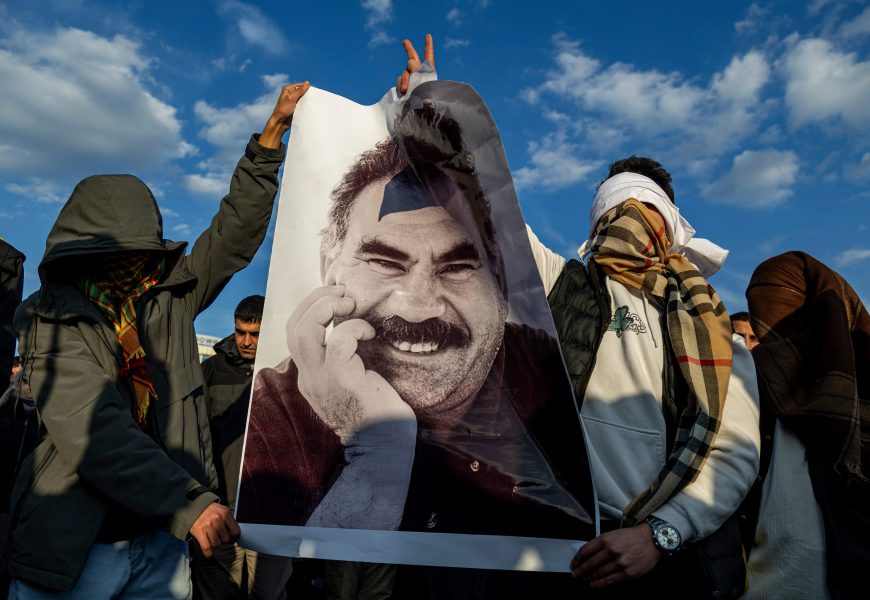
Demonstrators in Pakistan supportive of the Iranian government attempted to storm a U.S. Consulate on Sunday, authorities said, leading to violent clashes with security forces that killed at least 22 people and injured more than 120 others.
The top commander in Lebanon of the Quds Brigades, the armed wing of the Palestinian Islamic Jihad group, was killed at dawn Monday by an Israeli airstrike on a southern suburb of Beirut.
The group gave no further details about Adham Adnan al-Othman but said he had a long history of fighting Israeli forces.
Like the larger and stronger Hamas, Palestinian Islamic Jihad was formed in the 1980s as a radical Islamist movement to resisting Israel.
The Israeli military's Home Front Command said all schools across the country will remain closed and the ban on attending workplaces will continue at least until Saturday evening. Gatherings are prohibited and all beaches will remain closed to the public.
The nationwide restrictions were first imposed after Israel and the US launched a war against Iran on Saturday.
Prime Minister Benjamin Netanyahu has visited the site of a deadly Iranian missile attack in central Israel.
Nine people were killed Sunday when a missile slammed into a shelter located in a synagogue in Beit Shemesh.
Netanyahu accused Iran of intentionally targeting civilians and said the country poses a threat to the entire world. He said the world would benefit from the joint Israel-U.S. war against Iran.
"We set out to protect ourselves, but in doing so we protect many others," Netanyahu said.
U.S. Defense Secretary Pete Hegseth says the U.S. military operation in Iran could be shorter or longer than the four to five weeks that Trump has recently suggested.
"Trump has all the latitude in the world to talk about how long it may or may not take," Hegseth said at Monday's news briefing. "Four weeks, two weeks, six weeks. It could move up. It could move back."
Trump, in an interview Sunday with The New York Times, said the assault could last "four to five weeks."
The U.S. Embassy in Beirut is urging Americans to depart Lebanon immediately while commercial flights remain available, saying that the security situation in the country "is volatile and unpredictable."
The statement came as Israel carried a new wave of airstrikes on Lebanon that were clearly heard in the capital Beirut and the southern port city of Tyre.
Israel's military also said that it killed Hezbollah's intelligence official Hussein Mokalleh in a strike near Beirut earlier Monday.
The embassy urged U.S. citizens not to travel to Lebanon. It said all consular services are suspended until further notice, and that the U.S. embassy currently has no ability to provide any assistance to U.S. citizens in Lebanon.
President Donald Trump says he is "very disappointed" in Prime Minister Keir Starmer for initially refusing to allow British bases to be used for U.S. strikes on Iran.
Trump told Britain's Daily Telegraph that "we were very disappointed in Keir."
In a change of position, Starmer announced Sunday that the U.S. can use bases in England and on Diego Garcia in the Indian Ocean to strike Iran's ballistic missiles and their launch and storage sites, but not to hit other targets.
Trump said the change in position is "useful" but "took far too much time."
"It sounds like he was worried about the legality," Trump said.
Iranian media said Mansoureh Khojasteh, wife of Supreme Leader Ayatollah Ali Khamenei, died on Monday. She had been in a coma since Saturday's strikes on her husband's office.
Khojasteh, 78, was the only wife of Ali Khamenei. They married in 1964.
Separately, an Iranian human rights activists' group cited an education ministry spokesperson as saying that 171 students were killed across Iran in the past 48 hours.
According to the Human Rights Activists News Agency, the ministry spokesperson said the deadliest strike hit the Shajareh Tayebeh girls' elementary school in Minab, where 168 students died and 95 were injured. Additional casualties included two students in Tehran and a 9‑year‑old child in Abyek, Qazvin, while three others were injured in separate incidents in two districts of Tehran.
Cyberattacks knocked out Iran's key systems ahead of U.S and Israeli strikes, according to Joint Chiefs of Staff Chairman Air Force Gen. Dan Caine.
U.S. cyber operations were used to "disrupt, disorient and confuse" Iranian forces at the start of the operation, Caine said.
Disruptions to its communications systems reduced Iran's ability to assess the attack and to coordinate its response, Caine told reporters at a Monday briefing.
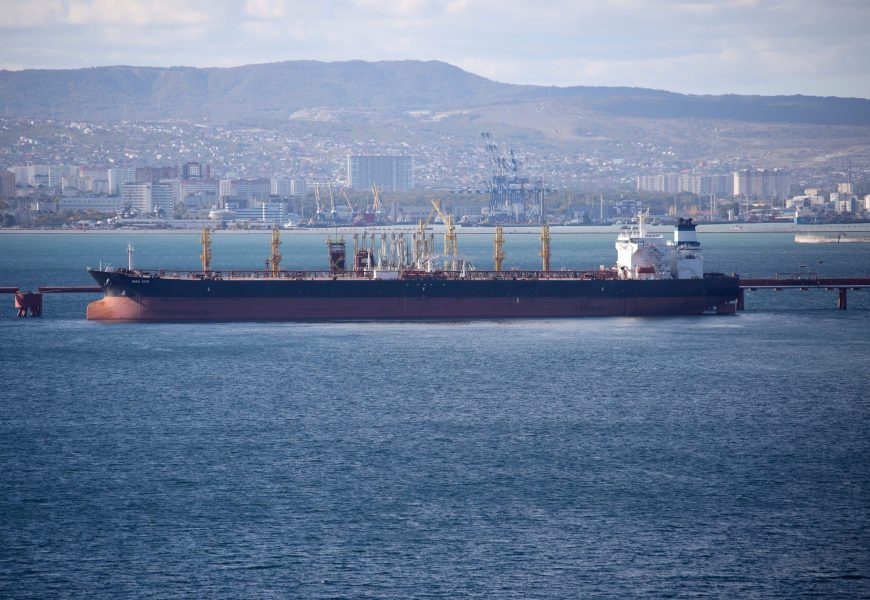
European natural gas futures are spiking 42% in the wake of the shutdown of a major supplier of ship-born gas due to the fighting in the Middle East.
The futures contract for April delivery shot up to 45.46 euros ($53.26) on the ICE commodities exchange. The jump came after QatarEnergy said it would stop its production of liquefied natural gas as the Mideast war rages. The state-owned firm blamed the war for the decision.
More Top Stories