°C
°C
 3
Min
3
Min
SEOUL, South Korea (AP) – An independent counsel on Friday demanded a 10-year prison term for South Korea’s ousted President Yoon Suk Yeol in the first of seven criminal cases related to his ill-fated attempt to impose martial law in 2024 and other allegations stemming from his time in office.
Korean prosecutors seek 10-year sentence for ousted President Yoon in first martial law trial
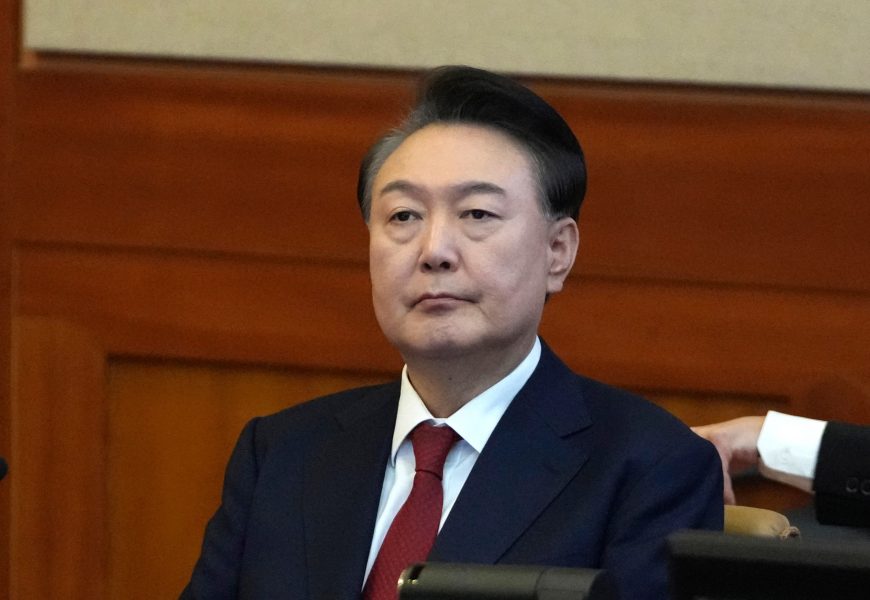
SEOUL, South Korea (AP) – An independent counsel on Friday demanded a 10-year prison term for South Korea’s ousted President Yoon Suk Yeol in the first of seven criminal cases related to his ill-fated attempt to impose martial law in 2024 and other allegations stemming from his time in office.
The first of Yoon’s trials to wrap up covers charges, including defiance of authorities’ attempts to investigate and detain him. Yoon’s lawyers called the 10-year term request “excessive” and accused independent counsel Cho Eun-suk’s team of being politically driven and lacking legal grounds to demand such a harsh punishment.
The court is expected to render a verdict as early as next month.
Yoon faces other trials on accusations ranging from corruption and favor trading to rebellion, a grave charge that is punishable by life imprisonment or the death penalty. The rebellion trial is also nearing an end.
Yoon’s martial law enactment brought armed troops into Seoul streets and triggered South Korea’s most serious political crisis in decades.
The martial law lasted only a few hours, as lawmakers managed to enter the National Assembly and voted to lift it. Yoon was impeached by the opposition-controlled parliament in December 2024, before he was formally dismissed as president following a Constitutional Court ruling in April.
On Friday, independent counsel Cho’s team requested the Seoul Central District Court to sentence Yoon to 10 years in prison on charges of obstruction of official duties, abuse of power, falsification of official documents and destruction of evidence.
Yoon holed up at his residence and hindered authorities’ attempts to execute a warrant for his detention for weeks after his impeachment. The standoff caused worries about physical clashes between Yoon’s presidential security service and those attempting to detain him and further deepened a national divide.
Park Eok-su, a senior investigator on Cho’s team, called Yoon’s actions “an unprecedented obstruction of official duties” during Friday’s court session. Yoon’s lawyers have said the detainment warrant was invalid and illegal.
Yoon also faces charges that he sidestepped a legally mandated full Cabinet meeting before declaring martial law, and that he fabricated documents, including the martial law proclamation and ordered data deleted from phones used by those involved in his martial law imposition.
Yoon has denied those charges and maintained that his decree was meant to draw public support for his struggle against the main liberal opposition Democratic Party, which impeached some of his top officials and obstructed his agenda.
Wrapping up a six-month probe last week, Cho’s team said Yoon plotted for over a year to impose martial law to eliminate his political rivals and monopolize power.
Yoon’s other trials deal with charges like the ex-leader ordering drone flights over North Korea to deliberately stoke tensions and justify his plans to declare martial law and committing perjury in the trial of his prime minister. Yoon also faces charges that he tried to manipulate the investigation into a marine’s drowning in 2023 and received free opinion surveys from an election broker in return for a political favor.
Yoon has said he wasn’t informed of such drone flights and denied wrongdoing in the influence-peddling scandal.
Related Stories


More Top Stories