°C
°C
 14
Min
14
Min
Speaker Mike Johnson’s ability to carry out President Donald Trump’s “play call” for funding the government will be put to the test Tuesday as the House holds a procedural vote on a bill to end the partial shutdown. Johnson can’t lose more than one Republican on party-line votes with perfect attendance, and some are threatening to tank the effort.
The Latest: Speaker Johnson tries to corral Republican votes to end partial shutdown

Speaker Mike Johnson's ability to carry out President Donald Trump's "play call" for funding the government will be put to the test Tuesday as the House holds a procedural vote on a bill to end the partial shutdown. Johnson can't lose more than one Republican on party-line votes with perfect attendance, and some are threatening to tank the effort if their priorities aren't included, even though Trump said "There can be NO CHANGES at this time."
The measure would end the partial government shutdown that began Saturday, funding most of the federal government through Sept. 30 and the Department of Homeland Security for just two weeks as lawmakers negotiate new rules for agents enforcing immigration laws.
Meanwhile, the Clintons have agreed to testify in the House Epstein investigation, and Colombia's president is visiting the White House as U.S. trade partners seek shelter from Trump's fury by cutting deals amongst themselves.
The Latest:
Shortly before the meeting between Petro and Trump, Colombia's government offered a diplomatic olive branch to the United States by announcing the extradition of drug trafficker Andres Felipe Marin Silva.
Extraditions have become a contentious issue between both countries as Petro holds back some extradition requests involving members of rebel groups, whom he has argued need to stay in Colombia to facilitate peace negotiations with his government..
Some officials in Petro's cabinet have also argued that extraditing drug traffickers to the United States hinders efforts to seek truth and reconciliation for their victims.
In today's meeting Petro is attempting to improve relations between his government and the Trump administration as both sides look for ways to cooperate in the fight against drug trafficking.
It took about an hour of negotiations, but the House is now on a glidepath for ending a partial government shutdown after Republicans used their majority to clear a critical procedural hurdle.
A final vote is expected in the afternoon, which would wrap up congressional work on 11 of the annual appropriations bills that fund the government for the 2026 fiscal year ending Sept. 30.
The last bill to be worked out covers the Department of Homeland Security where Democrats are demanding more restrictions on ICE operations. The measure before the House includes a short-term funding patch for the department through Feb. 13.
President Donald Trump has said he will sign the bill when it reaches his desk.
In his meeting with Donald Trump, Colombian President Gustavo Petro sported a dark suit with a white shirt and a golden tie, attire that the left wing leader tends to reserve for special occasions like his own inauguration, or military parades.
The Colombian president tends to dismiss formal attire, and in national broadcasts he is often seen donning more professorial attire such as cardigans, sweaters or white linen shirts known as guayaberas, which he has also used at the UN General Assembly.
However, Petro also has used suits in regional economic forums and in meetings with heads of state like the President of Panama or the King of Spain.
The meeting takes place as both nations try to renew cooperation in the fight against the drug trade, following months of tensions that included threats by Trump to intervene in Colombia.
The Colombian presidency released the first images of President Gustavo Petro's meeting with Donald Trump.
One photo captures the two leaders walking through the White House corridors alongside Ambassador Daniel García-Peña, who is seen carrying a copy of Trump's book, "The Art of the Deal."
Trump hoped redistricting could help House Republicans hold on to their slim majority in November's midterm elections. But the GOP so far has only a slight edge, and it's unclear whether that will make any difference in determining control of Congress.
It began last summer when Trump urged Republicans in Texas to redraw the state's congressional districts for political gain. Democrats countered with their own gerrymandering in California. More states soon followed.
The unconventional mid-decade redistricting contest has now shifted to the Democratic-led states of Maryland and Virginia, with Republican-led Florida set to undertake it this spring. Ongoing court challenges could affect boundaries in New York, Louisiana and elsewhere.
A key procedural vote to take up the bill is being held open as Republicans leaders try to wrangle the votes.
Two Republicans - Reps. Thomas Massie of Kentucky and John Rose of Tennessee - have voted against moving forward with the bill.
Republicans can only afford 1 defection, as they control the House 218-214. Four other Republicans have not yet voted.
All 214 House Democrats have voted no.
Rose, in a post on X, said Republicans must "hold the line" and get a commitment from Senate Republicans to move forward with voting legislation.
Colombian President Gustavo Petro arrived just before their scheduled meeting. The Oval Office sit-down with Trump comes just weeks after Trump threatened military action against the South American country and accused Petro of pumping cocaine into the United States.
"I'm not in favor of federalizing elections," Sen. John Thune told reporters, pointing to Constitutional requirements that states conduct their own elections.
The president said in a Monday podcast interview that Republicans should "take over" elections in as many 15 states. Trump's calls come amid a push among Republicans in Congress to tighten voting requirements nationwide.
"I'm a big believer in decentralizing and distributing power," Thune added.
However, the South Dakota Republican said he is supporting legislation known as the SAVE Act, which would require proof of citizenship when registering to vote in federal elections. The House has already passed the bill, but Republicans have not been able to overcome the 60-vote threshold required by the Senate's filibuster rules.
Republican leaders in the House are sounding confident they'll have the votes to pass a package of spending bills that would end a partial government shutdown.
"We passed these bills once before and we will pass them again" said House Majority Whip Tom Emmer of Minnesota.
The package awaiting a House vote funds various government agencies and programs such as the Department of Defense through Sept. 30. The bill also includes a short-term, two-week funding patch for the Department of Homeland Security.
Republicans have a razor-thin majority and can afford few defections, but that was looking increasingly unlikely Tuesday morning,
"The Republicans are going to do the responsible thing," said House Speaker Mike Johnson.
Because Abbott scheduled the vacancy elections so late in 2025 and 2026, they ended up colliding with the start of the 2026 midterm elections, for the next term that will start in 2027.
So not only were voters seeing campaign signs for the March 3 primary before the Saturday runoff, Harris County began sending out mail-in ballots for the new district primary two weeks before the runoff was finished.
"You literally had people who could vote in two different elections at the same time," said Amanda Edwards, a former Houston city councilwoman. "These elections aren't just back to back. They overlap."
Menefee said he's been trying to encourage people to stay engaged.
It has "definitely made people feel like they can be a pawn in a game," he said. "I think it has demoralized some people."
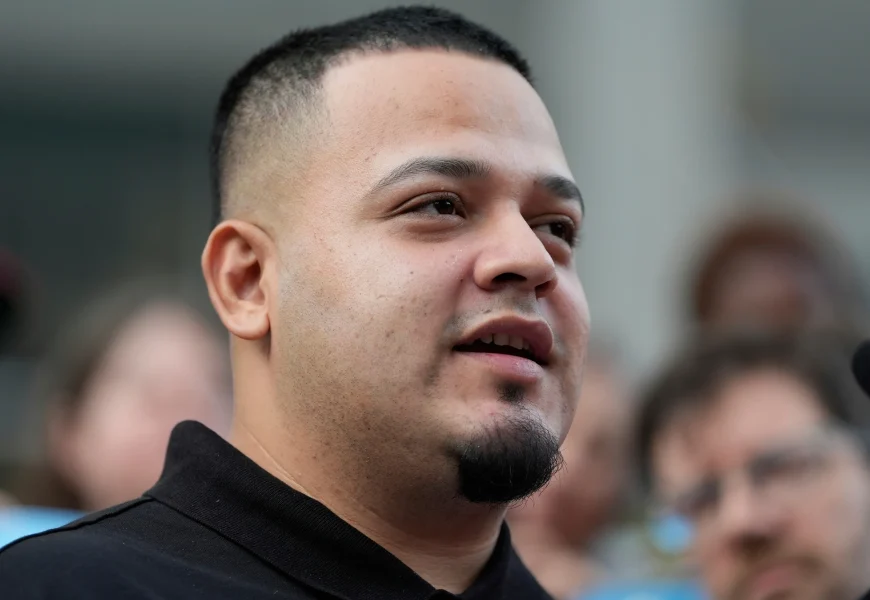
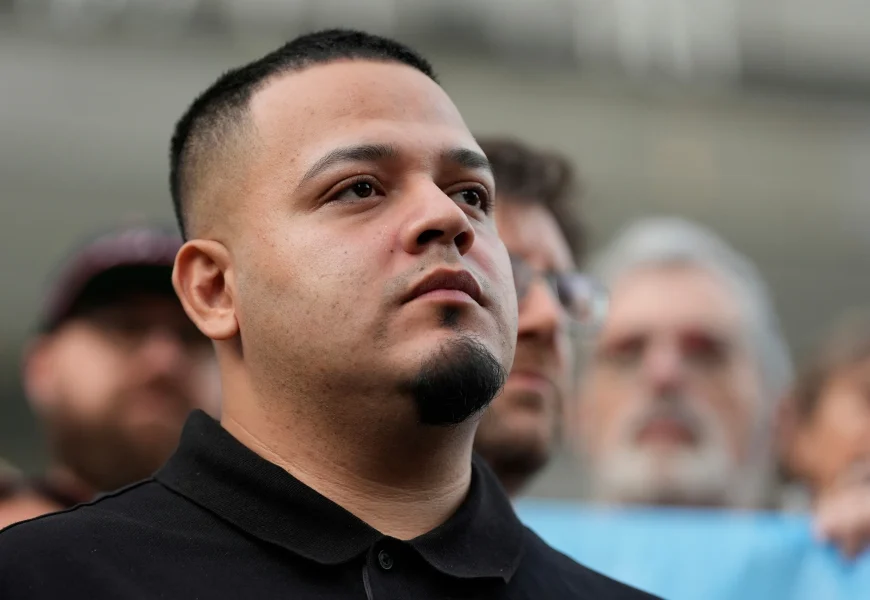
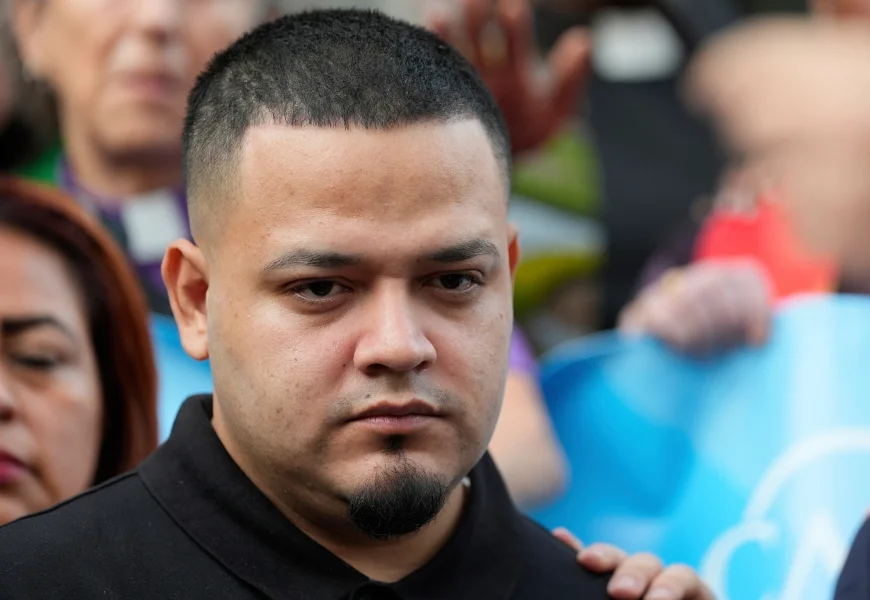
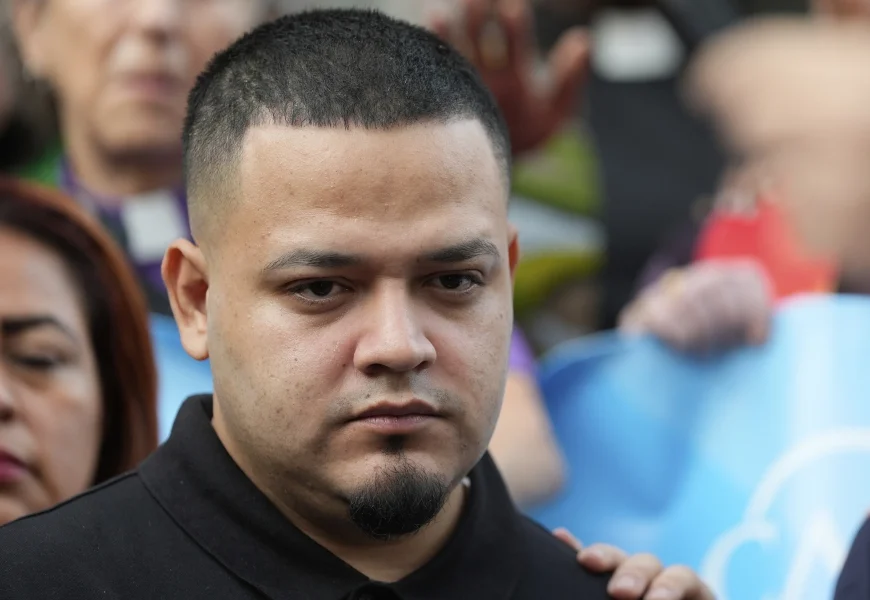
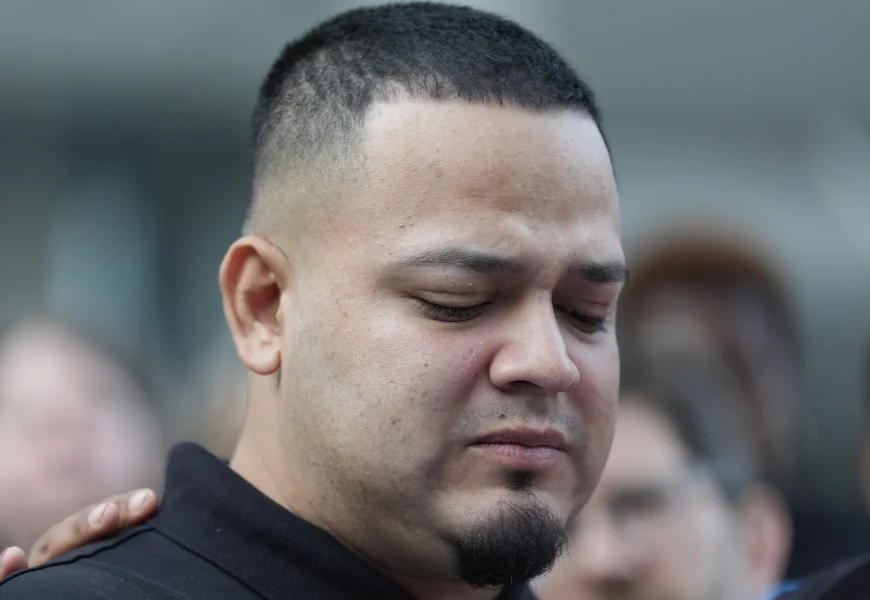
Rep. Christian Menefee started work Monday as the newest member of Congress, and has just four weeks to convince voters he deserves reelection.
The candidate Menefee defeated on Saturday, Amanda Edwards, is running again in next month's Democratic primary. So is Rep. Al Green, whose longtime home was redrawn into the 18th District. The situation is spinning heads in heavily Democratic Houston.
The 18th went nearly a year without representation after the Rep. Sylvester Turner died in March 2025. Republican Gov. Greg Abbott set an all-party primary for eight months later. That gave Republican leader Mike Johnson more time to pass House legislation with a thin GOP majority. Then, the Texas Legislature redrew congressional maps, raising concerns about disenfranchising voters in the predominantly Black and Hispanic district.
"We're not going to say they want to steal elections, but they make it very hard for the Black and brown communities to vote," voter Shampu Sibley said.
Some House Republicans have demanded that the funding package include the SAVE Act, which among other things would require Americans to prove their citizenship before voting in elections. But Rep. Anna Paulina Luna, R-Fla., appeared to drop this demand late Monday, writing on social media that she had spoken with Trump about a "pathway forward" for the voting bill in the Senate that would keep the government open.
The Brennan Center for Justice, a think tank focused on democracy and voting rights issues, said at least 21 million voters lack ready access to their passport or birth certificate.
"The SAVE Act is not about securing our elections. It is about suppressing voters," Senate Minority Leader Chuck Schumer said. Including it in the bipartisan funding bill, he said, "will lead to another prolonged Trump government shutdown."
Some Democrats are expected to vote for the final bill, but not for Tuesday's initial procedural measure setting the terms for the House debate.
Democratic leader Hakeem Jeffries has made clear that Democrats wouldn't help Republicans out of their procedural jam, even though Senate Democratic leader Chuck Schumer helped negotiate the funding bill. That's because the procedural vote covers a variety of issues most Democrats oppose.
"If they have some massive mandate," Jeffries said of Republicans, "then go pass your rule, which includes toxic bills that we don't support."
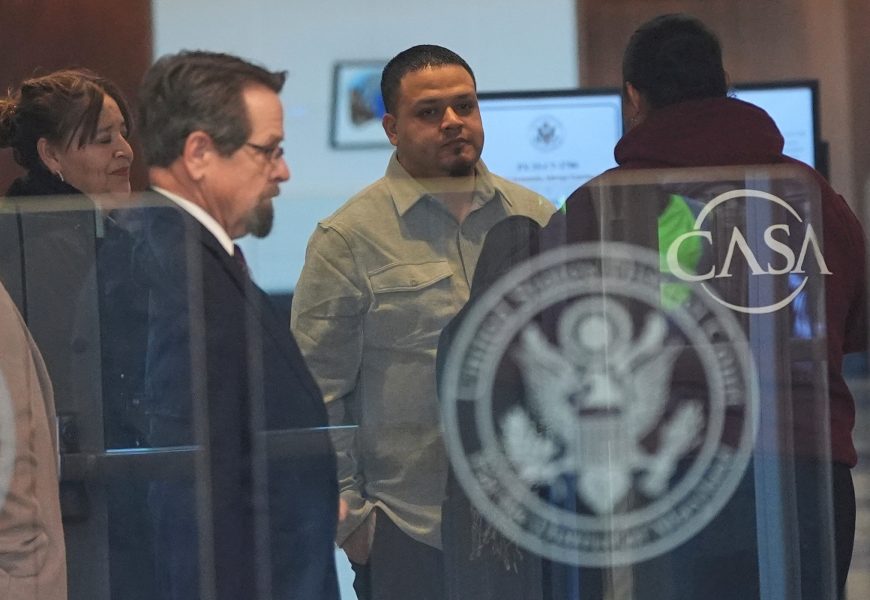
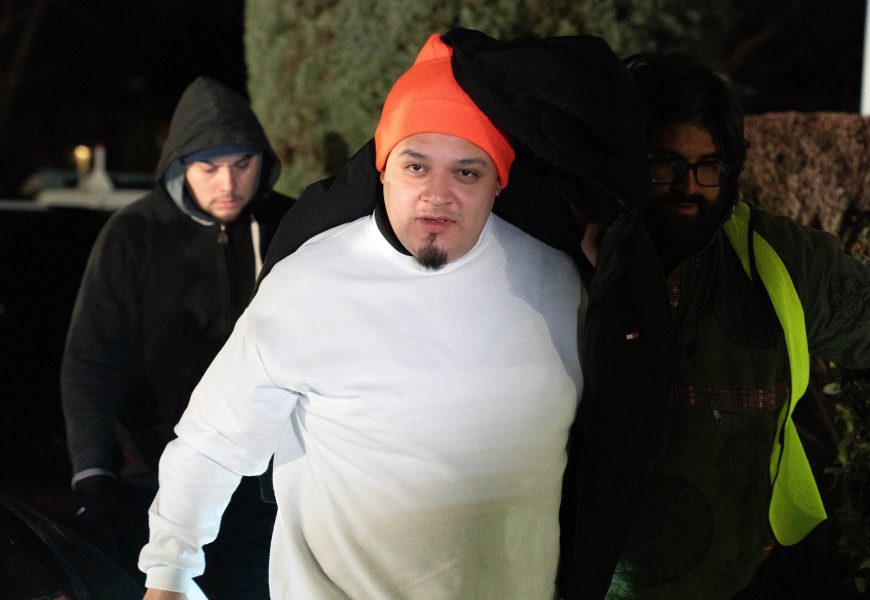
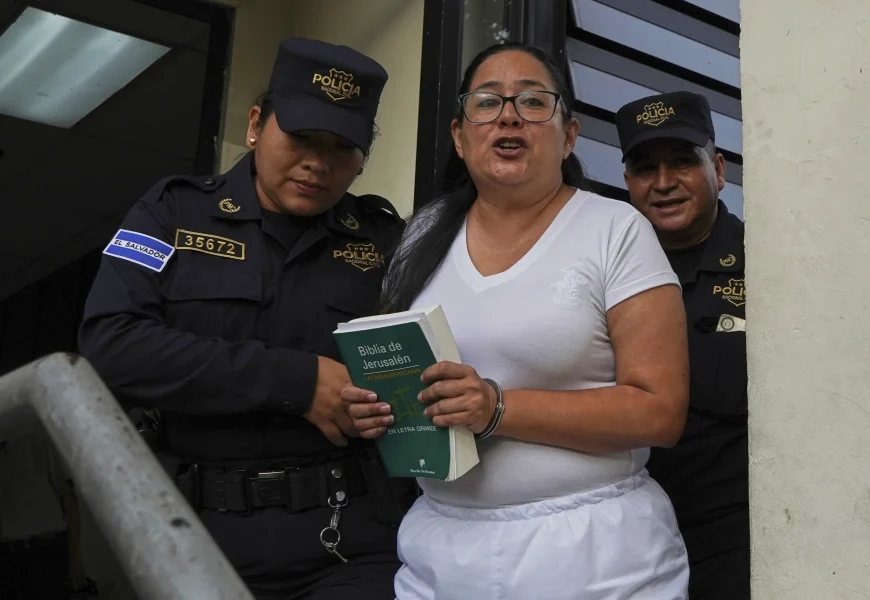
The former CNN anchor said agents handcuffed him at the elevator of his Los Angeles hotel, ignoring his offer to turn himself in to face federal civil rights charges over covering an anti-immigration enforcement protest that disrupted a Minnesota church service.
ABC late-night host Jimmy Kimmel said his Monday night guest "was arrested for committing journalism."
"I went there to be a journalist. I went there to chronicle and document and record what was happening. I was following that one group around, and so that's what I did. I reported on them," Lemon said.
Lemon said the arresting agents wouldn't let him make a phone call or talk with his lawyer, but one did agree to take his diamond bracelet, which kept getting caught in his handcuffs, up to his husband in their hotel room. "And that's how my husband found out. Otherwise, no one would have known where I was," Lemon said.
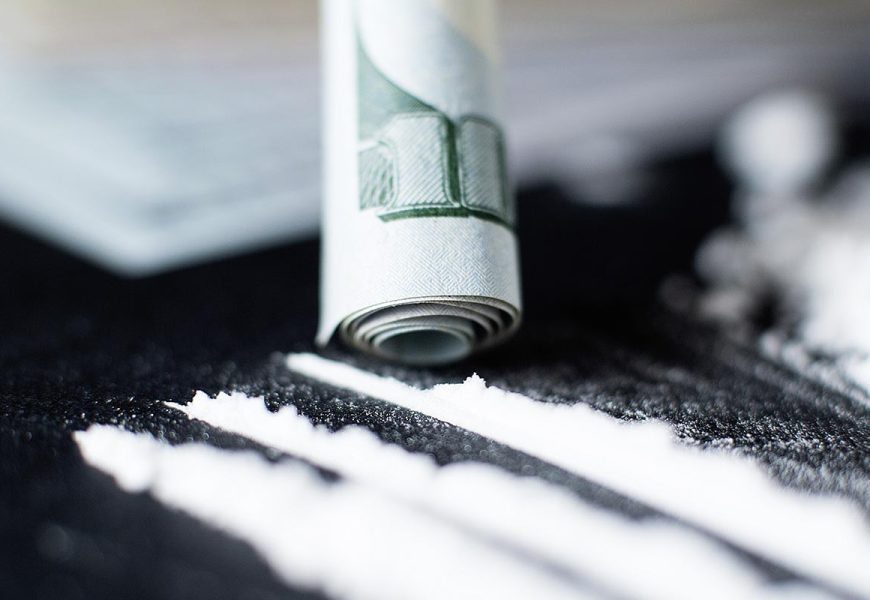
Trump is set to welcome Colombian President Gustavo Petro to the White House on Tuesday for talks only weeks after threatening military action against the South American country and accusing the leader of pumping cocaine into the United States.
U.S. administration officials say the meeting will focus on regional security cooperation and counternarcotics efforts. And Trump suggested Monday that Petro - who has criticized Trump and the U.S. operation to capture Venezuela's Nicolás Maduro - has "changed his attitude."
"Somehow after the Venezuelan raid, he became very nice," Trump told reporters.
Yet, bad blood between the leaders overshadows the sit-down. The conservative Trump and leftist Petro are ideologically far apart, but both leaders share a tendency for verbal bombast and unpredictability, setting the stage for a White House visit with an anything-could-happen vibe.
The president overnight accused Harvard University of not meeting his administration's demands and said he wants a $1 billion settlement from the school rather than the previous $500 million he sought.
On Truth Social, the president said, "Harvard has been, for a long time, behaving very badly!"
He repeated his assertions that Harvard is "Strongly Antisemitic" and said university President Alan Garber has done "a terrible job." Garber is Jewish and talks openly about his faith.
"He was hired AFTER the antisemitism charges were brought - I wonder why???" Trump wrote of the Ph.D. economist, physician and researcher who had been Harvard provost for 13 years before becoming president.
Trump's outburst came followed a New York Times report saying the president had dropped his demands that the nation's oldest and wealthiest university pay a federal fine as other elite institutions have done. Trump called the Times' reporting "a lot of nonsense."
Trump said Monday that he's "not ripping down" the Kennedy Center but insisted the performing arts venue needs to shut down for about two years for construction and other work without patrons coming and going and getting in the way.
The comments strongly suggested that he intends to gut the John F. Kennedy Center for the Performing Arts as part of the process.
Such a project would mark the Republican president's latest effort to put his stamp on a cultural institution that Congress designated as a living memorial to President Kennedy, a Democrat. It would also be in addition to attempts to leave a permanent mark on Washington through other projects, the most prominent of which is adding a ballroom to the White House.
Trump announced Sunday on social media that he intends to temporarily close the performing arts venue on July 4 for about two years "for Construction, Revitalization, and Complete Rebuilding," subject to board approval.
Bullied and buffeted by Trump's tariffs for the past year, America's longstanding allies are desperately seeking ways to shield themselves from the president's impulsive wrath.
U.S. trade partners are cutting deals among themselves - sometimes discarding old differences to do so - in a push to diversify their economies away from a newly protectionist United States. Central banks and global investors are dumping dollars and buying gold. Together, their actions could diminish U.S. influence and mean higher interest rates and prices for Americans already angry about the high cost of living.
Last summer and fall, Trump used the threat of punishing taxes on imports to strong-arm the European Union, Japan, South Korea and other trading partners into accepting lopsided trade deals and promising to make massive investments in the United States.
But a deal with Trump, they've discovered, is no deal at all.
The mercurial president repeatedly finds reasons to conjure new tariffs to impose on trading partners that thought they had already made enough concessions to satisfy him.
Former President Bill Clinton and former Secretary of State Hillary Clinton agreed late Monday to testify in a House investigation into convicted sex offender Jeffrey Epstein, but the Republican leading the probe said an agreement had not yet been finalized.
Rep. James Comer, the chair of the House Oversight Committee, continued to press for criminal contempt of Congress charges against both Clintons Monday evening for defying a congressional subpoena when attorneys for the Clintons emailed staff for the Oversight panel, saying the pair would accept Comer's demands and "will appear for depositions on mutually agreeable dates."
The attorneys requested that Comer, a Kentucky Republican, agree not to move forward with the contempt proceedings. Comer, however, said he was not immediately dropping the charges, which would carry the threat of a substantial fine and even incarceration if passed by the House and successfully prosecuted by the Department of Justice.
"We don't have anything in writing," Comer told reporters, adding that he was open to accepting the Clintons' offer but "it depends on what they say."
Speaker Mike Johnson's ability to carry out Trump's "play call" for funding the government will be put to the test Tuesday as the House holds a procedural vote on a bill to end the partial shutdown.
Johnson will need near-unanimous support from his Republican conference to proceed. He can afford to lose only one Republican on party-line votes with perfect attendance, but some lawmakers are threatening to tank the effort if their priorities are not included. Trump weighed in with a social media post, telling them "There can be NO CHANGES at this time."
The measure would end the partial government shutdown that began Saturday, funding most of the federal government through Sept. 30 and the Department of Homeland Security for two weeks as lawmakers negotiate potential changes for the agency that enforces the nation's immigration laws - United States Immigration and Customs Enforcement, or ICE.
More Top Stories