°C
°C
 4
Min
4
Min
WASHINGTON (AP) – Since the ceasefire between Iran and the U.S. was announced, leaders in President Donald Trump’s administration have been quick to say Iranian military and arms capacity have been all but wiped out during weeks of fighting.
By the numbers: US thrashed military targets in Iran, but some capabilities remain
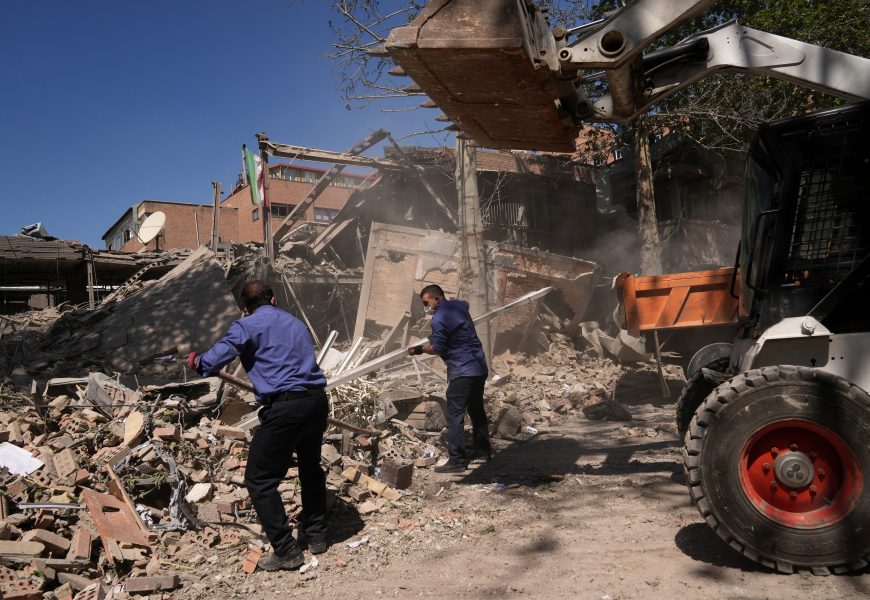

WASHINGTON (AP) - Since the ceasefire between Iran and the U.S. was announced, leaders in President Donald Trump's administration have been quick to say Iranian military and arms capacity have been all but wiped out during weeks of fighting.
But there is also an acknowledgment that Tehran retains some capabilities, whether to strike back or defend itself.
Gen. Dan Caine, chairman of the Joint Chiefs of Staff, this week said the U.S. military has hit more than 13,000 targets. He listed high percentages for attacks or destruction to Iran's air defenses, navy and weapons factories.
However, the totals stop short of Iran's military capabilities being "decimated" as the Republican president has asserted.
Independent data from Armed Conflict Location & Event Data, a U.S.-based group that tracks conflicts around the world, shows Iranian strikes persisted at a relatively steady and uninterrupted pace since the war began Feb. 28 through Wednesday.
Here's a look at what the U.S. says has been targeted, has been degraded or remains from Iran, by the numbers:
Caine told reporters Wednesday at the Pentagon that the U.S. has struck more than 1,500 air defense targets, more than 450 ballistic missile storage facilities and 800 one-way attack drone storage facilities. He said, "All of these systems are gone."
Defense Secretary Pete Hegseth similarly claimed that "Iran no longer has an air defense" and that "we own their skies" before conceding soon afterward that Iran "can still shoot - we know that."
Hegseth later elaborated, saying that while the Iranians may "have a system here or there," they no longer had an air defense "system that's capable of defending their skies."
Neither Caine nor Hegseth said what the remaining 20% of Iran's air defenses looked like or which parts of the country have the ability to carry out the sporadic fire they described.
Caine offered no new details about what kind of weapon the Iranians used to shoot down a U.S. F-15E Strike Eagle last week. It was the first time an American military jet was shot down during the war, showing Tehran's continued ability to hit back despite assertions from the Trump administration.
Trump described it on Monday as a "handheld shoulder missile, heat-seeking missile."
White House press secretary Karoline Leavitt told reporters Wednesday that the Iranian navy was "completely annihilated."
While 150 Iranian ships "are at the bottom of the ocean," Caine said, only half the paramilitary Revolutionary Guard's small attack boats - ships the government used to swarm and harass warships and merchants in the Strait of Hormuz - have been sunk.
Caine also said that after more than 700 strikes, the military believed it has destroyed more than 95% of Iran's naval mines.
Since the U.S. has not said how large Iran's stockpile was before the war, it's unknown how many naval mines make up the remaining 5%. Semiofficial news agencies in Iran published a chart Thursday suggesting the Revolutionary Guard put sea mines into the Strait of Hormuz, a crucial trade route for oil, during the war.
The message is likely designed to be a pressure tactic as Iran, Israel and the United States head into negotiations this weekend in Pakistan. Independent analysts say they have seen no change in merchant traffic through the strait since the tenuous ceasefire began this week.
Caine said Wednesday that the military "destroyed Iran's defense industrial base" while pointing to the fact that the U.S. and allies attacked "approximately 90% of their weapons factories."
He also said, "nearly 80% of Iran's nuclear industrial base was hit, further degrading their attempts to attain a nuclear weapon."
While he noted that Iran was no longer able to produce certain components like solid rocket motors, he stopped short of saying that Iran could not eventually rebuild or get weapons in other ways or that the factories attacked had actually been destroyed or rendered unusable.
Trump acknowledged this possibility when he warned countries against arming Iran.
"A Country supplying Military Weapons to Iran will be immediately tariffed, on any and all goods sold to the United States of America, 50%, effective immediately," Trump said in a social media post on Wednesday.
Meanwhile, Israel's military pointed to how many drones or missiles it has been able to stop from landing. It said it had an interception rate of more than 90% through its aerial defense systems.
Over the decades, Israel has developed a sophisticated system capable of detecting incoming fire and deploying only if a projectile is headed toward a population center or sensitive military or civilian infrastructure.
Israeli leaders say the system isn't 100% guaranteed but credit it with preventing serious damage and countless casualties.
More Top Stories