°C
°C
 16
Min
16
Min
The United States was informed about plans for an Israeli strike on Iran’s massive offshore South Pars natural gas field Wednesday but did not take part in it, according to a person familiar with the matter who was not authorized to comment publicly and spoke on condition of anonymity.
The Latest: US knew Israel would strike an Iranian gas field, AP source says
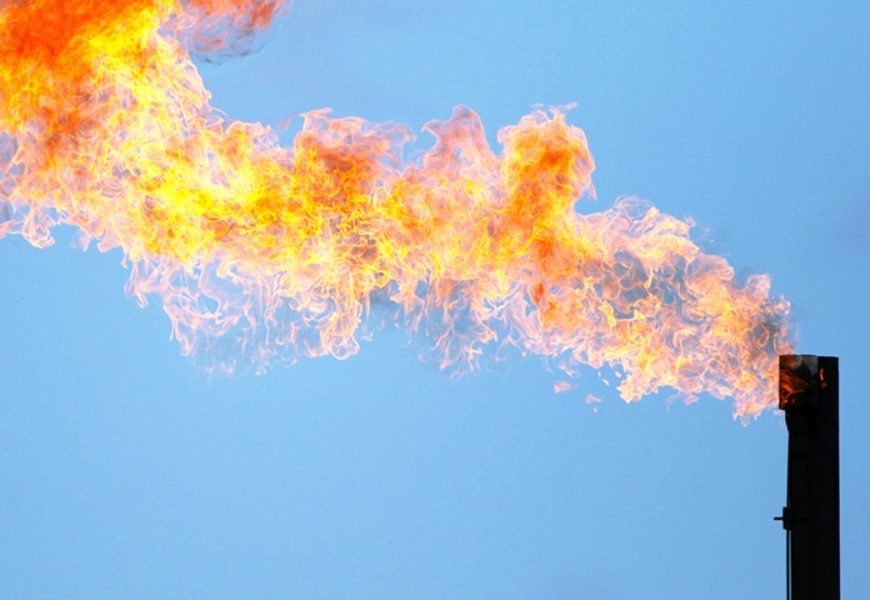
The United States was informed about plans for an Israeli strike on Iran's massive offshore South Pars natural gas field Wednesday but did not take part in it, according to a person familiar with the matter who was not authorized to comment publicly and spoke on condition of anonymity.
U.S.-Israeli war with Iran is escalating pressure on the region's energy sector, the price of oil surged another 5% to over $108 a barrel on international markets, increasing the cost of gasoline and other goods while squeezing the global economy.
Global oil prices rose on news of the Pars field attack due to fears of Iranian retaliation on Gulf energy infrastructure. Hours later, authorities in Qatar said a ballistic missile hit the country's key natural gas site, sparking a fire that caused "extensive" damage, and Qatar ordered some Iranian Embassy officials out of the country.
Iran has been striking its Persian Gulf neighbors' energy facilities since the war started on Feb. 28, and has made the Strait of Hormuz shipping channel - through which one-fifth of the world's oil travels - nearly impassable. Iran and Hezbollah have also been firing drones and missiles at Israel.
The U.S.-Israeli war with Iran has killed at least 1,300 people in Iran, more than 960 in Lebanon and 14 in Israel, according to officials in those countries. The U.S. military says 13 U.S. service members have been killed and about 200 wounded.
Here is the latest:
The United Kingdom Maritime Trade Operations center said that a vessel about 11 nautical miles east of Khawr Fakkan, in the Gulf of Oman off the United Arab Emirates' eastern coast, was hit by an "unknown projectile," igniting a fire aboard.
UKMTO issued the report early Thursday, saying authorities were still investigating the cause of the strike and that the ship's crew managed the blaze.
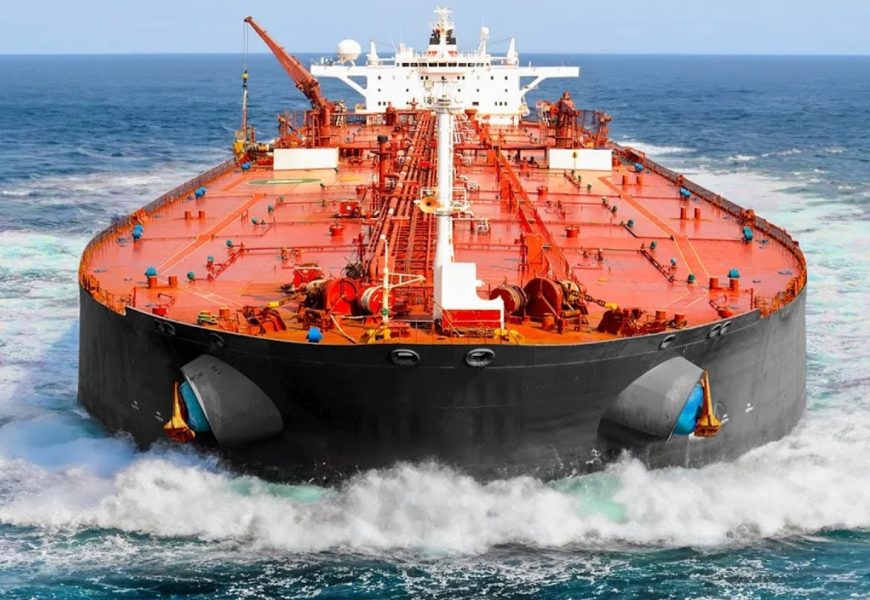
Since the Iran war started, some 20 vessels in the region have come under attack as the Iranian fire effectively halts traffic through the Strait of Hormuz, the narrow mouth of the Persian Gulf through which 20% of all oil and natural gas traded passes.
Qatari authorities issued an emergency alert on mobile phones early Thursday, warning of a possible incoming attack.
Kuwait's ministry of information said early Thursday that the the largest mosque in Kuwait City, which can accommodate thousands of worshippers for major prayers, will be closed to worshippers on Eid al‑Fitr due to the "current circumstances."
Eid al‑Fitr, a Muslim holiday that marks the end of Ramadan and is expected this year on March 19-20 typically draws tens of thousands of Muslims to pray together across Kuwait, including at the Grand Mosque.
Authorities across Gulf countries have announced that Eid prayers will be held only inside regular mosques, with no large outdoor gatherings as a precaution. The ongoing Iran war has prompted Gulf states to curb large public events and gatherings.
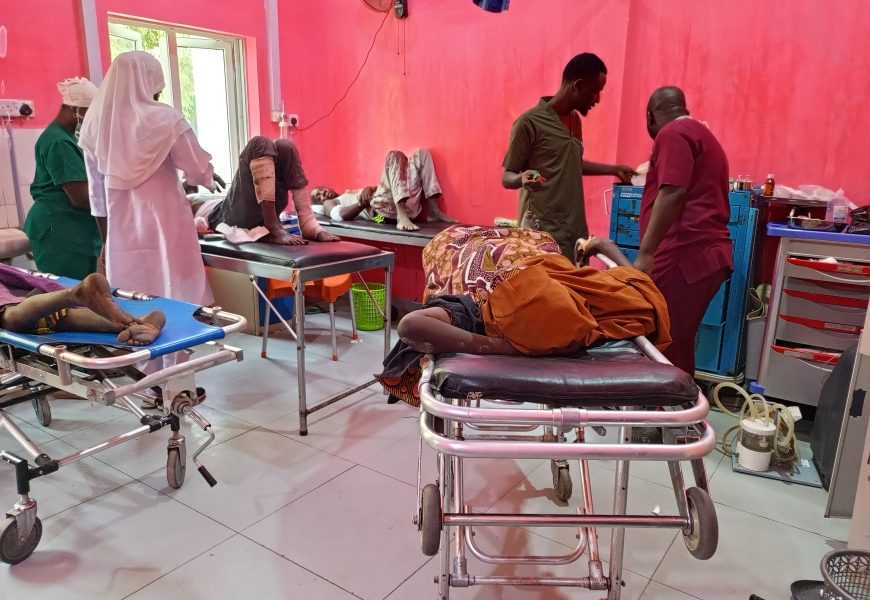
Medics and doctors were still assessing victims early Thursday morning as the Palestinian Red Crescent adjusted their toll to at least three killed and at least 13 injured. It had earlier reported four deaths.
Those injured were taken to hospitals in nearby cities, Dura and Hebron.
The group called the count preliminary and said the deaths resulted from a direct strike and "falling missile fragments."
Speaker Mike Johnson still declines to call it a war, but he acknowledged the situation in the Strait of Hormuz "is dragging it out a little bit."
The Republican who is close to Trump told AP and others at the U.S. Capitol that the president was right to ask countries who have interests in the region to help in securing the strait.
"I think it's pretty absurd that those requests were rebuffed," he said.
"I do think the original mission is virtually accomplished now: We were trying to take out the ballistic missiles and their means of production, and neuter the Navy, and those objectives have been met," he said. "As soon as we bring some calm to the situation, I think it's all but done."
Israel's Magen David Adom said early Thursday that a foreign worker in his 30s was killed by shrapnel wounds at a scene in the South Sharon region, where its paramedics responded.
Israel had said that it detected a new missile launch from Iran targeting the country late Wednesday, and that its defense systems were working to intercept the threat.
Palestinian Red Crescent said it sent five ambulances to the Hebron-area strike site, where crews treated and rushed victims to the nearest hospital and clinic. Paramedics said they faced serious delays getting there, slowed by gates the Israeli military has set up around Palestinian towns in the occupied West Bank and kept largely closed during the war.
"This forced closure caused significant delays, compelling ambulances to take long, rugged alternative routes, which critically impacted the 'golden hour' essential for life-saving interventions," the organization said in a statement.
The Israeli military told the AP that the hit in the West Bank was from an Iranian missile impacting - not shrapnel from an interception.
The Israeli military said it had been a cluster munition that was not intercepted by Israel's air defense system and crashed into a structure.
The strike killed at least four people and injured at least eight more, the Palestinian Red Crescent said. The tally of those killed or injured has increased as medics continue to assess the scene.
The Palestinian Red Crescent says first responders were treating people for shrapnel wounds in the occupied West Bank on Wednesday night as Iran fired missiles toward Israel.
It said a strike killed at least four people and injured at least six others in Beit Awa. At least two wounded survivors were transported to a hospital. Palestinian Red Crescent medics are continuing to assess the scene, and the tally of those dead or injured may change.
The fatalities were the first in the occupied West Bank during the Iran war. Missile debris has damaged homes and businesses during the first two and a half weeks.
Palestinians lack the shelter and siren system that Israelis rely on to stay safe from incoming missiles or debris from Iran or Hezbollah. It was not immediately clear if the deaths and injuries were a result of a direct strike or debris from an interception.
The USS Gerald R. Ford is heading back to the Mediterranean for repairs and resupply following a fire, a person familiar with the matter confirmed to The Associated Press.
The person, who spoke on condition of anonymity to discuss sensitive military plans, said the Navy's largest and newest aircraft carrier will pull into either the Navy's base in Crete or another port in Europe.
The carrier is currently operating in the Red Sea and its departure will mean U.S. Central Command will only have one aircraft carrier supporting operations against Iran.
Last week's fire in a laundry room rendered more than 100 beds unusable and led to about 200 sailors being assessed for smoke inhalation, according to military officials. They also said that while the fire was extinguished in a few hours, broader damage control efforts took around 30 hours.
___
- By Konstantin Toropin
The natural gas field under the Gulf is the world's largest. It's shared by Iran and Qatar, and is called South Pars on the Iranian side and the North Field on the Qatari side.
Iran is the fourth-largest consumer of natural gas in the world, and 80% of it comes from South Pars.
Although the field mainly supplies Iran's domestic needs, global oil prices rose on news of the attack due to fears of Iranian retaliation on Gulf energy infrastructure.
Qatar, which has a much smaller population than Iran, has invested billions in developing the field as a source of liquefied natural gas for export. Iran tried to develop similar LNG exports but was blocked by sanctions over its nuclear program.
The military said it was launching the strikes based on naval and military intelligence.
It was the second time since launching the war with Iran on Feb. 28 that the president has attended the solemn military ritual known as a dignified transfer, which he once described as the "toughest thing" he has had to do as commander in chief.
All six crew members of a KC-135 Air Force refueling aircraft were killed last week in a plane crash over friendly territory in western Iraq while supporting operations against Iran.
Wednesday's dignified transfer was closed to news media coverage at the request of the families in accordance with military policy. Trump spent just under two hours on the ground and didn't speak to reporters leaving Air Force One or returning to it.
Qatar's Foreign Ministry wrote on X Wednesday evening that it had declared the military and security attaches of the Iranian Embassy - as well as the staff in their offices - persona non grata.
The ministry said it had requested they leave the country within 24 hours.
The decision came after repeated Iranian targeting and acts of aggression toward Qatar, the ministry's statement said.
The city of Sidon on southern Lebanon's Mediterranean coast was crowded with freshly displaced people Wednesday after the Israeli military issued an evacuation warning a day earlier for residents of the city of Tyre, farther south on the coast, and nearby villages and Palestinian refugee camps.
The Lebanese University campus in Sidon opened its doors to people displaced from the Tyre district, initially without any supplies.
"Unfortunately, we had to accommodate them without mattresses or blankets" at first, said Saad Ghazzawi, a shelter organizer.
Batoul Shamseddine, who fled the Tyre area, said after receiving the warning, "we immediately packed whatever we could and ran out to the street. ... We found people everywhere out in the streets, everything was in chaos, like the Day of Judgment."
More than 1 million people have been displaced in Lebanon by the renewed war between Israel and Hezbollah.
The foreign ministry said it stood in solidarity with Saudi Arabia, Qatar and the United Arab Emirates and condemned attacks on their oil and gas facilities. It also condemned a reported Israeli attack on Iran's natural gas field as "a dangerous escalation" and "a flagrant violation of international law."
The Saudi Civil Defense agency said the four were hurt when shrapnel fell on a residential area in Riyadh, causing limited damage. It said they were not Saudi citizens but did not provide their nationalities.
The agency warned that attacking civilian sites was a "flagrant violation of international humanitarian law."
Ras Laffan Industrial City is the largest liquefied natural gas export facility in the world, according to the website of QatarEnergy, the state-owned oil and gas company.
On X, Qatar's Foreign Ministry condemned the attack and said it marked a dangerous escalation. The ministry wrote that Qatar would not hesitate to respond to attacks on its security and sovereignty.
The Qatari Foreign Ministry made the statement on X. The Ministry of Defense, also on X, said the fire broke out when a ballistic missile from Iran hit the facility.
The state-owned oil and gas company, QatarEnergy, said the fire had caused "extensive" damage.
Iran launched five ballistic missiles toward Qatar on Wednesday, the defense ministry said, and the country's military intercepted all of them except the one that fell at Ras Laffan.
The United States was informed about Israel's plans to strike Iran's massive South Pars natural gas field, but did not take part in it, according to a person familiar with the matter.
The person, who was not authorized to comment publicly and spoke on condition of anonymity, would not say if the U.S. administration agreed with the Israeli decision to attack the gas field - part of the world's largest such resource and a pillar of Iran's energy supplies.
___
- By Aamer Madhani
Sayyed Ragheb was already struggling to keep his family afloat, earning less than $100 a month. Now he fears it will get even worse after Egypt hiked fuel prices because of the Iran war.
Egypt is one of the few countries in the Middle East not directly affected by the war, now in its third week with no sign of abating. It's not part of the U.S.-Israeli campaign against Iran, and it hasn't been targeted by Iranian missile and drone fire, like Arab Gulf nations, or by Israeli bombardment, like Lebanon.
But the nation of more than 108 million people is feeling the conflict's repercussions. Soaring energy prices forced the government to implement a steep hike in the prices of subsidized fuel and cooking gas.
That's having a domino effect on the prices of other goods and services in Egypt's struggling economy. Moreover, it comes during the Muslim holy month of Ramadan, when families traditionally hold large dinner gatherings, and ahead of the holiday of Eid al-Fitr, a major shopping season when people buy new clothes, especially for children.
Masoud Pezeshkian's statement on X said such attacks would not help Israel and the United States.
"This will complicate the situation and could have uncontrollable consequences, the scope of which could engulf the entire world," he wrote.
Cypriot President Nikos Christodoulides said in Brussels on Wednesday that he's conveyed the offer to both Lebanese President Joseph Aoun and Israeli Prime Minister Benjamin Netanyahu.
EU-member Cyprus enjoys close relations with both countries.
Assistant Secretary-General for Humanitarian Affairs Joyce Msuya warned the U.N. Security Council Wednesday that "The longer hostilities persist in the region, the greater the risks for Syria and its people."
U.N. Deputy Special Envoy for Syria Claudio Cordone said Israeli helicopter and drone operations in Syria have increased, and the country has also seen debris crashing from intercepted Iranian missiles and drones as well as one incident of shelling from neighboring Lebanon attributed to Hezbollah.
"Israeli airstrikes on Lebanon have claimed both Lebanese and Syrian lives, and resulted in approximately 140,000 persons, mostly Syrians, crossing into Syria seeking safety," Cordone said.
In addition to the military spillover, Msuya said , disruptions to shipping and rising prices for fuel, fertilizer and other essential items "could deal a serious blow to Syria's already fragile economy - just as it begins to recover and reconnect with the world after years of conflict and isolation."
Cordone said the conflict has already affected cross-border trade and forced Syrian authorities to reduce electricity supplies.
However, Fed policymakers still expect to cut their key rate once in 2026.
For now, they left short-term interest rates unchanged for the second straight meeting at about 3.6%. In a statement Wednesday, the central bank said that the "implications of developments in the Middle East for the U.S. economy are uncertain."
Still, by keeping their forecast for a rate cut this year and next - the same projections that they made in December - central bank policymakers appear to expect the gas price spike from the Iran war to have a largely temporary effect on inflation and the economy. Policymakers also foresee unemployment remaining unchanged by the end of this year, a more optimistic outlook than most outside economists.
Whether that turns out to be true will largely depend on the length of the conflict. The officials expect inflation to fall back to 2.2% in 2027 and hit the Fed's 2% target in 2028.
Fed officials now expect that inflation will be 2.7% at the end of this year, up from their December forecast but slightly below the 2.8% it reached in January. They expect core inflation, which excludes the volatile food and energy categories, to also finish the year at 2.7%, up from a previous forecast of 2.5%. The Fed considers core prices a better measure of longer-run inflation. Consumer prices will spike higher in the coming months as gas prices have soared, but those increases could unwind by the end of the year, particularly if the conflict ends soon.
Debris from the interceptions fell across several areas of the city, the Defense Ministry said, with no immediate reports of casualties or damage.
It's an attempt to blunt the impact of rising oil prices on the country's treasury, as energy is partially subsidized in Egypt, Prime Minister Mostafa Madbouly told reporters Wednesday. The rule takes effect March 28.
Also, all Cabinet headquarters buildings will switch off their electricity after 6 p.m. starting next week, he said.
Egypt is not directly affected by the war, however the country is a net energy importer and is bracing for new inflationary waves as oil prices rise.
A hole ripped through the ceiling, a kitchen with collapsing shelves and a balcony with patio furniture covered in debris.
This was the state of an apartment in central Israel Wednesday, where a cluster munition fired by Iran had killed an older couple the night before.
"That cluster bomb separated to dozens of smaller rockets and spread out on kilometers in the center of Israel," said military spokesperson Lt. Col. Nadav Shoshani, speaking to journalists at the scene.
The barrage of missiles Iran launched toward Israel overnight was in retaliation for Israel's killing of Ali Larijani, secretary of Iran's Supreme National Security Council and one of the country's most powerful figures, the paramilitary Revolutionary Guard said Wednesday.
Besides filling up their tanks, drivers will be able to buy only a 10-liter (6.2-gallon) container. The government set the maximum price of one purchase at 400 euros ($460).
At the same time, drivers of cars registered in Slovakia will pay a different price than foreigners. The Finance Ministry has yet to set the price. The measure will be initially effective for 30 days.
Israeli Defense Minister Israel Katz claimed Hezbollah was using the bridges over the Litani River to move fighters and smuggle weapons.
Wednesday's strikes come as the Israeli military has sent more ground forces to the border with Lebanon.
Last week, Israeli strikes cut major roads and bridges in southern Lebanon, and Israel's hard-line finance minister has threatened to make Beirut's southern suburbs look like Gaza. The World Bank estimated the previous Israel-Hezbollah war cost Lebanon $6.8 billion in damage to physical structures.
Ayatollah Mojtaba Khamenei's written statement was published in Iranian media on Wednesday, a day after Israel said it killed Iran's top security official.
"Undoubtedly, the assassination of such a person shows the extent of his importance and the hatred of the enemies of Islam toward him," he wrote. "All blood has its price that the criminal murderers of the martyrs must pay soon."
This is only the second statement issued in Khamenei's name since he became supreme leader to replace his father, who was killed at the start of the war. Israeli and U.S. officials believe the younger Khamenei was wounded in that initial wave of attacks on Iran.
More Top Stories