°C
°C
 16
Min
16
Min
The director of the U.S. National Counterterrorism Center, Joe Kent, resigned on Tuesday, saying he ” cannot in good conscience” back the Trump administration’s war in Iran. Kent posted that Iran “posed no imminent threat to our nation, and it is clear that we started this war due to pressure from Israel and its powerful American lobby.”
The Latest: Top US counterterrorism official Joe Kent resigns over Iran war
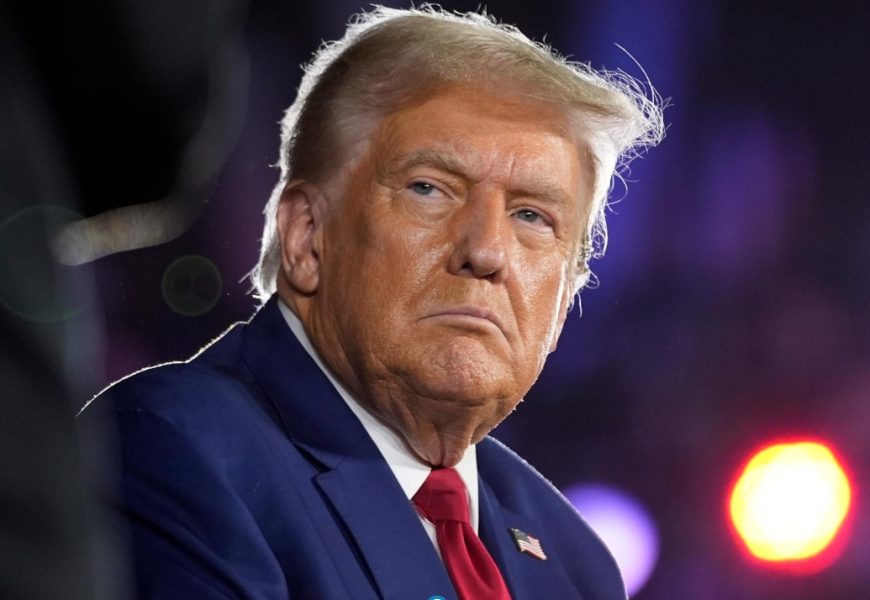
President Donald Trump's national counterterrorism director resigned on Tuesday, saying he " cannot in good conscience" back the Trump administration's war in Iran. Joe Kent posted that Iran "posed no imminent threat to our nation, and it is clear that we started this war due to pressure from Israel and its powerful American lobby." Trump welcomed Kent's departure, saying "We don't want those people."
Earlier Tuesday, Israel's defense minister said the Israeli military killed top Iranian security official Ali Larijani in an overnight strike. The Israeli military also announced it killed Gholam Reza Soleimani, the head of the Revolutionary Guard's all-volunteer Basij force. Iran did not confirm the deaths.
Israel also moved deeper into Lebanon as Gulf Arab nations came under renewed missile and drone fire Tuesday from Iran, which has been targeting regional oil infrastructure and vowed not to relinquish its stranglehold on the strategic Strait of Hormuz. Israel also launched new strikes on Iran and Lebanon.
The war has killed at least 1,300 people in Iran, more than 880 in Lebanon and 12 in Israel, according to officials in those countries. The U.S. military says 13 U.S. service members have been killed and about 200 wounded.
Here is the latest:
The State Department has reached out to numerous countries seeking their support in isolating Iran by designating the Islamic Revolutionary Guard Corps and Hezbollah as terrorist organizations even though Trump says the U.S. doesn't need military help.
A cable sent to all U.S. diplomatic missions on Monday told American diplomats in countries that have not yet made such designations to urge them to act quickly to do so.
"Such designations will intensify the pressure on the Iranian regime and limit its ability to sponsor terror activities across the globe that jeopardize the safety and security of your populations," the cable advised U.S. diplomats to tell their host governments.
"We assess that the Iranian regime is more sensitive to collective action than unilateral actions and that joint pressure is more likely to compel change by the regime than unilateral actions alone," said the cable, a copy of which was obtained by The Associated Press.
The images give a glimpse into the toll, with ships ablaze in an Iranian port and destroyed buildings at an American base.
Such information has been scarce, particularly from inside closed military facilities. These images come from Planet Labs PBC, a San Francisco-based firm used by media outlets including The Associated Press. Planet Labs imposed a two-week delay to avoid having its imagery used by "adversarial actors."
High-resolution images also have been published by competing firms, and providers including the U.S. Geological Survey have been publishing lower-resolution imagery.
The U.S. and Israel have been striking a wide variety of targets, including leadership figures, military bases, missile and air defense sites and positions of the paramilitary Revolutionary Guard and its volunteer force, the Basij. Iran has responded with drone and missile fire targeting Israel and nearby Gulf Arab nations.
Two drones were shot down by the defense system at the U.S. Embassy in Baghdad on Tuesday, while a third drone crashed inside the embassy compound, two Iraqi security officials said. They spoke on condition of anonymity because they were not authorized to comment.
An AP journalist in the area saw a massive fire that appeared to be engulfing a structure in the compound.
There was no immediate statement from the embassy.
U.S. facilities in Iraq have frequently come under attack by Iran or Iran-backed Iraqi militias since the U.S. and Israel attacked Iran, triggering the ongoing war in the Middle East.
State television is showing crowds of women wrapped in black and older men waving flags and portraits of the killed supreme leader, Ayatollah Ali Khamenei.
State media has also been warning Iranians to refrain from taking to the streets for Tuesday night's Fire Festival that marks the end of the Persian year, warning that the normally rowdy celebrations could be used by "rioters."
Iran has also stepped up security forces' presence on the capital's streets amid the war and warned against any anti-government protests.
Foreign Minister Hakan Fidan described "Israel's political assassinations" of top Iranian officials as unlawful and illegal, saying: "They must come to an end as soon as possible." He spoke hours after Israeli Prime Minister Benjamin Netanyahu said the killings were aimed at weakening Iran's government. Fidan said he would embark on a visit to regional countries to "discuss steps that can be taken to stop the war."
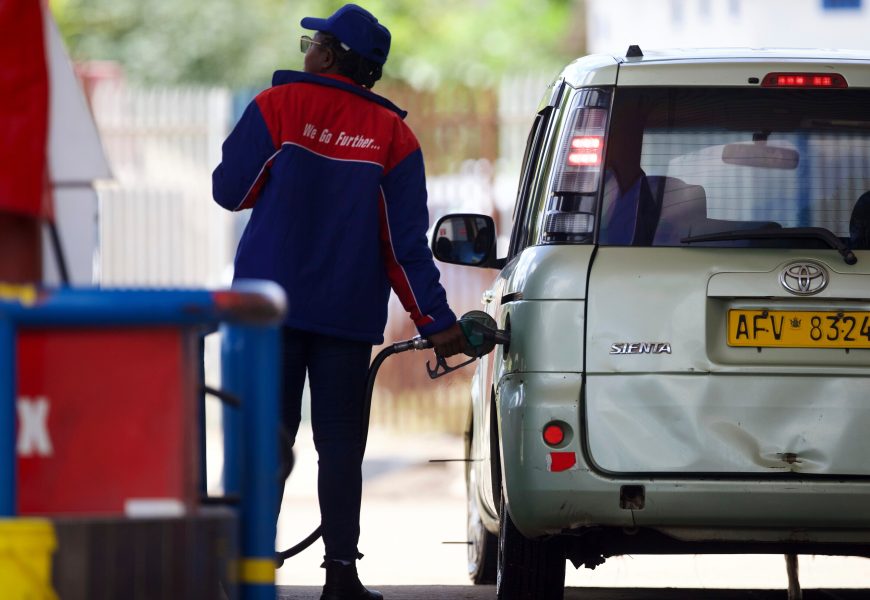
The escalating war with Iran is pushing parts of the world into energy triage, forcing governments to choose where to cut demand or absorb costs while prioritizing dwindling supplies.
Asia is the most exposed since it relies heavily on imported fuel, much of it shipped through the now-blocked Strait of Hormuz.
Governments in the region are scrambling to adjust - tallying oil reserves, conserving energy, competing for supplies and trying to blunt prices. That brings difficult trade-offs: Saving power may slow business activity. Prioritizing cooking gas for households can hurt restaurants and other businesses.
Analysts warn the same hard choices could soon spread beyond Asia to fuel-importing economies in Africa and elsewhere as countries compete for scarce supplies.
The trip to China had been planned for months but began to unravel as he pressured Beijing and other world powers to use military might to protect the Strait of Hormuz.
Trump said Tuesday while meeting with Irish Prime Minister Micheál Martin in the Oval Office that he would be going to China in five or six weeks' time instead of at the end of the month. He said he would be "resetting" his visit with Chinese President Xi Jinping, without elaborating.
Soon after pressing China and other nations to send warships to secure access to Middle Eastern oil over the weekend, Trump indicated his travel plans were up in the air, though he also indicated Tuesday that the U.S. didn't need any help after being rebuffed by other allies.
Trump complained about NATO's refusal to join the U.S. in the war, calling the decision "disappointing" and bad for the "partnership."
He floated the idea of having the U.S. withdraw from the alliance as a result. "It's certainly something that we should think about. I don't need Congress for that decision," Trump said, adding: "I have nothing currently in mind but I'm not exactly thrilled."
NATO exists as a defensive alliance, not an offensive one, and has said it has no plans to get involved in the U.S.-led war with Iran. However, NATO troops did deploy for 18 years to Afghanistan and its 2011 air campaign helped topple Libyan leader Moammar Gadhafi.
Speaking at the White House on Tuesday, the president said two top Iranian officials were killed, including one he said was responsible for the deaths of 32,000 Iranian protesters in recent weeks.
"Their leaders are gone," Trump said. "It's an evil group."
He made the comments after Israel said its overnight strikes killed Ali Larijani, secretary of Iran's Supreme National Security Council, and Gen. Gholam Reza Soleimani, the head of the Revolutionary Guard's all-volunteer Basij force. Iran did not immediately confirm either death.
The president said Joe Kent was a "nice guy" but "I always thought" he was "very weak on security."
Trump said that Kent leaving his post was "a good thing" since he disagreed with Kent's assessment on the threat from Iran. "We don't want those people," he said.
The vessel-tracker MarineTraffic said Tuesday that the ships included eight bulk vessels, five tankers and two liquified petroleum gas carriers.
Iran has nearly halted traffic through the narrow Strait of Hormuz, where a fifth of the world's oil typically sails from the Persian Gulf to customers worldwide.
The European Union's top diplomat says the 27-nation bloc bloc rejects Trump's demand to send warships to the Straits of Hormuz.
"This is not Europe's war. We didn't start the war. We were not consulted," EU foreign policy chief Kaja Kallas told lawmakers on Tuesday, a day after chairing talks among the member countries about Trump's warship demand.
"We don't know what are the objectives of this war," Kallas said. "The member states do not have the wish to be dragged into this."
In a lengthy statement on X, White House press secretary Karoline Leavitt aggressively disputed Kent's argument that Iran did not pose an imminent threat.
"As President Trump has clearly and explicitly stated, he had strong and compelling evidence that Iran was going to attack the United States first," Leavitt said. "This evidence was compiled from many sources and factors. President Trump would never make the decision to deploy military assets against a foreign adversary in a vacuum."
As for the allegation that Trump acted against Iran under the influence from Israel, Leavitt called it "both insulting and laughable."
Days after launching the war, Trump administration officials told congressional staff in private briefings that U.S. intelligence did not suggest Iran was preparing to launch a preemptive strike against the U.S.
Israel's military has ramped up operations near the Lebanon-Israel border since Hezbollah began firing rockets southward in the early days of the Iran war.
Although Israel has maintained a presence and carried out strikes in the area since a 2024 ceasefire, in recent weeks it has deployed tanks and intensified strikes it says are aimed at neutralizing the Iran‑backed Lebanese militant group, in what it has called a "limited and targeted operation"
The fighting has displaced more than 1 million people in Lebanon and killed at least 886, according to Lebanese authorities. In northern Israel, residents have endured a steady stream of Hezbollah rocket fire from Hezbollah, sowing destruction and closing businesses already crunched by years of conflict.
French President Emmanuel Macron said his country is ready to help secure the Strait of Hormuz, but only as part of a mission separate from the current Middle East war.
"We are not a party to the conflict, and therefore France will never take part in operations to reopen or liberate the Strait of Hormuz," Macron said, responding to Trump's call for European nations to send warships to the Persian Gulf.
Speaking ahead of a security meeting at the Elysee presidential palace, he stressed any mission would require "discussions and de-escalation with Iran" and must be "entirely separate from the ongoing military operations and bombings."
The Republican leader insisted the military operation against Iran would be winding down quickly.
But Johnson, who is close to Trump, said at a press conference at the U.S. Capitol that securing the strait remains an issue.
"We ask our allies to step up and acknowledge that reality, and help us out," Johnson said.
He dismissed concerns being raised that Trump administration officials have failed to appear for public hearings in Congress to explain their war strategy, saying members of Congress have had adequate access to private classified briefings.
Trump, who has been pressing allies to help safeguard the critical waterway, fumed that the U.S. is not getting support "despite the fact that almost every Country strongly agreed with what we are doing, and that Iran cannot" be allowed to secure a nuclear weapon.
"I am not surprised by their action, however, because I always considered NATO, where we spend Hundreds of Billions of Dollars per year protecting these same Countries, to be a one way street," Trump added in a post on social media. "We will protect them, but they will do nothing for us, in particular, in a time of need."
The number of people killed by Israeli strikes in Lebanon since the outbreak of the new Israel-Hezbollah war two weeks ago has risen to 912, Lebanon's Health Ministry said Tuesday. That's up from 886 killed as of Monday.
The death toll includes 111 children and 67 women. More than one million people have been displaced in Lebanon by the conflict.
The Iran-backed Lebanese militant group Hezbollah launched missiles across the border into Israel on March 2, two days after the U.S. and Israel attacked Iran, triggering the widening war in the Middle East.
Republican House Speaker Mike Johnson is taking issue with Joe Kent, who said Iran posed no imminent threat to the U.S.
"I got all the briefings. We all understood that there was clearly an imminent threat that Iran was very close to the enrichment of nuclear capability and they were building missiles at a pace no one in the region could keep up with," said Johnson, who was asked about Kent's resignation at a press conference Tuesday morning.
Johnson said he is convinced that if the president had waited "we would have mass casualties of Americans, service members and others, and our installation would have been dramatically damaged."
Days after launching the war, Trump administration officials told congressional staff in private briefings that U.S. intelligence did not suggest Iran was preparing to launch a preemptive strike against the U.S.
Iran's northern resort towns host thousands of families each year for the holiday. But now, many who regularly vacation near the Caspian Sea are there seeking respite from heavy bombardment in Tehran.
"This year has been a terrible year for all Iranians," a 23-year-old university student who headed north with his family told The Associated Press.
Speaking on condition of anonymity out of security fears, the student described a national "trauma," with the war following the shootings of thousands of anti-government protesters in January. "Prices are destroying us," the student added, calling the soaring inflation "backbreaking." Even before the war, Iran's economy had been crippled by international sanctions.
The U.N. refugee agency says hundreds of thousands of Iranian households have been displaced during the war, with most fleeing north or into rural areas to escape intense strikes on major cities.
- By Amir-Hussein Radjy in Cairo.
More than three decades after Lindsey Graham first arrived in Washington, he has everything he could ever want. The senator from South Carolina has Trump's ear, a war in Iran and a well-funded path to reelection.
Now it's just a question of what those things will cost the Republican Party - and the rest of the United States - in this election year when control of Congress hangs in the balance. The conflict is already deeply unpopular with no clear endgame, as oil prices rise and fighting spreads throughout the Middle East.
But Graham, now running for a fifth term, defended pushing the U.S. toward war. "We haven't underestimated Iran at all," he said. "We're crushing them."
Iran began airing footage of Tuesday's pro-government demonstrations on state television, which include images of some men in plainclothes branding assault rifles and shotguns on the back of motorcycles - a rarity in such demonstrations and a sign of the government wanting to warn any protesters off the streets.
"Chaharshanbe Souri," or the Festival of Fire in Iran, is to be marked on Tuesday night. There had been some fears from authorities any gathering could spark new protests against the theocracy.
Joe Kent, Director of the U.S. National Counterterrorism Center, has resigned from the Trump administration.
Kent said he "cannot in good conscience" back Trump's war in Iran.
Iran "posed no imminent threat to our nation, and it is clear that we started this war due to pressure from Israel and its powerful American lobby," Kent posted on social media Tuesday.
Before entering Trump's administration, Kent ran two unsuccessful campaigns for Congress in Washington state. He also served in the military, seeing 11 deployments as a Green Beret, followed by work at the CIA.
Democrats strongly opposed Kent's confirmation, pointing to his past promotion of conspiracy theories and ties to far-right figures including Graham Jorgensen, a member of the far-right military group the Proud Boys, and Joey Gibson, the founder of the Christian nationalist group Patriot Prayer. Democrats also grilled Kent on his participation in a group chat on Signal that was used by Trump's national security team to discuss sensitive military plans.
The food charity founded by celebrity chef José Andrés has 10 kitchens in different parts of Lebanon offering about 25,000 meals a day.
Since the latest Israel-Hezbollah war began on March 2, more than 1 million people, or about 20% of the country's population, have been displaced.
The war this year comes during the Muslim holy month of Ramadan when observant Muslims abstain from eating and drinking from before sunrise until sunset.
World Central Kitchen is providing iftar, or fast-breaking meals, that displaced people staying in schools or shelters can have after sunset.
"We are not only giving food. We are giving people hope and a smile," World Central Kitchen member Aline Kamakian told The Associated Press Tuesday.
Iranian hard-liners planned demonstrations late Tuesday afternoon in squares across the country, likely to counter any possible unrest as the country was set to celebrate its ancient fire festival.
The demonstrations were called to confront Israel and other enemies. Witnesses said in the Iranian capital, Tehran, there was a heavy security force presence around the Grand Bazaar, including heavy, truck-mounted machine guns being deployed.
"Chaharshanbe Souri," or the Festival of Fire in Iran, is to be marked on Tuesday night. The festival comes just days before Nowruz, the Persian New Year, which starts Friday evening. There had been some fears from authorities any gathering could spark new protests against the theocracy.
In a statement announcing the killings of Larijani and Soleimani, the Israeli leader said the attacks were aimed at weakening the government.
"We are undermining this regime to give the Iranian people the opportunity to remove it. It won't happen quickly or easily, but if we persist, they will have the chance to take their destiny into their own hands," he said.
Humanitarian groups are bracing for crisis as the U.S.-Israeli war against Iran and its proxies displace millions across the Middle East, said International Organization for Migration Brussels director Lukas Gehrke.
In Lebanon, more than a million people are displaced, and about 100,000 people, mostly Syrians, have fled into Syria, where the IOM is expects 250,000 refugees might soon need food and medicine, he said.
Inside Iran, Gehrke said fighting has damaged about 55,000 civilian structures including 30,000 homes, pushing people to shelter within Iran, with IOM tracking more than half a million cars headed north. Meanwhile the war has disrupted global supply chains, and funding cuts have hit aid agencies hard.
"We need to keep in mind how far we can go with the available funds," Gehrke said. "It's certainly a big test for everybody."
The World Food Program says the Middle East conflict is upending its supply chains like rarely before and could push 45 million more people into acute hunger if the war lasts through June. That would be up from 319 million today.
"This would take global hunger levels to an all-time record. And it's a terrible, terrible prospect," WFP deputy executive director Carl Skau told a U.N. briefing in Geneva.
Spiking food and fuel costs could price millions of families out of stable access to foods, especially in sub-Saharan Africa and Asia. As a result, he said the WFP could be "on the brink of the most severe disruption since Covid and the Ukraine war back in 2022."
More Top Stories