°C
°C
 3
Min
3
Min
TALLINN, Estonia (AP) – Belarus’ authoritarian President Alexander Lukashenko on Thursday ordered the release of 250 political prisoners as part of a deal with Washington that lifted some U.S. sanctions, the latest step in the isolated leader’s effort to improve ties with the West.
Belarus releases 250 political prisoners in a deal with the US to lift some sanctions
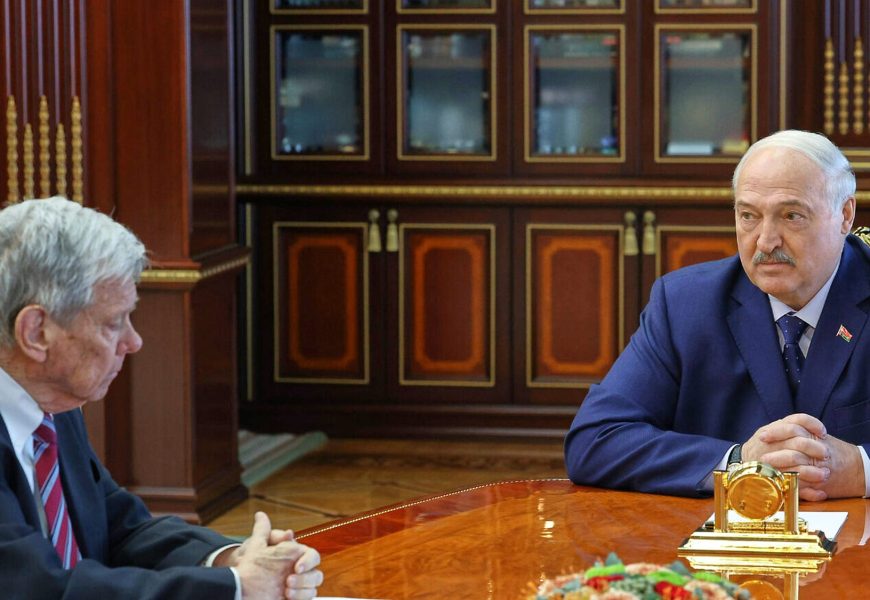
TALLINN, Estonia (AP) - Belarus' authoritarian President Alexander Lukashenko on Thursday ordered the release of 250 political prisoners as part of a deal with Washington that lifted some U.S. sanctions, the latest step in the isolated leader's effort to improve ties with the West.
Lukashenko pardoned the prisoners after meeting with U.S. President Donald Trump's special envoy for Belarus, John Coale, in the Belarus capital of Minsk. Coale hailed the release as a "significant humanitarian milestone" and a testament to Trump's "commitment to direct, hard-nosed diplomacy." It marked the largest one-time release of political prisoners in the country.
Coale told reporters that the U.S. will lift sanctions from two Belarusian state banks and the country's Finance Ministry, and that the top Belarusian potash producers have been removed from a sanctions list.
Belarus' opposition leader-in-exile, Sviatlana Tsikhanouskaya, hailed the prisoners' release as "a moment of great relief and hope."
"After years of isolation, people are now free and can finally embrace their loved ones," Tsikhanouskaya told The Associated Press. "There is nothing more powerful than seeing someone who endured unjust imprisonment reunited with their family."
She thanked Trump and his officials for their "tireless efforts to secure the release of political prisoners," adding that "these humanitarian efforts are saving lives."
The last time U.S. officials met with Lukashenko, in December, Washington announced the easing of sanctions on Belarus' potash sector, and 123 prisoners were released and sent to Ukraine and Lithuania.
A close ally of Russia, Minsk has faced isolation for years. Lukashenko has ruled the nation of 9.5 million with an iron fist for more than three decades, and the country has been sanctioned repeatedly by Western countries - both for its crackdown on human rights and for allowing Moscow to use its territory in the full-scale invasion of Ukraine in 2022.
Lukashenko's rule was challenged after a 2020 presidential election, when tens of thousands poured into the streets to protest a vote they viewed as rigged. They were the largest demonstrations since Belarus became independent following the 1991 collapse of the Soviet Union.
In an ensuing crackdown, tens of thousands were detained, with many beaten by police. Prominent opposition figures either fled the country or were imprisoned.
Five years after the mass demonstrations, Lukashenko won a seventh term last year in an election that the opposition called a farce.
More recently, Belarus has freed some political prisoners to try to win favor with the West. Since Trump returned to the White House last year, Lukashenko has released dozens of prisoners, including Nobel Peace Prize laureate Ales Bialiatski and key dissident figures Siarhei Tsikhanouski, Viktar Babaryka and Maria Kolesnikova.
Trump spoke to Lukashenko by phone in August 2025 after one such release and even suggested a face-to-face meeting in what would be a big victory for the Belarusian leader, who has been dubbed "Europe's Last Dictator."
Just before the latest announcement of releases, the prominent Belarus human rights group Viasna had estimated that there were more than 1,100 political prisoners in the country.
Tsikhanouskaya emphasized that "many people are still behind bars" and "our goal remains unchanged - to free them all and to put a final end to repression, so that every Belarusian can live freely in their own country."
More Top Stories