°C
°C
 6
Min
6
Min
KABUL, Afghanistan (AP) – Rescuers recovered more bodies from the rubble of a drug rehabilitation hospital in Kabul on Tuesday after officials said an overnight airstrike killed more than 400 people in a dramatic escalation of a conflict between Pakistan and Afghanistan that is now in its third week.
Afghanistan says more than 400 dead in Pakistan airstrike on Kabul hospital
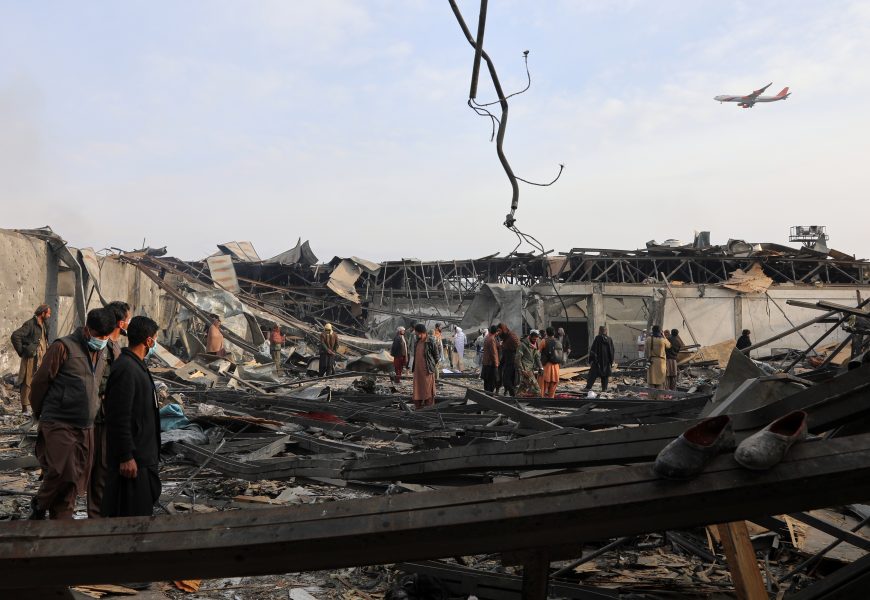
KABUL, Afghanistan (AP) - Rescuers recovered more bodies from the rubble of a drug rehabilitation hospital in Kabul on Tuesday after officials said an overnight airstrike killed more than 400 people in a dramatic escalation of a conflict between Pakistan and Afghanistan that is now in its third week.
Pakistan rejected Afghanistan's accusation that it targeted the Omid Addiction Treatment Hospital, insisting its strikes across eastern Afghanistan on Monday were against military facilities. It also dismissed Afghan claims of hundreds of casualties as propaganda.
The casualties were taken to several hospitals in the area, where crowds gathered to search for their loved ones among the injured and the dead. It was not possible to independently confirm the reported death toll.
The conflict between Afghanistan and Pakistan has seen repeated cross-border clashes as well as airstrikes inside Afghanistan, despite international calls for a ceasefire.
Pakistan accuses Afghanistan of providing a safe haven for militants who carry out attacks inside Pakistan, especially for the Pakistani Taliban. The group is separate but closely allied with the Afghan Taliban who took over Afghanistan in 2021 in the wake of the chaotic withdrawal of U.S.-led troops. Kabul denies the charge.
Afghanistan's deputy government spokesperson Hamdullah Fitrat posted on X that the airstrike hit the Omid hospital, a 2,000-bed facility in Kabul, at about 9 p.m. local time and that large sections of the facility had been destroyed.
Interior Ministry spokesman Abdul Mateen Qani said 408 people had been killed and 265 injured.
Local television footage on Tuesday showed security forces using flashlights as they carried casualties from the site while firefighters struggled to extinguish the flames.
The Omid hospital was renamed and expanded in size roughly a year ago from the Ibn Sina Drug Addiction Treatment Hospital as part of government plans to stamp out drug addiction in Afghanistan.
The site, near Kabul's international airport, is adjacent to a former NATO military base, Camp Phoenix, where U.S. forces used to train the Afghan National Army. The base was taken over by Afghanistan's new authorities after the Taliban seized power. It wasn't immediately clear what was now housed at the site.
A reporter for The Associated Press in an area near the site at the time of the strike said he heard a military jet fly overhead followed by a very powerful explosion.
Pakistan's Information Ministry said in an X post that the Pakistani military had "precisely targeted" Camp Phoenix, which it said was now a "military terrorist ammunition and equipment storage site." However, it said that the hospital was "multiple kilometers" away from the former camp and accused Afghan officials of lying. Google Maps shows another location, east of Kabul city, also labeled as Camp Phoenix.
"Another important question also lingers, as to why would an alleged drug rehabilitation facility be colocated with lethal ammunition storage site in a military camp? This also remains unanswered," the Information Ministry wrote.
Afghan Foreign Minister Amir Khan Muttaqi, speaking during a meeting with foreign ambassadors in Kabul, insisted his country wanted stability.
"The whole nation does not favor war," he said in a statement released by the ministry. "However, if war is imposed upon it, then with great courage it will prove its right to self defense and will defend its land and its beliefs."
Afghan government spokesperson Zabihullah Mujahid condemned the strike, accusing Pakistan of "targeting hospitals and civilian sites to perpetrate horrors." He said those killed were "innocent civilians and addicts."
Rescue team worker Allah Mohammad Farooq said hundreds had been killed.
"When we arrived here, everyone was buried under the rubble," he said. "We then used a crane to pull them out. Most of the people were dead, and many are still trapped under the debris."
A man sitting outside the site broke down in tears as he recounted hearing about the bombing. Haji Najibullah said his son and other relatives had been patients in the facility.
"We have no information about who is alive and who is buried under the rubble," he said. "Only God knows who may have survived and who may be injured."
To ease the crowds of desperate relatives searching local hospitals for loved ones, Afghan authorities published a list of 500 people they said had been at the treatment center and were safe.
The United Nation's mission in Afghanistan called for an immediate ceasefire.
In a statement, it expressed its "deepest condolences to the families of those killed" in what it said was "an airstrike carried out by Pakistan military forces (that) impacted the Omid Addiction Treatment Hospital, a health care facility for the treatment of drug-addicted individuals, dozens of whom were reportedly killed and injured."
Thameen Al-Kheetan, a spokesperson for the UN High Commissioner for Human Rights, called for an investigation into the strike and said those responsible must be "held to account in line with international standards."
Speaking in Geneva, Al-Kheetan said that since Afghanistan and Pakistan began fighting in late February, 289 Afghan civilians, including 104 children, had been killed or injured and tens of thousands displaced.
In Islamabad, Information Minister Attaullah Tarar rejected Afghanistan's accusations that Pakistan had targeted a hospital as "entirely baseless."
Tarar said Pakistan had targeted facilities "being directly or indirectly used to plan, facilitate, shelter, train or abet terrorist attacks inside Pakistan." Strikes in Kabul and in the eastern Afghan province of Nangarhar were "precise, deliberate and professional," he said, adding: "No hospital, no drug rehabilitation center, and no civilian facility was targeted."
The fighting, the most severe between the two neighbors, began in late February after Afghanistan launched cross-border attacks in response to Pakistani airstrikes. The clashes disrupted a ceasefire brokered by Qatar in October, after earlier fighting killed dozens of soldiers, civilians and suspected militants.
Pakistan has declared it's in "open war" with Afghanistan. The conflict has alarmed the international community, particularly as the area is one where other militant organizations, including al-Qaida and the Islamic State group, still have a presence and have been trying to resurface.
___
Ahmed reported from Islamabad, and Becatoros from Athens, Greece. Habib Rahmani in Kabul, Patrick Quinn in Bangkok, and Jamey Keaten in Geneva contributed.
More Top Stories