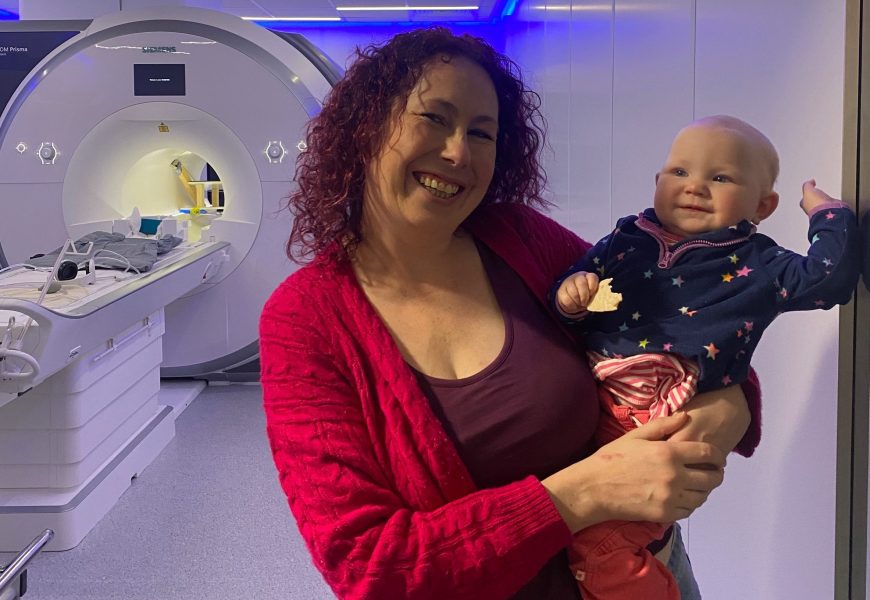
The technique - known as functional magnetic resonance imaging, or fMRI - allowed scientists to examine visual function more precisely than in the past. Many previous studies relied on how long an infant looked at an object, which can be difficult to assess at younger ages. Some of those past studies suggested that infants as young as 3 to 4 months could distinguish between categories such as animals and furniture.
"What we're showing is that they really already have this ability to group together categories at two months," O'Doherty said. "So it's something much more complex than we would've thought before."
In the new study, many of the babies returned at 9 months, and researchers successfully collected data from 66 of them. In the 9-month-olds, the brain was able to distinguish living things from inanimate objects much more strongly than in the 2-month-olds, O'Doherty said.
Someday, researchers said, scientists may be able to connect such brain imaging to cognitive outcomes later in life.
Liuba Papeo, a neuroscientist at the National Center for Scientific Research in France, said the number of babies in the study is one thing that makes the work "impressive and unique." Brain imaging with very young infants presents challenges.


 °C
°C
 3
Min
3
Min