°C
°C
 17
Min
17
Min
Israel has struck southern Lebanon, Beirut and an oil storage facility in Tehran as the war in the Middle East keeps escalating, and Prime Minister Benjamin Netanyahu promised “many surprises” for the next phase of the conflict. Iran also hit a desalination plant in Bahrain. A U.S. airstrike damaged an Iranian desalination plant on Qeshm Island.
The Latest: Iran’s president says nation ‘will not bow’ to pressure from US and Israel
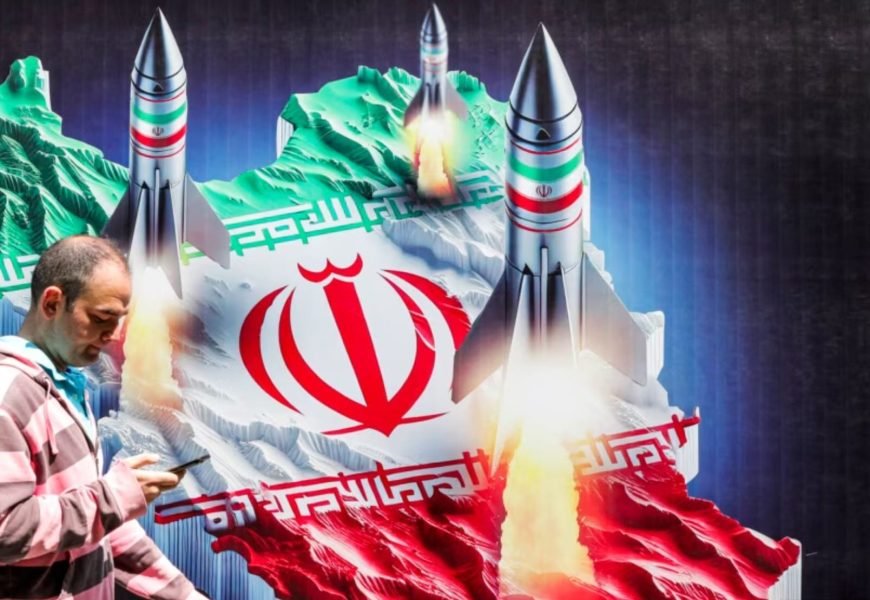
Israel has struck southern Lebanon, Beirut and an oil storage facility in Tehran as the war in the Middle East keeps escalating, and Prime Minister Benjamin Netanyahu promised "many surprises" for the next phase of the conflict.
Iran also hit a desalination plant in Bahrain. Iran's Foreign Minister Abbas Araghchi said a U.S. airstrike damaged an Iranian desalination plant on Qeshm Island, warning that in doing so "the U.S. set this precedent, not Iran." Such infrastructure is critical for drinking water supplies in the parched deserts of the Gulf.
An Israeli attack on an oil storage facility in Tehran sent up pillars of fire that could be seen in Associated Press video as a glow against the Saturday night sky. It appeared to be the first time a civil industrial facility has been targeted in the war.
The conflict has rattled global markets, disrupted air travel and left Iran's leadership weakened by hundreds of Israeli and American airstrikes.
Here is the latest:
Lebanon says over a half-million people have been displaced in the week of fighting between Israel and Hezbollah.
The actual number is likely higher. Lebanon's count of 517,000 refers to those who registered on the government's online portal. The cash-strapped government has struggled to accommodate the large number of people who have fled their homes in large parts of southern and eastern Lebanon.
Israel over the past week has called on residents in dozens of villages across southern Lebanon and the entirety of Beirut's southern suburbs to evacuate as the fighting intensifies.
Palestinian mourners marched down the main street of the West Bank village of Khirbet Abu Falah Sunday, hoisting high the coffins of three men killed in an interaction with settlers.
Earlier in the day, Israeli settlers had attacked Palestinians near the village, which is east of Ramallah in the Israeli-occupied territory, the military said. Two Palestinians were killed by gunfire and a third died from suffocation, likely due to tear gas, the military said.
The deaths bring the total number of settler-related killings of Palestinians in the West Bank to six this week, and seven in the roughly nine weeks since the start of 2026.
That's a major spike. In all of 2025, the UN human rights office reported nine Palestinians killed by settlers.
Sri Lanka will issue a monthlong visa for the Iranian sailors evacuated outside its waters after a U.S submarine attack sunk another ship in the same area, killing more than 80 sailors.
Public Security Minister Anada Wijepala told the media on Sunday that the government will issue "a free visa" for the Iranian sailors, adding that "it will take sometime for them(sailors) to leave this country."
On Saturday, 204 sailors were transferred to a Sri Lankan naval base from their ship "IRIS Bushehr" which was taken under Sri Lankan custody.
The ship had sought help from Sri Lanka reporting an engine failure. The appeal followed the sinking of the Iranian warship "IRIS Dena by the U.S. torpedo attack, off Sri Lanka's coast on Wednesday. The Sri Lankan navy rescued 32 sailors and recovered 87 bodies.
The strike marked one of the rare instances since World War II in which a submarine sank a surface warship.
Israelis along the northern border with Lebanon Sunday watched and worried as the area grew increasingly militarized during yet another round of fighting with the Iran-backed militant group Hezbollah.
Military jeeps and trucks with tanks on them could be seen on roads close to the border.
"I believe that our army today will bring order regarding Hezbollah and eliminate them permanently so we can live here in peace," said Morris Yakuti, a poultry farmer from the area.
Others weren't so sure.
"Since I have enough experience in this area all my life, I think it's just another circle of war and it will not end this war, so it will happen again and again," said Harella Matalon Aizenshtadt.
Israel's renewed offensive began last week after Hezbollah launched rockets toward northern Israel during the war's opening days.
The subsequent strikes have been the most intense since a November 2024 ceasefire.
Armed Conflict Location and Event Data, the U.S-based group known as ACLED, said over 43% of the fatalities were documented that day, Feb. 28, in 10 countries. ACLED has documented over 1,000 incidents in the first week of the war across 16 countries.
The deadliest single strike during the first week was on Feb 28 on a girl's school near a Revolutionary Guards base in Minab in southern Iran, that killed 168 civilians.
That was followed by another strike on a playground in Shiraz, in central Iran, on March 5, that killed 20 people. Another strike on a residential area in Lamerd, in Fars province, killed 19 on the first day of the war, ACLED said.
Although ACLED recorded fewer strikes on civilian sites in Iran, they caused more causalities, it said. Over 57% of civilian casualties in Iran resulted from 3.4% of the recorded strikes by the US and Israel.
Moments after residents of southern Israel were warned of incoming ballistic missiles from Iran, sirens sent millions more Israelis in the Tel Aviv metro area and parts of the West Bank into shelters as the army said it had detected another missile attack.
However disdainful of their government in Tehran, most Iranians are wary of Trump's courting of Iranian Kurdish groups, said Alex Vatanka, a fellow at the Middle East Institute in Washington, D.C.
Iranians see the U.S. president's calls to the Kurds and posts on social media as signals that Trump desires not the liberation but rather than the fragmentation of Iran.
"What Iranians are by and large hearing is not regime change in Tehran, not this glorious move to a secular democracy and so forth, but basically the dismantling of Iran," Vatanka said. Talk of separatism, from the Kurds and other minority groups like Baluchis, Ahwazi Arabs and Azeris "is going to undermine that bigger effort aimed at the regime and it will demoralize the opposition."
Vatanka said that territorial losses in Iranian Kurdish areas or perhaps three Iranian islands claimed by the United Arab Emirates would rally Iranians around the flag if not the authorities against foreign interference.
The Kingdom's Civil Defense said Sunday evening that a military projectile that fell onto a residential area killed two foreign-born residents and wounded 12 others in Al-Kharj governorate.
The Civil Defense spokesperson said in a statement that the two killed were of Indian and Bangladeshi nationality, and all wounded are Bangladeshi residents.
These are the first casualties to be reported by Saudi Arabia since the war began a week ago.
Three key signals might signal fatal cracks in the Iranian government, said Farzan Sabet, researcher at the Geneva Graduate Institute.
Popular uprisings, foreign intervention, and defections from the political and military elites are key signals of big changes in Iranian history, he said. Foreign intervention is clear in the smoke and flames across Tehran from Israeli and U.S. air strikes, he said, and the latest protest movement in 2026.
But we have yet to see defections that might precipitate change, Sabet said.
Israeli targeting of Iran's domestic security infrastructure is likely aimed at demoralizing the police and giving opposition groups space to organize, he said.
"It potentially creates a structure where it makes both a kind of popular uprising potentially more likely and more likely to succeed in the future, but it also creates space for the opposition to have organized armed resistance in the core of the country," Sabet said.
British Prime Keir Starmer has spoken to U.S. President Donald Trump about the military cooperation between the two countries in the Middle East.
Trump has rebuked Starmer on several occasions since they last spoke over a week ago over the prime minister's initial decision not to permit the U.S. military to use British bases in the initial attacks against Iran, describing him at one point as "not Winston Churchill."
Starmer has now granted permission for "defensive" actions against Iranian missile sites from U.K. bases after Iran started attacking countries throughout the region.
Starmer's office in No. 10 Downing Street said the pair discussed the military cooperation between the U.K. and U.S. through the use of bases "in support of the collective self-defense of partners in the region."
Starmer also shared his "heartfelt condolences" following the deaths of six U.S. soldiers.
The strike Sunday in the Rimal neighborhood of Gaza City killed the three Palestinians and wounded several others, said Mohamed Abu Selmiya, the director of Shifa Hospital, where the bodies were brought.
The Israeli military had no immediate comment.
Israeli attacks have continued across the strip since the start of the latest war in the Middle East.
More than 72,100 Palestinians have been killed in the war sparked by Hamas' Oct. 7, 2023 attack into Israel, according to the Gaza Health Ministry. Part of the Hamas-run government, its statistics are seen as generally reliable by the United Nations and independent experts.
Palestinian militants killed some 1,200 people, mostly civilians, in the initial attack and took another 251 hostage. The ceasefire deal ended major military operations and led to the release of all remaining captives but left major questions about Gaza's future unanswered.
The president in an ABC News interview reiterated that he wants a say in who comes to power in Iran once the war is over, warning anew that the new leader "is not going to last long" if the person doesn't have his approval.
Trump also expressed openness to someone with ties in the current regime.
"I would, in order to choose a good leader I would, yeah, I would," Trump said. "There are numerous people that could qualify."
He did not specify any Iranian figures who fit his criteria.
Trump has faced blowback in Washington after the Treasury Department announced it would allow India to buy Russian oil until April 4.
The move, which temporarily gives Russia a stream of revenue to fund its war against Ukraine that the U.S. only recently managed to cut off, -comes even as Moscow is reportedly sharing information with Iran that could help it target U.S. troops and assets in the Mideast.
But top Trump administration officials say the waiver is motivated by pragmatism.
Energy Secretary Chris Wright said Russian oil being sold to India had been expected to go to Chinese refineries but had been idling at sea.
"Instead of having it wait six weeks to unload there, let's just pull that oil forward, have it land at Indian refineries and tamp this fear of shortage of oil, tamp the price spikes and the concerns we see in the marketplace," Wright said in an appearance on CNN's "State of the Union."
Ambassador Mike Waltz, the U.S. envoy to the United Nations, said on NBC's "Meet the Press" that "it was kind of common sense" to let the oil on idling ships go to India.
Michael Leiter, Israeli's ambassador to the United States, has laid out a vision for a post-theocracy Iran, with Jerusalem and Washington providing "guidance" for a pluralistic transitional government.
"What we're hoping for is that we move into a period of a transitional government where the minorities come together, where the majority of the people come together, all the various opposition parties come together for a transitional government where they can lead the country for a year or so together with the guidance from the United States and Israel and other regional allies," Leiter told CBS' "Face the Nation" Sunday morning.
Leiter said Israel has cultivated relations with Iranian ethnic minorities, such as the Kurdish and Baluchi communities. But he said the country's ethnic Persian majority would need to buy in as well.
"We want a united Iran," he said. "What we're encouraging them to do is to coalesce."
Leiter hailed the Israeli-American alliance that launched the ongoing unilateral war, saying, "We've reached a level of collaboration that we've never seen between our two countries and between our two militaries."
Trump has floated the idea of having a say in the selection of Iran's next supreme leader. The country's foreign minister is having none of it.
"We allow nobody to interfere in our domestic affairs. This is up to the Iranian people to elect their new leader," Araghchi told NBC's "Meet the Press." He adds: "It's only the business of the Iranian people, and nobody else's business."
Trump has been quoted as saying "we want someone that will bring harmony and peace to Iran" and that he wants to be involved in the appointment, as was the case in Venezuela after U.S. forces captured then-President Nicolás Maduro in January.
Israel says it has begun another round of airstrikes on Iran.
It was the second wave of strikes announced by the Israeli military on Sunday.
Pirhoussein Koulivand, head of Iran's Red Crescent Society, said 65 schools and 32 medical facilities, hospitals and pharmacies have been targeted in the war. They are part of the almost 10,000 civilian sites that Red Crescent claimed earlier Sunday had been damaged in the country.
AP could not independently verify the figures.
It came after the Israeli military said Sunday that it had struck more than 3,400 targets in Iran.
U.S. Navy Capt. Tim Hawkins, CENTCOM spokesman, denied targeting civilians in a comment to AP Sunday and accused Iran of deliberately doing so.
The Israeli military said it has completed another round of airstrikes in Teheran, in which it "dismantled" the space agency headquarters, affiliated with the Iranian Revolutionary Guard.
It said the site was "used by the IRGC to advance terrorist activities and monitor the State of Israel and its residents."
Targets also included the Guard's Internal Security's command center and 50 of its ammunition bunkers, a compound belonging to its Ground Forces, and a base of the Guard's volunteer Basij force, the army said.
The Israeli military says Iran has launched a new barrage of missiles toward Israel.
It says air defenses have been activated to intercept the incoming fire.
Sirens warning of incoming missiles sounded in central Israel, including Tel Aviv and parts of Jerusalem.
Swiss Defense Minister Martin Pfister, one of Switzerland's federal council members, said the government believes the attack on Iran constitutes a violation of international law.
The U.S. and Israel - as well as Iran for its counter attacks - broke international law's prohibition on the use of force, Pfister said in comments to SonntagsZeitung that were published Sunday. Switzerland is famously neutral.
Switzerland is governed by a seven-member federal council, who each hold portfolios as government ministers and take turns each year holding the top job of president. Pfister is part of the council and can speak on its behalf.
Energy Secretary Chris Wright said there's currently a " fear premium in the marketplace" but sought to assure Americans that surging fuel prices are a short-term problem.
"We never know exactly the timeframe of this," Wright said in an appearance on CNN's "State of the Union. "But in the worst case, this is a weeks, this is not a months thing."
White House press secretary Karoline Leavitt in a Sunday appearance on Fox News call the rising "a short-term disruption" that will benefit consumers in the long term.
"But ultimately taking out the rogue Iranian regime is going to be a good thing for the oil industry," Leavitt added. "And those prices are going to come back down just like they have over the course of the past year, because of President Trump's American energy dominance agenda."
Araghchi says Tehran has intentionally limited itself to a range of 2,000 kilometers (1,240 miles) for its ballistic missiles "because we don't want to be felt as a threat by anybody else in the world."
Araghchi tells NBC's "Meet the Press" says Iran hasn't begun any plan to increase that range and that there's no evidence or intelligence indicating that his country "is going to long-range missiles, let alone those missiles who can reach the United States soil."
The current range puts all of the Mideast and some of Eastern Europe in range.
Sen. Mark Warner questioned what he says are the administration's shifting justifications for the attacking Iran.
"We have had four different answers as to the reasons for the war," the Virginia Democrat told "Fox New Sunday."
The vice-chairman of the Senate Intelligence Committee, Warner added, "This is a war of choice ... There was no imminent threat. There was not even an imminent threat to Israel."
Warner questioned repeated Trump administration claims that the war would be brief and involve no U.S. ground forces. He asked what would happen mass protests took place in Iran, as Trump has called for, and the Revolutionary Guard slaughtered thousands of protestors.
"That would put an obligation on us that I don't think Americans want," he said.
He criticized Trump's diplomatic approach, saying the president had ignored the warnings of both European and Arab allies to join with Israel and launch a unilateral war.
"We are always better with allies," Warner said. "Unfortunately, this president has insulted virtually all of our allies."
Ukraine will send experts to advise the United States and other Middle Eastern countries on repelling Iranian drone attacks next week, President Volodymyr Zelenskyy said Sunday.
Speaking at a press conference in Kyiv alongside Dutch Prime Minister Rob Jetten, Zelenskyy said that Ukrainian experts would be "on site" to assess the situation, but did not specify where they would be located or the exact date of their arrival.
Zelenskyy said Ukraine would help Washington and other countries with all "necessary means - first and foremost expertise and the experience of our military in defending against Shahed drones, cruise missiles, and so on."
The Ukrainian leader said that he wished for the move to be "an opportunity for both sides."
"You know what capabilities we have, and we understand what capabilities the Gulf countries lack," he said.
The Israeli military said on Sunday it had struck more than 3,400 targets in Iran and more then 600 in Lebanon since the Middle East war began last week.
Military spokesperson Lt. Col. Nadav Shoshani added that Israel believes it has destroyed 60% of the missile launchers across Iran, which he said is causing a bottleneck of launches and dramatically reducing firepower.
Strikes also destroyed Iran's two major missile production sites that created the missiles with range to reach Israel, he said.
U.S. Central Command says the Iranian government "blatantly disregards the safety of innocent people" in its own country.
Central Command says Iran is using areas with high civilian populations for military operations, including launches of drones and ballistic missiles.
"This dangerous decision risks the lives of all civilians in Iran since locations used for military purposes lose protected status and could become legitimate military targets under international law," according to the statement.
Central Command says the U.S. military "takes every feasible precaution to minimize harm to civilians but cannot guarantee civilian safety in or near facilities used by the Iranian regime for military purposes."
Arab foreign ministers on Sunday have strongly condemned Iran attacks on its Arab neighbors as a "grave threat to international peace and security."
In a final communique following their virtual meeting, the ministers expressed support to Gulf states along with Jordan and Iraq in the "measure they take to deter and respond to these aggressions."
Iran has said it targets U.S. assets in Arab countries in response to U.S. and Israeli strikes which triggered the war on Feb. 28. However, Iranian attacks hit civilian facilities and disrupted life across the Gulf states.
The ministers called for Iran to immediately stop its attacks and cease "provocative acts or threats to neighboring countries." They urged the U.N. Security Council to condemn Iran and force it to "immediately and unconditionally halt its attacks" on Arab countries.
The ministers also voiced support to Lebanese government in its efforts to disarm Hezbollah, and urged the international community to pressure Israel to immediately cease its attacks on Lebanon.
The communique didn't mention U.S. and Israeli strikes, which triggered the war.
More Top Stories