°C
°C
 5
Min
5
Min
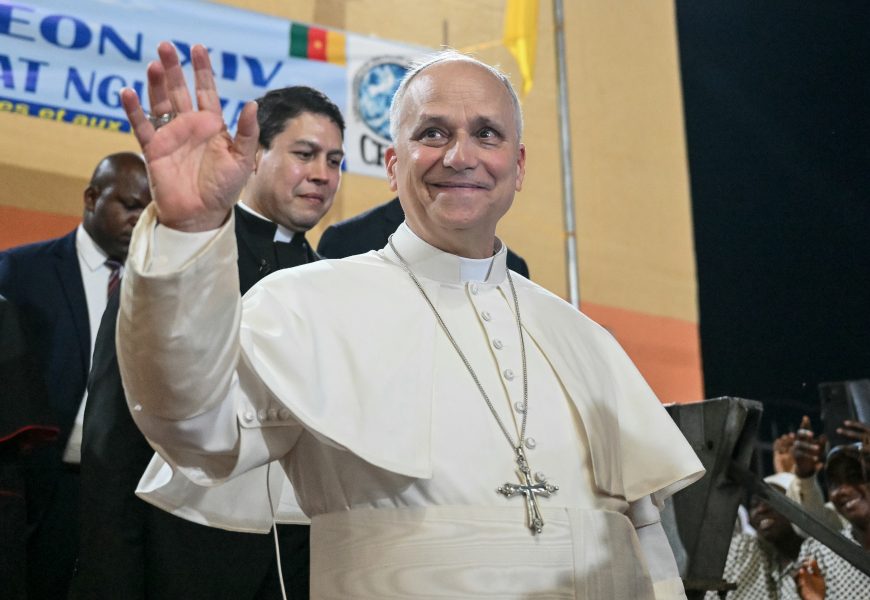
LUANDA, Angola (AP) – Pope Leo XIV challenged Angola’s leaders to break the “cycle of interests” that have plundered and exploited Africa for centuries, as he arrived in the southern African country on Saturday with a message of encouragement for its long-suffering people.
Pope Leo XIV challenges Angola’s leaders while delivering a message of encouragement for its people
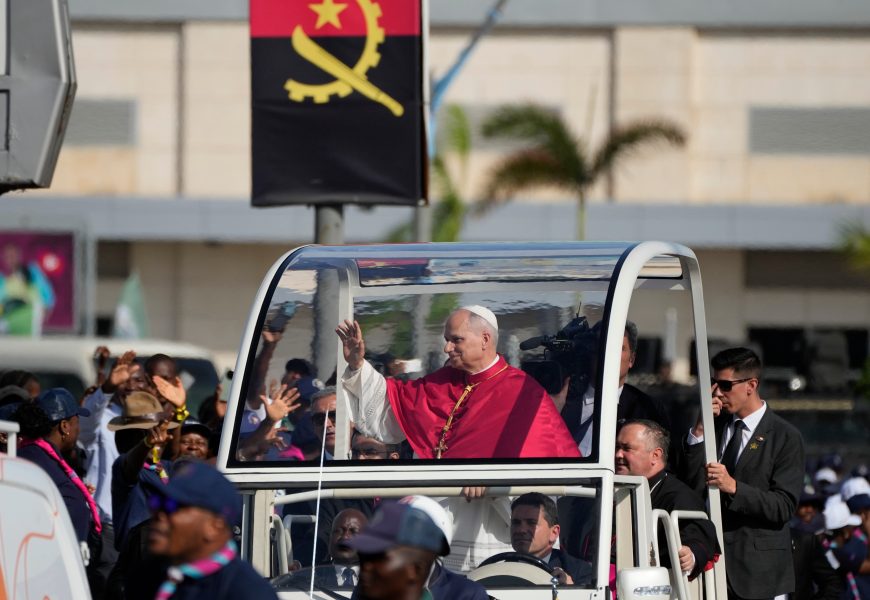

LUANDA, Angola (AP) - Pope Leo XIV challenged Angola's leaders to break the "cycle of interests" that have plundered and exploited Africa for centuries, as he arrived in the southern African country on Saturday with a message of encouragement for its long-suffering people.
Leo's arrival in Angola, the oil-and-mineral rich former Portuguese colony, marked the third leg of his four-nation African voyage. En route from Cameroon, he spoke again of the ongoing back-and-forth with U.S. President Donald Trump over the Iran war.
Leo, history's first U.S.-born pope, said that it was "not in my interest at all" to debate Trump, but that he would continue preaching the Gospel message of peace, justice and brotherhood in Africa.
In Angola, Leo met with President Joao Lourenco and delivered his first speech to Angolan government authorities, in which he referred repeatedly to Angola's tortured history of colonial plunder and civil war.
"I desire to meet you in the spirit born of peace and to affirm that your people possess treasures that cannot be bought or stolen," he said. "There dwells within you a joy that not even the most adverse circumstances have been able to extinguish."
Angola, which has a population of around 38 million, gained independence from Portugal in 1975. But it still bears the scars of a devastating civil war that began straight after independence and raged on and off for 27 years before finally ending in 2002. More than a half-million people are believed to have been killed.
For years, the civil war was a Cold War proxy conflict, with the United States and apartheid South Africa backing one side and the Soviet Union and Cuba backing the other.
Angola is now the fourth-largest oil producer in Africa and among the world's top 20 producers, according to the International Energy Agency. The country is also the world's No. 3 diamond producer and has significant deposits of gold and highly sought after critical minerals.
But despite its varied natural resources, the World Bank estimated in 2023 that more than 30% of the population lived on less than $2.15 a day.
"You know well that all too often people have looked - and continue to look - to your lands in order to give, or, more commonly, in order to take," Leo told the Angolan authorities.
The pontiff said: "It is necessary to break this cycle of interests, which reduces reality, and even life itself, to mere commodities."
While in Cameroon, Leo had railed against the "chains of corruption" that were hindering development, as well as the "handful of tyrants" who were ravaging Earth with war and exploitation. He raised similar points in Angola.
"How much suffering, how many deaths, how many social and environmental disasters are brought about by this logic of extractivism! At every level, we see how it sustains a model of development that discriminates and excludes, while still presuming to impose itself as the only viable option."
Jose Eduardo dos Santos, the late former president who led Angola for 38 years from 1979 to 2017, was accused of diverting billions of dollars of public money to his family, largely from the country's oil revenue, as millions struggled in poverty.
After Lourenco took over as president, his administration estimated that at least $24 billion was stolen or misappropriated by dos Santos. Lourenco's administration has vowed to crack down on corruption and has worked to recover funds allegedly stolen during the dos Santos era.
But critics note that Angola still has deep problems with corruption and have questioned if Lourenco's actions were more aimed at political rivals so as to consolidate his power.
In his speech Saturday, Lourenco said that the Angolan government was committed to improving the lives of its people, but it was a "complex and difficult challenge." He also called for an end to the Iran war and asked the pope to continue using his "moral authority" to push for peace and understanding among people.
Angola, on the southwest coast of Africa, was considered to be the epicenter of the trans-Atlantic slave trade as a Portuguese colony. More than 5 million of the roughly 12.5 million enslaved Africans were sent across the ocean on ships departing from Angola, more than any other country, though not all of them were Angolans.
The highlight of Leo's visit to Angola is expected to be his visit on Sunday to Muxima, south of Luanda. It's a popular Catholic shrine in a country where around 58% of the population is Catholic.
The Church of Our Lady of Muxima was built by Portuguese colonizers at the end of the 16th century as part of a fortress complex and became a hub in the slave trade. It remains a reminder of the inextricable link hundreds of years ago between Roman Catholicism and the exploitation of the African continent.
Leo has Black and white ancestors who included both enslaved people and slave owners, according to genealogical research. He's going to Muxima to pray the rosary, in recognition of the site becoming a popular pilgrimage destination after believers reported an appearance by the Virgin Mary around 1833.
More Top Stories