°C
°C
 6
Min
6
Min
WASHINGTON (AP) – There were Nobel laureates and acclaimed authors. Pioneers of science and medicine. At least one was a college president. High-profile academics spun in Jeffrey Epstein’s orbit for years, even after he was convicted of sex crimes. Now, facing backlash, many say they were driven by a single factor: Epstein’s wealth.
Professors in the Epstein files say they hoped friendship would lead to research funding
WASHINGTON (AP) - There were Nobel laureates and acclaimed authors. Pioneers of science and medicine. At least one was a college president. High-profile academics spun in Jeffrey Epstein's orbit for years, even after he was convicted of sex crimes. Now, facing backlash, many say they were driven by a single factor: Epstein's wealth.
A new trove of documents released by the Justice Department reveals Epstein's reach into academia was deeper than previously known. He kept close with dozens of researchers who exchanged chummy emails while leaning on him to fund their projects. Some sent him gifts and visited him in New York and Florida. Several offered sympathy as he faced fallout from his crimes.
New scrutiny is landing on numerous academics whose emails surfaced among the files, revealing conversations that covered topics from scientific studies to sex and romance. At least one scholar has resigned over new revelations, and Yale University pulled another from teaching while it reviews his conduct.
Asked about relationships that often endured for years, many have offered a similar response: Epstein had money to give, and they needed it.
In the ultra-competitive world of research funding, professors rely not only on federal grants but also on private donations from wealthy benefactors, which they typically must secure themselves. Doing so helps to guarantee their jobs, fund graduate students and further their research.
To some, Epstein was a willing donor with a personal interest in the sciences.
Dr. Mark Tramo, a neurologist at the University of California, Los Angeles, said his connection to Epstein was always rooted in cultivating donations. He exchanged dozens of emails and calls with Epstein over more than a decade, veering into topics well beyond the professional, records show. Tramo sent Epstein occasional gifts and offered medical advice for Epstein's back pain.
As Epstein's jail term drew to a close in 2009, Tramo sent an email: "Only 13 days to go, buddy!!!!! - where and when's the party?" Tramo later suggested a hangout in Florida or New York. He offered to help "in any way" as Epstein sought to rebuild his image.
Tramo told The Associated Press he didn't know until years later that Epstein's crimes involved underage girls, and he now regrets the relationship. Still, Tramo described his behavior as "standard operating procedure" when dealing with a potential donor.
"It's human nature that philanthropists expect at least a modicum of congeniality from fundraisers and beneficiaries of their largess," he said in an email.
Officials at UCLA did not respond to emails seeking comment.
Tramo estimates he received about $200,000 from Epstein to support his research. The financier's money became more enticing as federal funding became harder to win, he said, especially for riskier "out-of-the-box" research like his. Tramo runs an institute that studies the link between music and the brain.
The revelations underscore the allure of private money in research, said Leslie Lenkowsky, a scholar of philanthropy at Indiana University. Epstein offered a shortcut to funding, without the scrutiny and red tape that come with federal grants, he said. Epstein also offered an entry into a world of wealth and power, surrounding himself with famous figures who amplified his appeal, Lenkowsky said.
"It blinded people," he said. "They saw the money coming, they felt that the risks were minimal, and so they went after it."
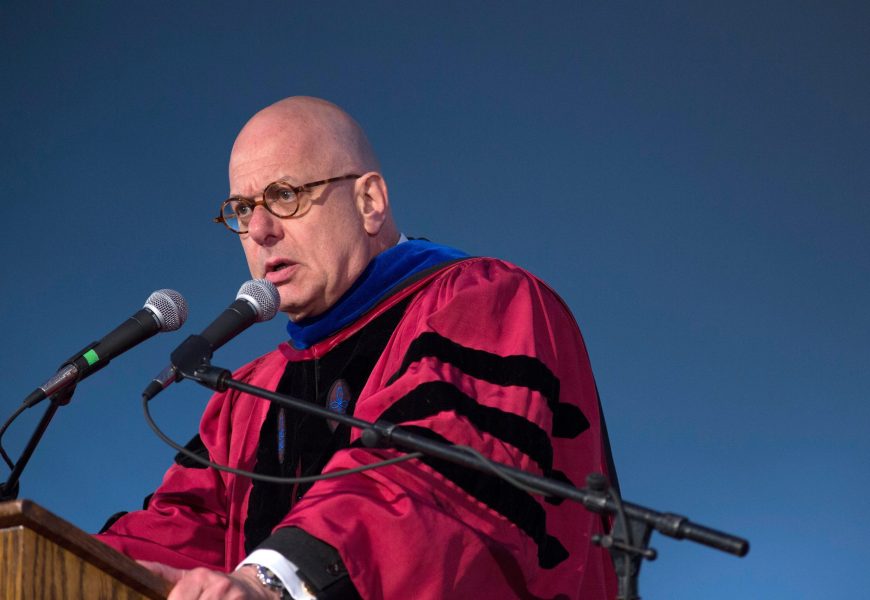
The new emails revealed a deeper relationship than was previously known between Epstein and Leon Botstein, the president of Bard College in New York.
The two met on multiple occasions, with Epstein sometimes arriving by helicopter at the small, private college. Botstein asked Epstein to be a guest at the 2013 graduation ceremonies, and the president - a conductor - later suggested they meet for an opera performance.
In 2018, weeks after The Miami Herald reported new details on Epstein's criminal prosecution, Botstein reached out: "I want you to know that I hope you are holding up as well as can be expected." In at least two emails, Botstein referred to his "friendship" with Epstein.
Botstein now denies any personal connection. "Mr. Epstein was not my friend; he was a prospective donor," Botstein said in a campus letter this week.
Epstein steered $150,000 to Botstein in 2016, which the president has previously said he donated to the college. Epstein later dangled the possibility of a bigger donation, but it never materialized, said David Wade, a spokesperson for Botstein.
"The only reason President Botstein ever communicated with Jeffrey Epstein was in the work of fundraising for the College," Wade said.
Epstein often postured himself as a patron of the sciences, and some of his academic ties have been well documented. He gave more than $9 million to Harvard, most of which went to a research facility started by Martin Nowak, a math and biology professor. Harvard sanctioned Nowak in 2021 amid revelations that Epstein had his own office in the building and routinely paid visits.
During Epstein's trips to Harvard, records show he filled his days meeting with prominent academics who sometimes became close friends. He occasionally met with Larry Summers, a former U.S. Treasury secretary and Harvard president, and with linguist and activist Noam Chomsky.
The emails reveal how Epstein cultivated a network of scientists, asking those he knew to connect him with others they respected. In other cases, researchers sought him out, asking him to bankroll their projects. The files include such emails from academics at the University of Texas, the University of Tennessee, Indiana University and others.
Two professors at Yale University were newly found to have ties to Epstein. One, computer science professor David Gelernter, has been removed from teaching while the university reviews his conduct. Gelernter's emails with Epstein include a 2011 message suggesting a Yale senior for a job, describing her as a " v small good-looking blonde."
Other files reveal that Dr. Nicholas Christakis, a Yale sociologist and physician, met with Epstein in 2013 and exchanged emails with him. Christakis told the AP he met to raise money for his lab, though Epstein never provided backing. He said he was horrified to learn later of Epstein's crimes.
"Any funds I raise are administered by Yale University, and the Yale development office was aware of and supported my meeting with Mr. Epstein," Christakis said in an email.
Yale officials declined to comment.
Other files reveal Epstein's friendship with David Ross, a museum curator who resigned from his post at the School of Visual Arts in New York this month. Some emails appeared aimed at consoling Epstein as he faced public turmoil.
"It is depressing to see how you are once again being dragged through the mud," Ross wrote in 2015. "I'm still proud to call you a friend."
More Top Stories