°C
°C
 6
Min
6
Min
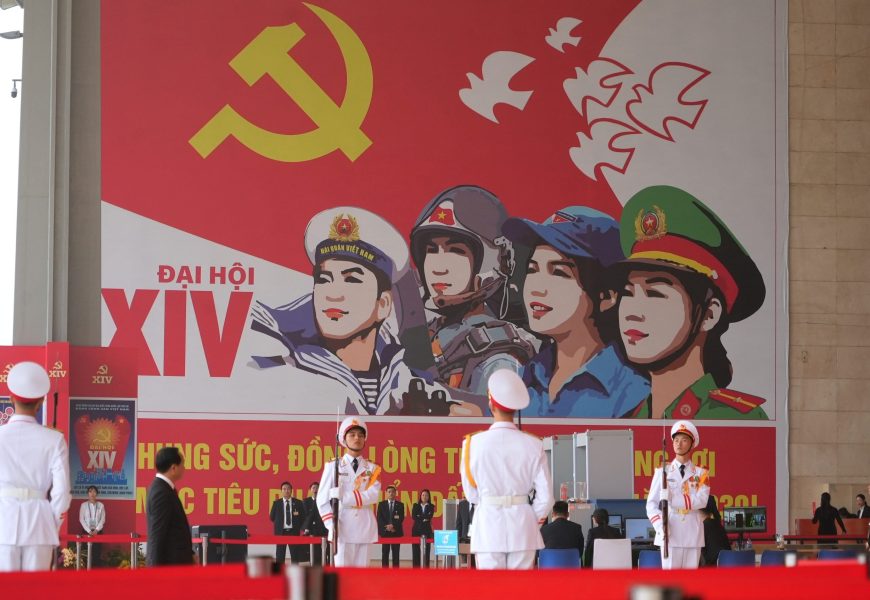
HANOI, Vietnam (AP) – To Lam was reelected Friday as general secretary of Vietnam’s ruling Communist Party and appears poised to become the country’s most powerful figure in decades, with analysts expecting him to assume the presidency in a break from Vietnam’s tradition of collective leadership.
Vietnam leader To Lam consolidates power with reelection as country targets 10% growth
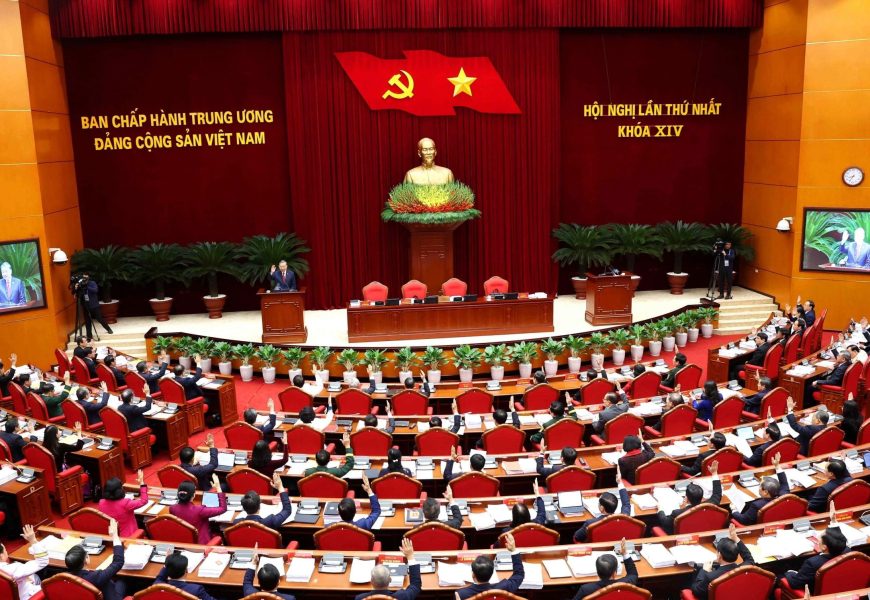
HANOI, Vietnam (AP) - To Lam was reelected Friday as general secretary of Vietnam's ruling Communist Party and appears poised to become the country's most powerful figure in decades, with analysts expecting him to assume the presidency in a break from Vietnam's tradition of collective leadership.
Lam, 68, pledged to accelerate economic growth and was reappointed unanimously by the 180-member Central Committee at the conclusion of the National Party Congress that ran from Monday through Friday.
No formal announcement was made about the presidency. But the composition of the newly elected 19-member Politburo, the party's top decision-making body, "strongly suggests" Lam will further concentrate his power with the presidency, said Le Hong Hiep, a fellow at Singapore's ISEAS-Yusof Ishak Institute.
Such consolidation could speed decisions and push through reforms, he said, but risks weakening intra-party checks and complicating succession. The model mirrors power structures in China under Xi Jinping and neighboring Laos.
The Congress was shaped by the central question of whether Vietnam can transform itself into a high-income economy by 2045, setting a target of 10% or higher annual growth from 2026 to 2030.
Party leaders say this will require moving beyond cheap labor and export-led growth toward productivity, technology and a stronger private sector.
"We must achieve double-digit growth to reach the set goals," Lam said.
Lam's reappointment caps the rise of a career policeman who climbed from the security services to the apex of Vietnam's political system.
His ascent was propelled by a sweeping anti-corruption campaign launched under his predecessor, Nguyen Phu Trong, which Lam oversaw as head of the powerful Ministry of Public Security. That sidelined or removed dozens of senior officials including two former presidents and Vietnam's parliamentary head, dramatically reshaping the party's balance of power.
Lam oversaw Vietnam's most ambitious bureaucratic overhaul since the late 1980s, cutting tens of thousands of public-sector jobs, merging ministries, redrawing provincial boundaries and pushing through major infrastructure projects.
Unlike his predecessor Nguyen Phu Trong, an ideologue who prioritized party discipline, Lam has focused on economic performance and repeatedly emphasized the need to empower the private sector and move Vietnam beyond a growth model built on cheap labor, exports and foreign investment. The model saw Vietnam becoming a manufacturing hub, lifted millions out of poverty and fueled a growing middle class.
But challenges loom including the need for deeper reforms, an aging population, climate risks, weak institutions and U.S. pressure over its trade surplus. Hanoi also is balancing ties with major powers including China, its largest trading partner and rival claimant in the South China Sea.
"He is a pragmatic reformer," said Nguyen Khac Giang of Singapore's ISEAS-Yusof Ishak Institute.
He noted Lam's near-immediate acceptance of U.S. president Donald Trump's offer to join the Board of Peace, an unusually fast decision for Vietnam, where foreign policy moves are typically calibrated with an eye on Beijing's possible interpretation.
"We are ready to contribute even more as mediators and bridges to build peace," Lam said at a post-Congress news conference.
That pragmatism has unsettled the party's conservative faction, led by the military, which is wary of his reform agenda and intent on preserving socialist discipline.
Lam's expansion of the state security apparatus with broader police authority over legislation and businesses also has sharpened a long-running rivalry with the military, which controls extensive commercial interests, analysts said.
His expected power consolidation also heightens human rights concerns in a nation that has intensified crackdowns on activists, journalists and environmental advocates.
Vietnam has set an ambitious target of 10% or higher annual economic growth over the next five years, placing the private sector at the center of its development strategy in a notable shift for the communist state.
The country fell short of its earlier aim of 6.5% to 7% growth in the first half of the decade, despite posting a robust 8% expansion in 2025. Policymakers are recalibrating the growth model to give a leading role to private enterprise and emphasize higher-value industries, modernized production and greater use of science, technology and digital tools.
"What stands out this cycle is not just the direction, which is broadly consistent, but the sense of urgency," said Richard McClellan, founder of consultancy RMAC Advisory. "Vietnam's window of strategic opportunity won't stay open forever."
Policy documents adopted at the Congress describe the private sector as one of the economy's "most important driving forces" and elevate foreign affairs and international integration alongside national defense and security, highlighting dependence on global trade, investment and geopolitics.
The shift could give major private conglomerates a bigger role in infrastructure, energy and industrial projects long dominated by the state. Critics warn it risks further entrenching powerful business groups.
Those firms seek to diversify away from the U.S. market amid tariff uncertainty, with companlies including Vingroup, Hoa Phat and Masan increasingly looking to Southeast Asia, the Middle East and Europe.
The party's updated platform also raised environmental protection to a "central" task alongside economic and social development, a notable shift in Vietnam where rapid growth has fueled worsening air pollution and other environmental pressures.
"The environmental shift is significant in intent, but uneven in impact so far," said McClellan, who noted Vietnam has stepped up its rhetoric on green growth but faces a challenge in translating that intent into concrete policy trade-offs.
To Lam's reliance on state security creates other tensions. Efforts to formalize the economy, expand the tax base and curb informal payments collide with entrenched practices at the local level, where corruption has long lubricated everyday commerce.
Hoa, a Hanoi cafe owner who used one name for fear of government reprisal, said her business relies on allowing customers to park motorbikes on the pavement outside, which is technically illegal but permitted through bribes. Stricter tax enforcement without addressing those practices, she warned, would be damaging.
"I support the party's reforms," she said. "But businesses don't just run on paperwork."
Hiep, the analyst, said Lam's continued leadership would preserve Vietnam's political stability and signal economic and foreign policy continuity.
But he cautioned the 10% growth target for the next five years will be "tremendously challenging" given Vietnam's limited new growth engines and continued reliance on exports, foreign investment and infrastructure spending in a hostile global environment.
"If Vietnam isn't careful, the country may face significant economic problems within the next few years," he said.
More Top Stories