°C
°C
 16
Min
16
Min
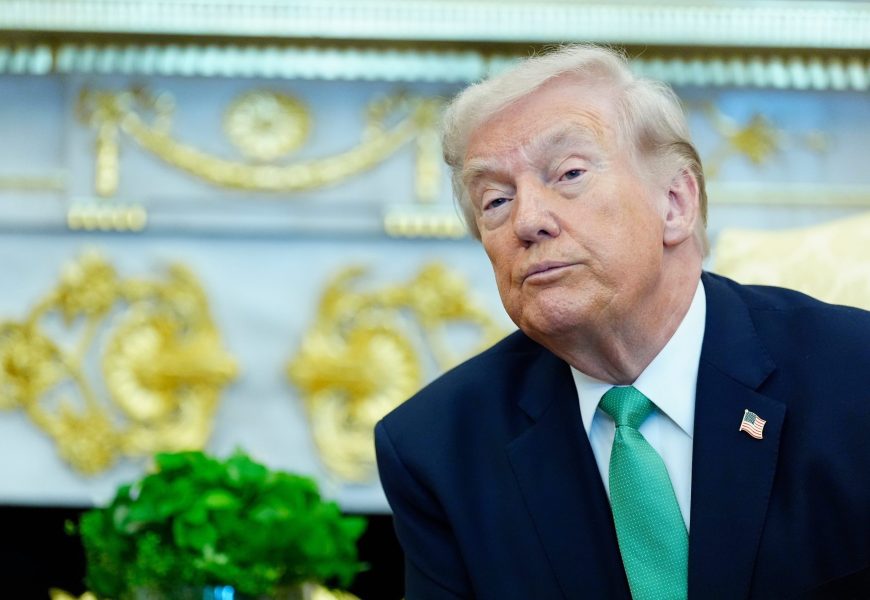
Israel warned Friday it will expand its attacks on Iran as Tehran kept firing missiles at Israel and Gulf Arab nations. The U.S. military also continued striking Iran, while President Donald Trump delayed his threat to obliterate Iran’s energy plants over its effective closure of the Strait of Hormuz.
The Latest: Israel warns attacks on Iran will expand as Trump delays Strait of Hormuz deadline
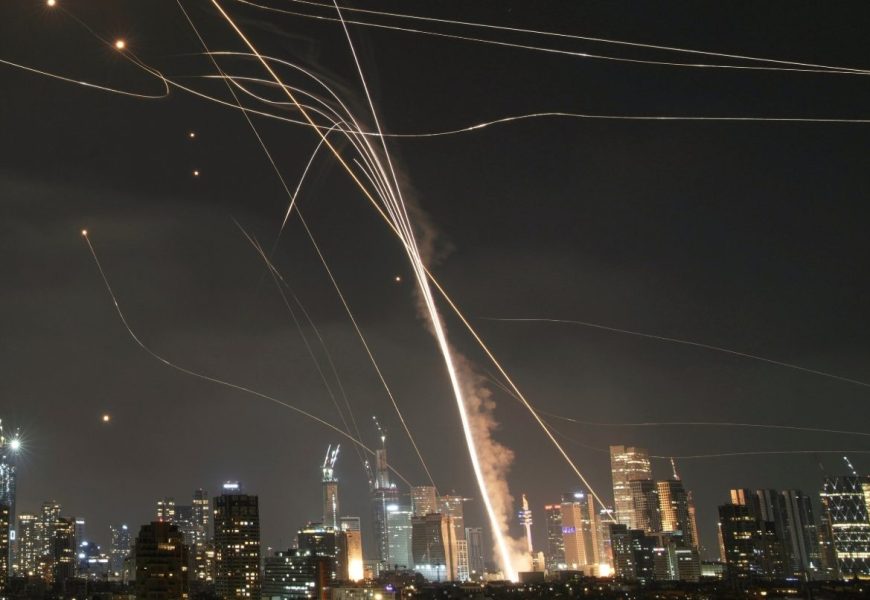
Israel warned Friday it will expand its attacks on Iran as Tehran kept firing missiles at Israel and Gulf Arab nations. The U.S. military also continued striking Iran, while President Donald Trump delayed his threat to obliterate Iran's energy plants over its effective closure of the Strait of Hormuz.
Israel has moved thousands of troops across the border into Lebanon, where Israeli officials said they want to take control of the entire area south of the Litani River - some 20 miles (about 30 kilometers) north of the border.
Facing a convulsing stock market, Trump on Thursday extended a deadline for reopening the Strait of Hormuz until April 6, saying Iran asked for the grace period and that talks were going "very well," despite the fact Iran continues to publicly insist it is not negotiating with the White House on a 15-point proposal to end the conflict.
The war has killed more than 1,900 people in Iran and nearly 1,100 in Lebanon. Eighteen people have died in Israel, while four Israeli soldiers have also been killed in Lebanon. Thirteen U.S. military members have died, as well as a number of civilians on land and sea in the Gulf region. Millions of people in Lebanon and Iran have been displaced.(backslash)
Here is the latest:
Iran state media says its nuclear facilities were attacked Friday, just hours after Israel threatened to "escalate and expand" its campaign against Tehran.
IRNA reports that a heavy-water plant and a yellowcake production plant were struck. Yellowcake is a concentrated form of uranium after impurities are removed from the raw ore. Heavy water is used as a moderator in nuclear reactors.
Word of the attacks came after U.S. President Donald Trump claimed talks on ending the war were going well and gave Tehran more time to open the Strait of Hormuz. Iran has given no sign of backing down.
Pakistan's foreign minister said Friday that U.N. Secretary-General Antonio Guterres in a phone call has praised and expressed full support for Islamabad's diplomatic efforts aimed at ending war in the region.
Foreign Minister Ishaq Dar said on X that they discussed the evolving situation in West Asia and its implications for international peace and security.
Dar said he underscored the United Nations' indispensable role in conflict prevention and resolution and reaffirmed Pakistan's commitment to diplomacy and dialogue as the only viable path to sustainable peace.
French foreign affairs minister Jean-Noël Barrot says G7 countries have adopted a declaration on Iran calling for an immediate halt to attacks against civilian populations and infrastructure.
"Nothing justifies deliberately targeting civilians during armed conflicts, nor carrying out attacks against diplomatic facilities," Barrot told a press conference after a meeting with his G7 counterparts outside Paris.
"It also reaffirms the absolute necessity of permanently restoring free and safe navigation in the Strait of Hormuz," Barrot said.
Barrot said that Rubio, like other participants in these discussions, "wants that once the United States' military objectives have been achieved, maritime security and freedom of navigation can be ensured in the Strait of Hormuz, as in all international waters around the world."
The WFP's estimate for this year is up from a baseline of 318 million across 68 countries previously forecast for 2026. It takes into account data from 53 countries.
The agency cites the spike in energy prices due to the Middle East fighting as having the biggest impact on food prices, with low-income countries especially vulnerable.
Per capita incomes in poorer nations have not yet recovered to pre-pandemic levels, and governments finances are tight as food prices have risen by 15% in a dozen countries, and by more than half in Venezuela, Iran and Sudan, the agency said.
Opposition to the war against Iran has more people signing up for "No Kings" protests, where organizers say more than 9 million Americans plan to demonstrate Saturday against the Trump administration.
Bruce Springsteen, who plans to perform "Streets of Minneapolis", says they're coming to defend "American democracy, American freedom, our American Constitution and our sacred American dream - all of which are under attack by our wannabe king and his rogue government."
More than 3,100 events are being organized across all 50 US states, including many in suburbs where resistance against Trump is growing, said Ezra Levin, a cofounder of Indivisible, the activist group spearheading the events.
Other rallies are planned in Canada, Germany, France, the United Kingdom, Spain, Portugal, Switzerland, Italy, Greece, the Netherlands, Ireland, Sweden, Mexico and Australia. In constitutional monarchies, they're using "No Tyrants" as their rallying cry.
The pregnant woman was killed by an Israeli strike Friday on the eastern village of Bazalieh that also wounded seven people, the Health Ministry said.
The ministry in Beirut said 26 people were killed and 86 wounded over the past 24 hours, increasing the toll of wounded to 3,315 since the latest Israel-Hezbollah war began on March 2.
U.S.-Israeli strikes are wreaking widespread damage to civilian sites in Iran's capital, one month into the war. The head of Iran's largest bookshop chain, Book City, says at least six branches across Tehran have been damaged.
Ali Jafarabadi said a blast from a nearby strike ripped through their main branch on the capital's famous Shariati street, shattering the front windows. A metal rod speared through a line of books in his office. He said most of his shops have reopened nevertheless, and the main branch was full of customers this week, reporting strong sales.
"It shows people are craving books, people are craving culture, people are craving a safe space where they can come and connect with each other. That - that is the people of Iran," Jafarabadi told The Associated Press from Tehran.
More than 5,000 residents of the capital have been wounded, according to Iran's health ministry, but Jafarabadi said there were no injuries in his shops.
Warplanes were seen flying over the Lebanese capital Friday afternoon as they conducted strikes on its southern suburbs.
The Israeli military said it has begun a wave of strikes targeting Hezbollah infrastructure in Beirut.
Of the total wounded to date, 273 service members have returned to duty, said Capt. Tim Hawkins, spokesman for U.S. Central Command.
That leaves 30 troops wounded and out of action, with 10 still considered seriously wounded, Hawkins said.
The total of 303 is an increase of 13 troops since the last update provided March 24. Earlier in the week, 35 service members were too injured to return to their posts.
Since the war in Iran began, 13 U.S. service members have been killed in combat.
Russia's Emergencies Ministry said Friday that it has delivered a batch of medicines to Iran.
The ministry said that 313 metric tons of medicines were carried by rail to Azerbaijan's border with Iran, where they were handed over to Iranian representatives. It said the supplies have been sent on President Vladimir Putin's orders.
Earlier this month, an Emergencies Ministry plane delivered 13 metric tons of humanitarian supplies to Iran.
A sharp generational split over the Iran war is opening up at this year's Conservative Political Action Conference.
Younger attendees tell The Associated Press they feel disappointed and even betrayed by Trump's launch of strikes against Iran. They say his actions clash with his America-first promises.
Older conservatives defend Trump and call the war a pragmatic response to threats. Some younger voters say their support has slipped, and they worry about troops deploying.
Prominent conservatives in the media are also divided. CPAC leaders are pushing for unity with tough midterms ahead. The conference chairman, CPAC Chairman Matt Schlapp acknowledged the divisions and said the convention's annual straw poll will include a question about it, with results released Saturday, the convention's final day.
The Health Ministry said the airstrike that destroyed a house in the coastal village of Saksakiyeh also wounded eight people.
Lebanon's state media reported airstrikes in other parts of south Lebanon including the southern city of Nabatiyeh and villages close to it as well as other towns and villages in the coastal Tyre region.
The strikes came as other parts of south Lebanon witnessed intense clashes between Israeli troops and Hezbollah fighters.
Hezbollah said its fighters fought fierce battles in the villages of Chamaa and Bayada near the Mediterranean coast.
Iran appears to be setting itself up as the gatekeeper for the Strait of Hormuz. The move could cement Tehran's de facto chokehold over the crucial waterway and formalize its ability to keep its own oil flowing to China.
Iranian communications to the U.N. maritime authority and the experience of ships transiting the strait suggest the creation of something akin to a "toll booth." Ships must enter Iranian waters and be vetted by Iran's Islamic Revolutionary Guards Corps. At least two vessels paid for passage using Chinese currency.
Iranian news agencies quoted a lawmaker as saying "parliament is pursuing a plan to formally codify Iran's sovereignty, control and oversight over the Strait of Hormuz, while also creating a source of revenue through the collection of fees."
Traffic through the strait has fallen by 90%, sending global oil prices skyrocketing and inflicting alarming shortages on Asian nations in particular.
Wall Street lurched lower in premarket trading and oil prices rose another 2% as Israel launched a new wave of attacks on Iran and Trump extended his deadline for Tehran to open the Strait of Hormuz.
Futures for the S&P 500 were down 0.3% early Friday, adding to the 1.7% decline a day earlier. The index is headed for a fifth straight losing week, which would be the longest such losing streak in almost four years.
Futures for the Dow and Nasdaq also fell. Unlike the rally earlier this week, markets appeared skeptical of Trump's latest claim that talks with Iran were going "very well."
Associated Press journalists in the area saw the smoke plumes resembling the controversial substance, which is banned under international law when used in civilian areas.
"This image clearly shows the use of artillery-delivered white phosphorus being dispersed over a wide area," said Rich Weir, Senior Advisor at Human Right Watch's Crisis, Conflict and Arms Division. "While the legality of its use here is difficult to ascertain without more information, it's incendiary effects can can cause devastating injuries."
Weir said the rights group has documented Israel using the substance "repeatedly unlawfully" in populated areas in Lebanon in other instances.
Israel has maintained that it has used the substance as a smokescreen or to light up areas in line with international law.
Wearing white numbered shirts, athletes ran through the streets of Gaza on Friday in the first "marathon" in more than two years. Organized by the Emirati group Al Fares Al Shahm, the race had some 300 participants from across the enclave, running 4 kilometers (2.5 miles) to the backdrop of cheering fans.
"It was a wonderful feeling today, after a break from sports for more than two years," said Mahmoud Abu Sbeitan, a participant.
Salah al-Din street - where the race was run - was once difficult to walk on, said Kamel Khatib, another runner. "But today we are participating in a marathon and this is a very wonderful feeling."
The Philippines will shift online about 650 meetings of the Association of Southeast Asian Nations, including by its foreign ministers, in a drastic move to save money as a result of the crisis caused by the war in the Middle East.
President Ferdinand Marcos Jr., this year's ASEAN chair, said only an annual summit hosted by the Philippines in May will be done face-to-face but even that will be stripped of the pomp and pageantry in "a very bare-bones summit."
"ASEAN meetings cannot be impervious to the complex adversities that the bloc has to overcome," Executive Secretary Ralph Recto said.
Defense Minister Israel Katz made the comment in a statement noting that he and Prime Minister Benjamin Netanyahu "warned the Iranian terrorist regime to stop firing missiles at the civilian population in Israel."
"Despite the warnings, the firing continues - and therefore (Israeli military) attacks in Iran will escalate and expand to additional targets and areas that assist the regime in building and operating weapons against Israeli citizens," Katz said.
"They will pay heavy, increasing prices for this war crime."
Israel said a third Iranian missile barrage targeted the country on Friday.
For the second time on Friday Israel's military said it identified missiles being launched from Iran toward the country.
The Health Ministry gave no further details on the early Friday strike that came without warning on the southern suburb of Tahwitat al-Ghadir.
Iranian Foreign Minister Abbas Araghchi also said more than 600 schools have been damaged or demolished and more than 1,000 students and teachers "martyred or wounded" in Iran during the war.
"The aggressors' targeting pattern accompanied by their rhetoric leave little doubt as to their clear intent to commit genocide," Araghchi said by video during an urgent debate at the Human Rights Council in Geneva on Friday.
The debate focused on a Feb. 28 strike at an elementary school in the southern city of Minab. More than 165 people were killed, most of them of children, according to Iranian state media. Experts says evidence suggests the blast was likely caused by U.S. airstrikes. U.S. officials have said an investigation is underway. The State Department did not immediately respond to a request for comment from The Associated Press.
The military said Friday the service members were evacuated to a hospital after being injured during an "operational accident" in southern Lebanon. No other details were immediately available.
Catherine Vautrin also said that France's position is strictly defensive.
Speaking on Europe 1 and CNews on Friday as G7 foreign ministers met outside Paris in presence of U.S. Secretary of State Marco Rubio, Vautrin said that France's strategy in the Middle East is based on a diplomatic approach to avoid any escalation in the region.
"The goal, I repeat, is truly to facilitate the diplomatic path," she said. Referring to the blockade of the Strait of Hormuz, Vautrin said "the aim is truly this diplomatic approach, which is the only one that can guarantee a return to peace. Many countries are concerned, and it is absolutely essential that we find a solution."
Foreign Secretary Yvette Cooper has called for a "swift resolution" to the war in the Middle East and the reopening of the Strait of Hormuz.
Speaking at a meeting of G7 foreign ministers on the outskirts of Paris, Cooper said Iran is undermining the global economy by blocking international shipping through the Strait of Hormuz, the world's most important waterway for oil shipments. "Frankly, Iran cannot be allowed to hold the global economy hostage as a result of a strait that is vital to international shipping routes and the freedom of navigation," she said.
Ukrainian President Volodymyr Zelenskyy says his country and Saudi Arabia have made "an important arrangement" on defense cooperation.
Zelenskyy, on a visit to Saudi Arabia on Friday, said on social media that the document "lays the foundation for future contracts, technological cooperation, and investment." He provided no details.
Ukrainian experts in drone combat, with experience of more than four years fighting Iranian drones used during Russia's invasion, are helping five Middle East and Gulf countries to counter attacks, according to Zelenskyy. The Ukrainian leader said he would meet later in the day with Crown Prince Mohammed bin Salman.
Egyptian Foreign Minister Badr Abdelatty in a phone call with U.S. Secretary of State Marco Rubio "emphasized the importance of providing economic support" to Egypt as his country grapples with the economic crisis triggered by the war.
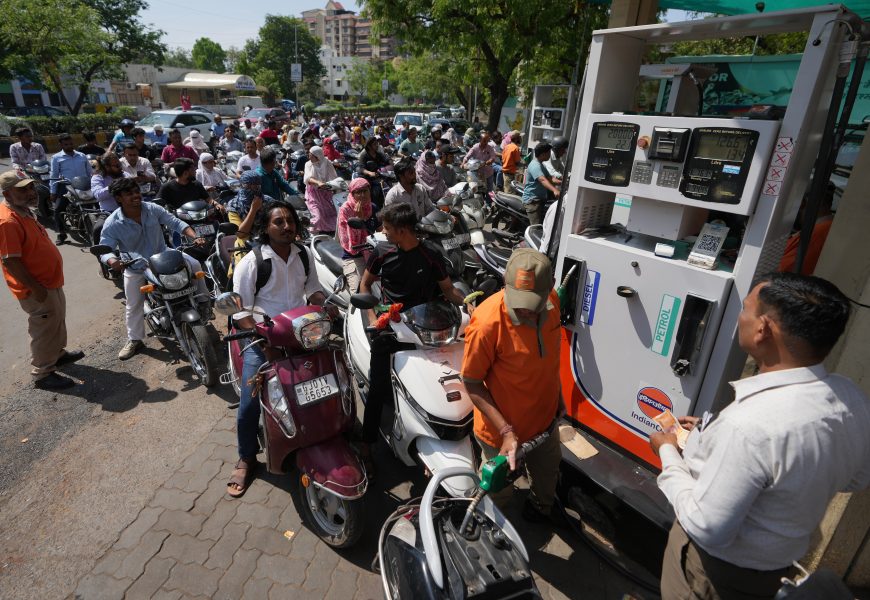
Egypt has started implementing fuel hikes and restrictions, and the government has reduced official overseas trips.
Of the six missiles, four fell into the Persian Gulf and on uninhabited areas, while two others were intercepted, the kingdom said.
Attacks on Iran have damaged 82,000 civilian buildings, including hospitals, residential units and the homes of 180,000 people, across 20 of Iran's 32 provinces, the International Organization for Migration said on Friday.
A second Iranian attack on a port in Kuwait on Friday targeted a facility under construction as part of China's Belt and Road Initiative in the oil-rich nation.
Kuwait said Mubarak Al Kabeer Port came under attack by drones and cruise missiles. It said there was "material damage" there, but no injuries. The attack appeared to be one of the first times a Chinese-affiliated project in the Gulf Arab states has come under assault. China has continued to purchase Iranian crude oil during the war.
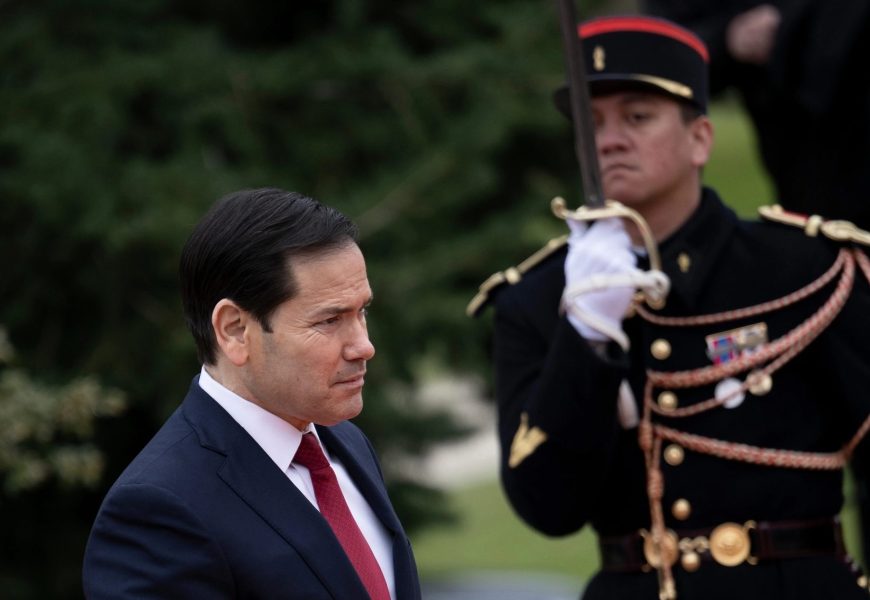
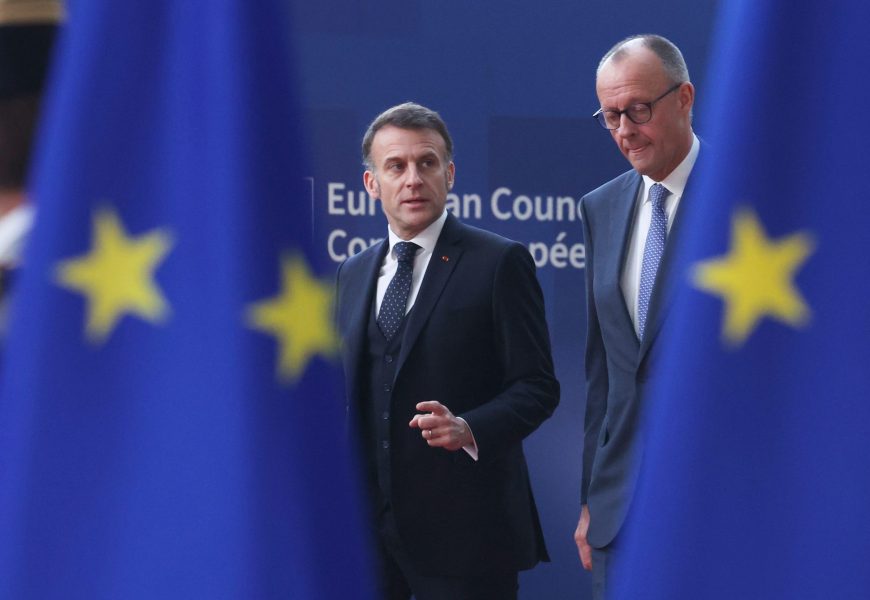
The U.S. secretary of state is in France meeting his Group of Seven counterparts Friday, after Trump criticized NATO countries for being reluctant or refusing outright to join the U.S. and Israel in the Iran war.
Rubio will have a hard time trying to sell the other top diplomats on the U.S. strategy for the Iran conflict, to which almost all nations have raised objections. On his arrival at the historic 12-century abbey in Vaux-de-Cerney outside of Paris, Rubio posed for a group photo with his fellow foreign ministers. None spoke.
Egypt's Foreign Ministry says phone calls between Foreign Minister Badr Abdelatty and his Turkish and Pakistani counterparts involved "intensive efforts" to set up direct talks between the United States and Iran. It offered no other details.
In a letter Friday to the military's chief of staff, Lt. Gen. Eyal Zamir, mothers of soldiers called for an end to Israel's ground offensive into Lebanon.
The Parents of Combat Soldiers group includes 600 military parents. The letter said the military has been taking orders from politicians who are ready to "sacrifice" its children, and urged Zamir to focus on a political solution. "Four soldiers have already been killed in Lebanon, how many more will sacrifice their lives in vain?!" said the letter.
Jan Egeland, secretary-general of the Norwegian Refugee Council, said the humanitarian organization's workers in Iran have reported to him that "countless homes, hospitals and schools have been damaged or destroyed," and that nearly every neighborhood in Tehran has sustained damage.
"Civilians are paying the highest price for this war - it must end" he said in a statement.
"If this war continues, we risk a far wider humanitarian disaster," he added. "Millions could be forced to flee across borders, placing immense pressure on an already overstretched region."
More Top Stories