°C
°C
 17
Min
17
Min
Authorities in Dubai said Tuesday morning they “contained” a Kuwaiti oil tanker after it came under attack from Iran. Officials said there was “no oil leakage and no injuries reported.” The U.S.-Israeli war with Iran has caused major disruptions to the world’s supply of oil and natural gas, roiling global markets, and left more than 3,000 dead.
The Latest: Iran strikes a fully loaded oil tanker off Dubai coast as gas reaches $4 a gallon in US
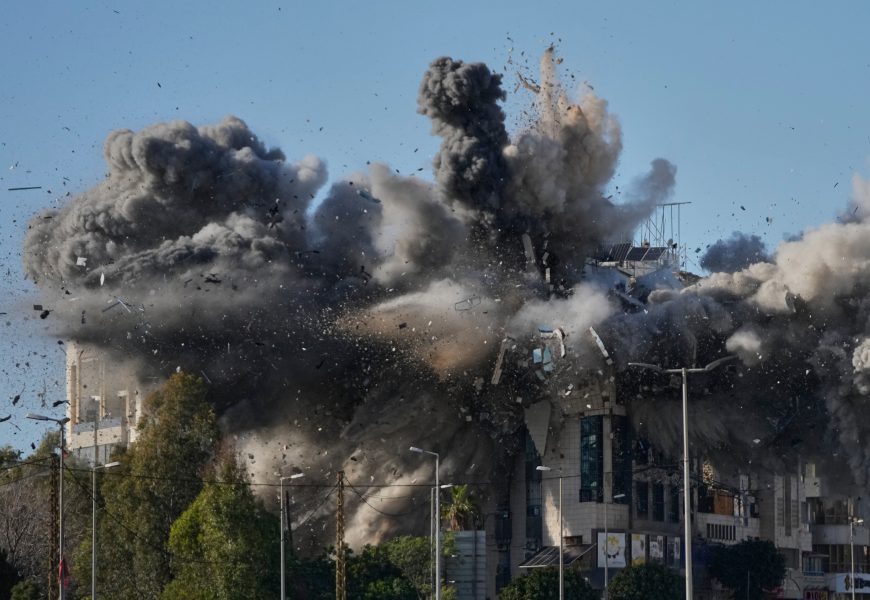
Authorities in Dubai said Tuesday morning they "contained" a Kuwaiti oil tanker after it came under attack from Iran. Officials said there was "no oil leakage and no injuries reported." The U.S.-Israeli war with Iran has caused major disruptions to the world's supply of oil and natural gas, roiling global markets, and left more than 3,000 dead.
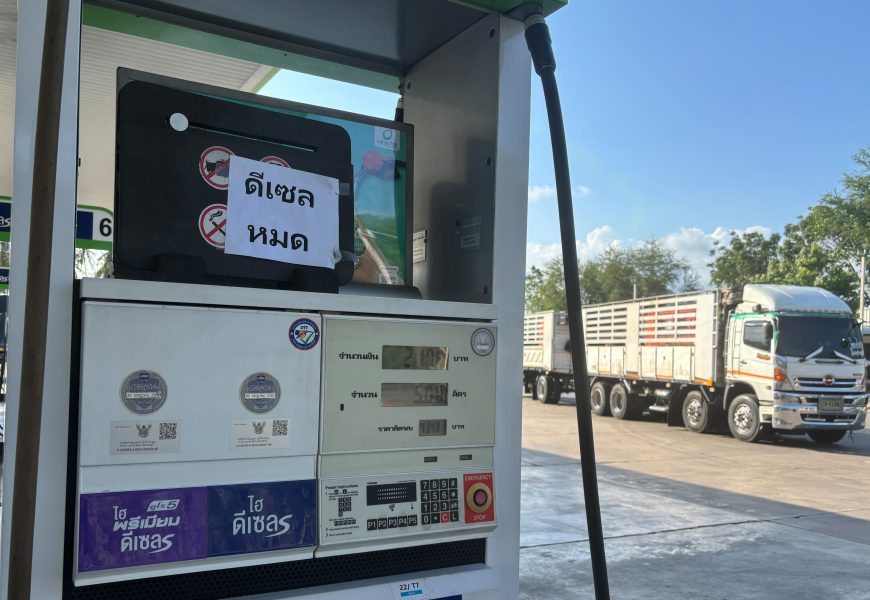
Meanwhile, U.S. gas prices jumped past an average of $4 a gallon for the first time since 2022 as fuel prices continue to soar worldwide. The last time U.S. drivers were collectively paying this much at the pump was nearly four years ago, following Russia's invasion of Ukraine.
U.S. President Donald Trump on Tuesday said nations upset by high fuel prices should " go get your own oil " as Iran maintains its chokehold on the Strait of Hormuz.
Also, Israel and the U.S. launched a new wave of strikes on Iran, hitting Tehran in the early morning hours. Israel has invaded southern Lebanon to push out Iran-backed Hezbollah militants, who have fired rockets and drones across the border, in a campaign that Israeli officials suggest could become a prolonged occupation.
Here is the latest:
The ministry did not identify the journalist or give further details on their nationality.
In a statement Tuesday, it said that security forces had launched an operation to track down the kidnappers, "acting on precise intelligence and through intensive field operations" after intercepting a vehicle belonging to the kidnappers that overturned as they tried to flee.
One suspect was arrested and one of the vehicles used in the kidnapping was seized, but others remain on the loose, the statement said. A spokesperson for the U.S. Embassy in Baghdad declined to comment.
It was not immediately clear if the kidnapping was related to the Iran war.
Iran-backed militias in Iraq have launched regular attacks on U.S. facilities in the country since the beginning of the U.S.-Israeli war on Iran.
Iran's missiles continue to penetrate Israeli airspace and kill civilians. Its cheap drones slip through its neighbors' air defenses, shattering Gulf Arab nations' carefully curated images of invincibility and wounding U.S. troops. Its threats to attack oil and gas tankers strangle the Strait of Hormuz, sending energy prices soaring.
To maintain its leverage, Iran just needs to withstand the conflict long enough to pressure Washington to seek an off-ramp, experts say.
"Their strategy is to try to cause sustained pain and to drive up the costs of the war for the U.S.," said Kelly Grieco, an expert in U.S. military strategy and operations who is a senior fellow at the Washington-based Stimson Center think tank.
Iran is launching fewer missiles than at start of the war, but is deploying more low-flying drones that are harder to intercept.
France's U.N. Ambassador Jerome Bonnafont told an emergency Security Council meeting that members must take action and not merely settle for condemning Israel's "grave" threats and attacks on peacekeepers, including French forces
"It must act so that these kinds of acts do not happen again," he said, calling on Israel to provide immediate guarantees that deconfliction procedures exist and will be respected.
Bonnafont, who requested the meeting after three Indonesian peacekeepers were killed, also urged Israel and Hezbollah to respect the safety of U.N. forces, warning that those who do not "should be accountable before this council and the entire international community." The U.N. is still investigating the peacekeepers' deaths.
He added that "Hezbollah must stop taking the Lebanese people hostage" in a war he said is driven by Iran, and said France is working toward a diplomatic solution.
Mohammadi's legal team, accompanied by one family member, visited her in Zanjan Prison on March 29, according to a statement from the Free Narges Coalition campaign.
"Her general health was extremely poor, and she appeared pale and weak with significant weight loss," it said in a statement, then cited her fellow inmates as saying she was found unconscious in her bed with her eyes rolled back on March 24.
"Despite this medical emergency, and evident indications of a heart attack, authorities refused to transfer Mohammadi to a hospital or allow her to visit a specialist," the statement said.
Mohammadi has a heart condition and suffered multiple heart attacks while imprisoned before undergoing emergency surgery in 2022, her supporters say.
U.S. Ambassador Mike Waltz called for a "pause" during an emergency Security Council meeting on the killings, while the United Nations figures out whether Israel or Hezbollah militants are to blame.
He said the U.N. must "fully investigate and assess the circumstances of these tragic incidents," even as countries share in the grief.
Waltz also called for changes to U.N. peacekeeping operations, saying the council owes troops not just condolences but "a wise approach" that recognizes "terrorists have no respect for the norms of international law."
British Defense Secretary John Healey said Tuesday that the U.S. remains a key ally despite criticism from his American counterpart, Pete Hegseth, that the U.K. had not deployed its navy to the Middle East.
"The U.S. is a uniquely close ally to the U.K.," Healey said in Qatar. "We do things as two nations that no other militaries or intelligence services do. And my job as defense secretary is to make sure that we can, in this Middle Eastern conflict, defend Britain and British people, and we are; and British bases, and we are; and British allies and partners, and we are."
Hegseth sniped at the U.K. for not sending warships to the region, saying at a Washington news conference that "last time I checked there was supposed to be a big, bad Royal Navy that could be prepared to do things like that as well."
Healey announced that the U.K. is sending more missile and air defense systems to Bahrain, Kuwait and Saudi Arabia, and extending the use of its Typhoon fighter jets in Qatar.
In a social media post, WHO's director general said the windows in its offices in Iran's capital were shattered after strikes in the last two days, but that no one was injured.
"Strikes impacting the operations and damaging the premises of WHO and other @UN agencies, the locations of which have been clearly identified, cannot be tolerated and must be avoided at all costs," Tedros Adhanom Ghebreyesus said.
A young anti-government activist in Iran says he would volunteer with the army if the United States launches ground operations, calling the country's territorial integrity a "red line."
"If the idea of occupying islands or part of my country's territory is implemented, I will definitely be available as a soldier to defend the Iranian nation," said the 25-year-old from the northern town of Babol, speaking on condition of anonymity because of fears for his safety.
The activist, who joined protests before the war, said he received a weekend text urging volunteers to join national "defense" efforts. He said he would not serve with the Revolutionary Guard, which has crushed past unrest, but would join the regular army.
Iran has seen multiple text-message campaigns urging enlistment, although it is unclear how many recruits they have generated. The country also requires military service for most men over 18, with limited exemptions.
U.N. Ambassador Danny Danon said Israel "can confirm now that UNIFIL forces were hit by Hezbollah explosive devices in an incident near Bani Ayan in southern Lebanon."
He offered condolences to their families but provided no details about the circumstances of their deaths Monday. A third UNIFIL peacekeeper was killed Sunday.
Speaking to reporters Tuesday, Danon accused Hezbollah of launching attacks from civilian buildings and infrastructure near U.N. positions. He said the Iran-backed militant group continues to operate freely, in violation of a U.N. Security Council resolution calling for its disarmament and the deployment of Lebanese forces across the country. The Lebanese government "has done neither," Danon said.
Lebanon has issued condolences over the three Indonesian peacekeepers' deaths, but neither the government nor Hezbollah have addressed allegations that the militant group was responsible.
At an emergency U.N. Security Council session Tuesday, world powers denounced the two incidents in the last two days that led to the killing of three peacekeepers in southern Lebanon, saying it's part of a pattern of aggression towards the officers carrying out the mission.
"These are sadly not the only dangerous incidents faced by UNIFIL's courageous peacekeepers," Jean-Pierre Lacroix, the U.N. peacekeeping chief, said during his briefing. "There has been a worrying increase in denials of freedom of movement and aggressive behavior."
He described several incidents in the last week where the Israel Defense Forces fired warning shots at a UNIFIL patrol and days later another patrol was subjected to heavy small arms fire "from a group of approximately 20 individuals blocking the road."
Lacroix added that the investigation into the origin of the attacks is ongoing and it's not clear which side was responsible for the death of the three Indonesian officers.
Earlier Tuesday, Italy and France expressed concern over the attacks against U.N. personnel and Turkey has condemned such attacks.
Players on Iran's national soccer team used the friendly international game against Costa Rica on Tuesday to honor children allegedly killed by U.S. and Israeli airstrikes and bombardment of their country.
There were no spectators at the stadium in Antalya in southern Turkey but FIFA's President Gianni Infantino was present at the game.
They were joined by Iran's coach Amir Ghalenoei, Iran's Football Federation Vice President Mehdi Mohammad Nabi and staff members, posing with the photographs of children in their hands while singing the national anthem ahead of the match that served Iran as a World Cup warmup ahead of the tournament being co-hosted by the United States, Mexico and Canada.
China and Pakistan agreed to promote a five-point proposal aimed at restoring peace in the Middle East after a monthlong war.
Chinese Foreign Minister Wang Yi on Tuesday received his Pakistani counterpart, Ishaq Dar, and both agreed on the five points they'll pursue: an immediate cessation of hostilities, the start of peace talks as soon as possible, ensuring the safety of non-military targets, guaranteeing the safety of navigation through the Strait of Hormuz, and safeguarding the primacy of the U.N. charter.
Chinese state media and Pakistan's Foreign Ministry announced the agreement.
Both countries called on all parties to follow the proposals, but they didn't mention any other concrete steps.
Dar traveled to Beijing as Pakistan has been acting as a mediator between Iran and the United States. The South Asian country is using its relatively good ties with both Washington and Tehran to try to help end the war.
President Trump is threatening to deploy ground troops to seize critical oil infrastructure on Iran's Kharg Island, a military gambit experts say would risk American lives and could still fail to end the war.
If Trump wants to hobble Iran's oil industry for leverage in negotiations, a better option might be setting up a blockade at sea against ships that have filled up at Kharg Island's oil terminals, the experts said.
The island - located on the other side of the Persian Gulf from U.S. bases in Kuwait and Saudi Arabia - is the beating heart of Iran's oil industry, through which 90% of its exports pass.
"Putting people on the ground might be the most psychologically compelling way of striking a blow at Iran," said Michael Eisenstadt, a former U.S. military analyst who now directs the Military and Security Studies Program at the Washington Institute for Near East Policy.
"On the other hand, you're putting your own troops at jeopardy," said Eisenstadt, a retired Army reserve officer who served in Iraq. "It's not far from the mainland. So they can potentially rain a lot of destruction on the island, if they're willing to inflict damage on their own infrastructure."
U.S. stocks are bouncing back as the spike for oil prices caused by the war with Iran slows.
The S&P 500 climbed 1.2% early Tuesday. A day earlier, it closed more than 9% below the all-time high it set early this year. The Dow Jones Industrial Average rose 410 points, and the Nasdaq composite added 1.6%.
Steadying oil prices took some pressure off Wall Street. The worry is that if oil prices stay high for a long time because of the war, it could set off a brutal blast of global inflation. Treasury yields ease again in the bond market.
The Health Ministry in Beirut said Tuesday that 21 people were killed and 70 wounded over the past 24 hours.
The ministry says 1,268 have been killed and 3,750 wounded since the latest Israel-Hezbollah war began March 2.
The dead include 125 children and 88 women, the ministry says.
That's according to health officials at Nasser hospital, where the casualties were taken Tuesday.
The Israeli military did not immediately respond to a request for comment.
In the courtyard of Nasser hospital, the family and acquaintances of the father and his son gathered for the funeral prayer, carrying their bodies in white burial shrouds, in tears and agony.
The Gaza Strip has seen near-daily Israeli fire and strikes since a fragile ceasefire was reached in October and nearly 709 Palestinians have been killed since, according to figures from the Hamas-run Gaza Health Ministry. Israel and Hamas have traded accusations of violating the ceasefire.
Gaza's militants have sat out the current Iran conflict.
Iranian Foreign Minister Abbas Araghchi on Tuesday issued a warning against Israel "unashamedly" bombing pharmaceutical companies as part of the Iranian infrastructure the U.S. and Israel have been targeting since the war began.
"Their intentions are clear. What they've gotten wrong is that they're not dealing with defenseless Palestinian civilians. Our Powerful Armed Forces will severely punish aggressors," he wrote on X.
Speaking to military officials, minister Israel Katz reiterated that the military aims to control the area south of the Litani River - some 20 miles (about 30 kilometers) north of the border.
He said Israel will prohibit the return of 600,000 Lebanese who fled the area over the last few weeks until safety and security were "ensured" for residents of Israel's north.
Hezbollah and Israel have exchanged consistent cross-border fire since the latest flareup that began March 2. He said all homes in the Lebanese villages directly across the border from Israel would be demolished "in order to remove once and for all the threats near the border from residents of the north."
The Indonesian government has started to implement a work-from-home policy for civil servants as an adaptive and proactive measure in response to global developments of the ongoing war in the Middle East that's straining global supply chains, particularly in the energy sector.
"Implementing work-from-home arrangements for civil servants at the central and regional levels, with one workday per week on Fridays," Coordinating Economic Minister Airlangga Hartarto said in a broadcasted conference Tuesday.
The government is also implementing mobility efficiency measures that include a 50% reduction in official vehicle use, except for operational purposes and electric vehicles, and encouraging the use of public transportation.
The measure include a reduction of up to 50% in domestic business trips and up to 70% in international business trips, Hartarto said.
Recommendations regarding working from home and efficiency have also been provided to the private sector, taking into account the needs and characteristics of each business.
"At some point I will, not quite yet, but countries have to come in and take care of it," he told CBS News in a telephone interview Tuesday. "Iran has been decimated, but they're going to have to come in and do their own work."
The conversation followed Trump's social media post in which he lashed out at allies over their unwillingness to help the U.S. reopen the critical passageway. He said Iran has been "decimated" and no longer poses a "real threat."
"Let them come up and take it. They didn't want to give a hand to anybody. NATO is terrible, and they're all terrible," Trump said. "So if they want oil, come up and grab it."
"There are countries around the world who ought be prepared to step up on this critical waterway as well," Hegseth said Tuesday, speaking at a news conference from the Pentagon. "It's not just the United States Navy. Last time I checked, there was supposed to be a big, bad Royal Navy that could be prepared to do things like that as well."
In a social media post Tuesday, President Trump said nations upset by high fuel prices should "go get your own oil" as as average U.S. gas prices shot past $4 a gallon.
Defense Secretary Pete Hegseth said Tuesday the U.S. undertook the war in Iran for the "free world" and questioned the value of the NATO alliance if those countries don't stand with America.
Hegseth and Chairman of the Joint Chiefs of Staff Gen. Dan Caine have wrapped up a news conference at the Pentagon. Hegseth pointed to a social media post from President Donald Trump about allies and said Iranian missiles don't reach the U.S. but could hit allies and others.
"The president's pointing out you don't have much of an, an alliance if you have countries that are not willing to stand with you when you need them," Hegseth said.
Defense Secretary Pete Hegseth declined to tell reporters Tuesday whether or not the U.S. military will deploy ground troops against Iran.
"You can't fight and win a war if you tell your adversary what you are willing to do or what you are not willing to do to include boots on the ground," he said.
Hegseth added: "Our adversary right now thinks there are 15 different ways we could come at them with boots on the ground. And guess what? There are. "
Hegseth also said talks with Iran to end the conflict are ongoing.
"We don't want to have to do more militarily than we have to," he said. "But I didn't mean it flippantly when I said, in the meantime, we'll negotiate with bombs."
Speaking at a news conference from the Pentagon on Tuesday, Gen. Dan Caine, chairman of the Joint Chiefs of Staff, said U.S. military action in Iran remains focused on "targeting their minelaying capability, their naval assets."
"We've taken out again more than 150 ships," Caine said, adding that attack helicopters are now joining in the effort targeting Iranian naval targets.
Another key objective of the war is disabling Iran's defense industrial base, including nuclear research sites, Caine said.
"This includes factories, warehouses, nuclear weapons research and development labs, and the associated infrastructure required for Iran to reconstitute its combat capability," Caine said.
The agency says the tally follows renewed fighting between Israel and Hezbollah in the war and covers a period from March 2 to March 27.
The vast majority - nearly 180,000 - were Syrians returning to their war-battered country, in addition to more than 28,000 Lebanese.
"Most are people fleeing the intense Israeli bombardments. They arrive exhausted, traumatized and with very, very few belongings," UNHCR's representative in Syria, Aseer Al-Madaien, told a U.N. briefing in Geneva by video from Damascus.
The agency has already helped more than 3 million people displaced both within Syria and abroad who've returned home following the fall of President Bashar Assad in December 2024.
Unlike the 2024 Israel-Hezbollah war, when Lebanese could flee across the border without visas, the current Syrian government has restricted the entry of Lebanese unless they have residency in Syria, a Syrian spouse or parent, or other exceptional circumstances.
More Top Stories