°C
°C
 5
Min
5
Min
VATICAN CITY (AP) – Pope Leo XIV on Wednesday opened a new phase of his pontificate by gathering the world’s cardinals to Rome and indicating some reform-minded priorities by calling the modernizing teachings of the Second Vatican Council the “guiding star” of the church.
Pope Leo XIV convenes cardinals and signals reforms ahead now that the Holy Year is over
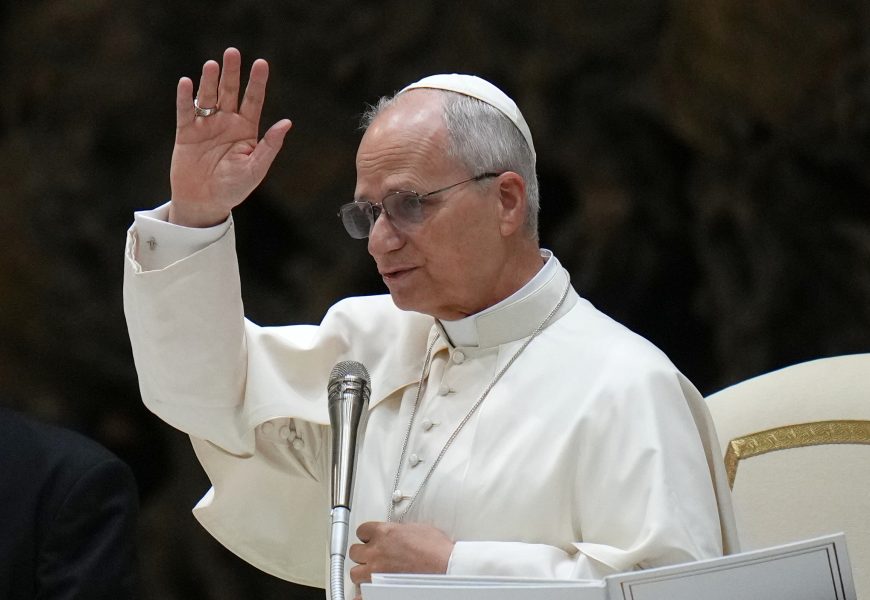
VATICAN CITY (AP) - Pope Leo XIV on Wednesday opened a new phase of his pontificate by gathering the world's cardinals to Rome and indicating some reform-minded priorities by calling the modernizing teachings of the Second Vatican Council the "guiding star" of the church.
Red-capped cardinals trickled into the Vatican's audience hall for the opening session of the two-day meeting, the first of Leo's papacy. Several cardinals said they didn't know what to expect, since Leo's written invitation had spoken only in vague terms about four main agenda items.
"We'll see, we'll see, we haven't even started yet. Be patient!" Cardinal Pierbattista Pizzaballa, the Latin patriarch of Jerusalem, said as he arrived.
But during his morning general audience Wednesday, Leo gave the strongest signal yet about the direction of his still-young pontificate, calling for the full implementation of the reforms of Vatican II, the 1960s meetings that modernized and revolutionized the Catholic Church and remain a source of debate today.
Leo said that for the foreseeable future, he would devote his weekly catechism lessons to a rereading of key Vatican II documents, noting that the generation of bishops and theologians who had attended the meetings and crafted the reforms are dead.
"Therefore, while we hear the call not to let its prophecy fade, and to continue to seek ways and means to implement its insights, it will be important to get to know it again closely, and to do so not through hearsay or interpretations that have been given, but by rereading its documents and reflecting on their content," he said.
Citing all the popes from Vatican II forward who spoke about its importance, Leo said: "Indeed, it is the magisterium that still constitutes the guiding star of the church's journey today."
Among other things, Vatican II allowed for use of the vernacular rather than Latin for Mass. It called for greater participation of lay faithful in the life of the church and revolutionized Catholic relations with Jews and people of other faiths. At the time and in the decades since, though, its reforms crystalized the divisions between traditionalist, conservative Catholics and the more progressive wing of the church that are still alive today.
Leo's first few months as pope were dominated by fulfilling the intense 2025 Holy Year obligations of meeting with pilgrimage groups, celebrating special Jubilee audiences and Masses and wrapping up the outstanding matters of Pope Francis' pontificate.
He called the consistory of cardinals, as such meetings are known, to begin the day after he closed out the Jubilee, suggesting that he too saw its conclusion as the opportunity to unofficially launch his pontificate and look ahead to his own agenda.
It was a significant gesture, since Francis had relied not on consistories or the College of Cardinals as a whole to help him govern, but rather a small, hand-picked group of nine cardinals who met every few months at the Vatican.
Before the May conclave that elected Leo, cardinals had complained about Francis' go-it-alone governing style, suggesting that Leo is responding to their requests to be consulted more.
The Vatican said Leo's first consistory was aimed at "fostering common discernment and offering support and advice to the Holy Father in the exercise of his high and grave responsibility in the government of the universal church."
On the agenda is a discussion of two of Francis' key reform documents: his original mission statement issued at the start of his pontificate, and the 2022 document that reformed the Vatican bureaucracy. Also being discussed is Francis' call for the church to be more "synodal," or responsive to the needs of rank-and-file Catholics, and a discussion of the liturgy, according to Vatican News.
The last agenda item is believed to refer to divisions within the church over the old Latin Mass, which was celebrated before the Vatican II reforms allowed Mass in different languages and with the active participation of the faithful.
Francis had greatly restricted the celebration of the old Latin Mass, arguing its spread in recent years had created divisions in the church. But Francis' crackdown fueled a strong conservative and traditionalist backlash against him, especially in the United States, which the Chicago-born Leo seems keen to try to pacify.
"Critics of Francis have held out hope that Leo XIV will relax restrictions on the Latin Mass, but given his emphasis on church unity and Vatican II, Leo XIV might wait and see before making changes," Matthew Schmalz, professor of religious studies at the Jesuit-run College of the Holy Cross, in Worcester, Massachusetts, said in an email.
There are currently 245 cardinals, almost equally split between those who are under age 80 and voted in the conclave that elected Leo, and those who are older. The Vatican hasn't said how many would attend.
One senior cardinal, though, was listed prominently on Leo's agenda of private audiences Wednesday: Cardinal Joseph Zen, the retired archbishop of Hong Kong. Zen, who turns 94 next week, was a fierce conservative critic of Francis, especially over the pope's outreach to China, and complained for years that the Argentine Jesuit wouldn't receive him in private audience.
More Top Stories