°C
°C
 3
Min
3
Min
BUDAPEST, Hungary (AP) – Hungary’s government will declassify a national security report that the populist prime minister says will prove his main political challenger received illegal financing from Ukraine, a minister said Thursday.
Hungary to declassify security report as Orbán claims Ukraine is illegally funding his opponent
BUDAPEST, Hungary (AP) - Hungary's government will declassify a national security report that the populist prime minister says will prove his main political challenger received illegal financing from Ukraine, a minister said Thursday.
Prime Minister Viktor Orbán faces the biggest political challenge of his career in next month's elections, where he is trailing in most polls behind his center-right opponent, Péter Magyar and his Tisza party.
As the April 12 vote approaches, Orbán - who maintains cordial relations with the Kremlin - has relied increasingly on an aggressive anti-Ukraine campaign that alleges Kyiv, the European Union and Tisza are part of a conspiracy to oust his government and install one that makes decisions more favorable to Ukraine.
Orbán has repeatedly claimed that Ukraine is financing Tisza, without providing evidence for his accusations. In an interview on commercial broadcaster ATV last week, the nationalist leader said "significant" sums had been provided to Tisza by Ukraine for the development of IT applications and voter mobilization efforts.
Magyar denies the allegations.
Orbán added that his claims were "not assumptions, but facts" he had seen in a national security committee report, and encouraged journalists to request the report be declassified.
"I don't think the state would withhold this information from you," Orbán said.
On Thursday, Orbán's chief of staff, Gergely Gulyás, told a news conference that "the declassification process is underway," and that the report would be released "in the foreseeable future."
With only four weeks until the election and many voters dissatisfied with a chronically stagnant economy, crumbling social services and widespread allegations of corruption, Orbán has cast the stakes of the vote as existential for Hungary's future.
The central message of Orbán's pitch is that a new government would bankrupt Hungary by supporting Ukraine against Russia's invasion, and send Hungary's youth to their deaths on the front lines. The campaign, replete with disinformation, has relied heavily on pictures and videos generated by artificial intelligence.
Orbán's government has also used public funds to cover the country in billboards featuring an AI-manipulated image of Ukrainian President Voldodymyr Zelenskyy flashing a sinister smile. The caption reads: "We won't let Zelenskyy have the last laugh!"
Meanwhile Magyar, a 44-year-old lawyer and a former insider within Orbán's Fidesz party, has warned of possible efforts by Russian intelligence services to influence the election outcome in Orbán's favor.
The Tisza party did not immediately respond to a request for comment.
Orbán's government has strongly opposed EU financial and military aid for Ukraine, and vowed that it would veto any EU steps toward its accession into the bloc.
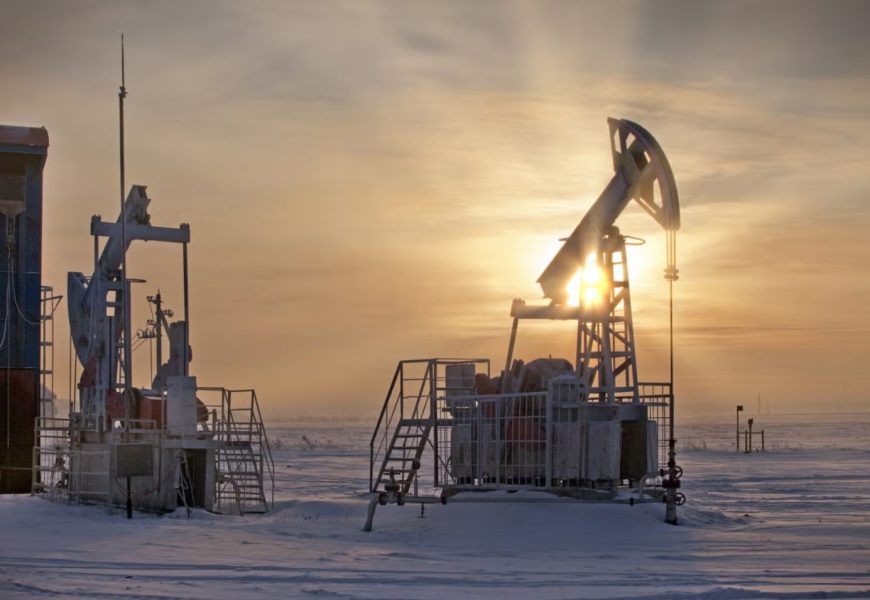
Hungary recently vetoed a new round of EU sanctions against Russia and blocked a major, 90-billion-euro ($104-billion) loan for Kyiv in retaliation for an interruption in Russian oil shipments across Ukraine.
Orbán has also deployed military forces to key energy infrastructure sites across Hungary, accusing Ukraine of plotting disruptions.
Last week, masked commandos with Hungary's Counter Terrorism Center detained seven Ukrainian state bank employees and impounded two armored vehicles that were carrying 40 million U.S. dollars as well as 35 million euros and 9 kilograms (19.8 pounds) of gold.
The bank employees were deported to Ukraine after more than a day in detention, but the money and gold, worth some $82 million, stayed in Hungary.
The action outraged Ukraine, which said the shipment traveling from Austria to Ukraine across Hungary was part of regular services between state banks. Ukraine's foreign minister accused Hungary of "state terrorism" and "taking hostages."
More Top Stories