°C
°C
 3
Min
3
Min
BOGOTA, Colombia (AP) – Colombia’s government said nationwide deforestation increased slightly in 2025 but that it had still surpassed its four-year target to reduce forest loss under President Gustavo Petro, with pressure on the Amazon remaining largely unchanged in the administration’s final year.
Colombia’s deforestation rises slightly as Amazon forest loss holds steady
BOGOTA, Colombia (AP) - Colombia's government said nationwide deforestation increased slightly in 2025 but that it had still surpassed its four-year target to reduce forest loss under President Gustavo Petro, with pressure on the Amazon remaining largely unchanged in the administration's final year.
The Environment Ministry and IDEAM, the country's meteorological agency, said late Friday that Colombia lost 119,483 hectares (295,000 acres) of forest in 2025 - about the size of Los Angeles. That was a 5% increase from the previous year.
Officials emphasized that despite the increase, forest loss remained 31% below 2021 levels, surpassing the government's goal of reducing annual deforestation by at least 20% from that baseline.
While Colombia has kept deforestation well below 2021 levels, the latest figures underscore how difficult it has been to sustain the dramatic reductions achieved in 2023. Illegal land grabbing, cattle ranching and expanding infrastructure continue to put heavy pressure on the Amazon, even as authorities say they are increasingly targeting the criminal networks that profit from clearing the rainforest.
Petro, who leaves office next week, made protecting the Amazon a cornerstone of his environmental agenda. His administration also passed a landmark cattle traceability law aimed at preventing beef linked to illegal deforestation from entering supply chains.
The figures provide a benchmark for the incoming government of President-elect Abelardo de la Espriella, who has pledged to expand oil and mining development while reviewing several of Petro's environmental policies.
The 2025 statistics were released after weeks of criticism from incoming Environment Minister Fabio Arjona, who accused the outgoing government in a post on X of delaying publication, saying it had withheld the figures because it knew "the scenario is tragic."
The figures paint a more nuanced picture than the government's announcement suggests. After Colombia reached a record low in deforestation in 2023, forest loss rose 43% in 2024, reversing much of those gains. While the increase slowed markedly this year, deforestation remains well above the historic low recorded two years ago.
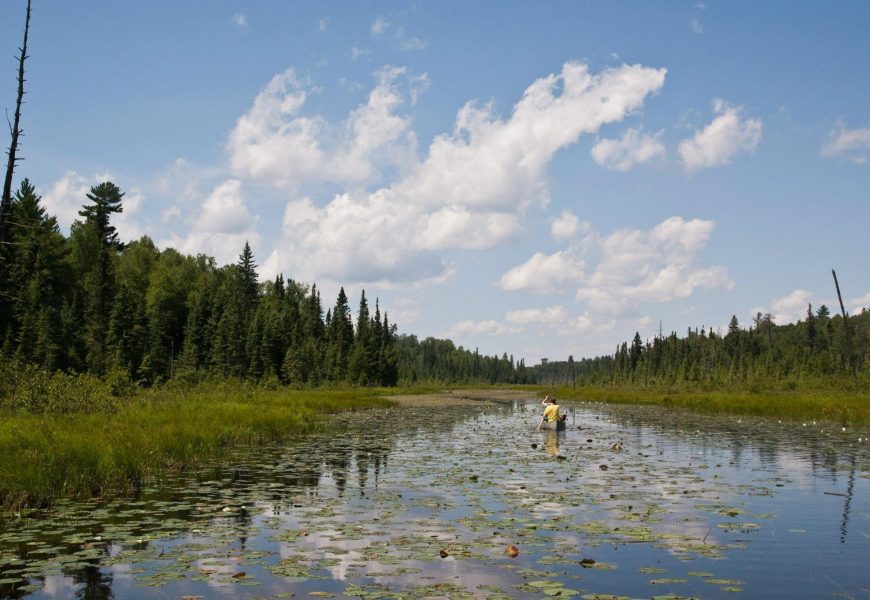
More than 65% of Colombia's forest loss again occurred in the Amazon, where 77,805 hectares (192,000 acres) were cleared in 2025, virtually unchanged from the 77,124 hectares reported in 2024.
The government's monitoring system identified 10 active deforestation hot spots concentrated in the northwestern Amazon.
The municipalities with the highest levels of deforestation were Cartagena del Chaira in Caqueta province, followed by Mapiripan in Meta, San Vicente del Caguan in Caqueta and Calamar in Guaviare - all part of Colombia's long-standing "arc of deforestation," where illegal land grabbing, cattle ranching and forest clearing intensified after the 2016 peace agreement with the Revolutionary Armed Forces of Colombia, or FARC, the country's largest guerrilla group, left a power vacuum in remote rainforest regions.
Environment Minister Irene Vélez attributed the results to greater cooperation with rural communities, expanded conservation incentives and a shift away from policies that criminalized small-scale farmers. She also highlighted a major investigation in Mapiripan that led to the arrest of 17 people allegedly linked to a criminal network involved in illegal land grabbing, deforestation and extensive cattle ranching.
The government said deforestation inside Colombia's national parks fell nearly 19% from the previous year to 9,388 hectares (23,200 acres). Officials credited programs that pay communities to conserve forests, large-scale restoration efforts and the country's first forestry concession, which grants rural communities long-term rights to sustainably manage public forest land.
Officials reiterated that the principal drivers of deforestation are illegal land grabbing, the expansion of extensive cattle ranching and unplanned road construction, rather than coca cultivation, the raw ingredient used to produce cocaine, which has long dominated Colombia's anti-drug efforts.
More Top Stories