°C
 5
Min
Ukrainian President Volodymyr Zelenskyy has vowed to resume attacks on Russian oil infrastructure after Russian officials reported a drone assault on a major refinery in the Ryazan region, escalating tensions over a proposed energy ceasefire and a reported disruption to US satellite support for Kyiv.
Zelenskyy Vows to Resume Russian Refinery Strikes Amid US Intelligence Dispute
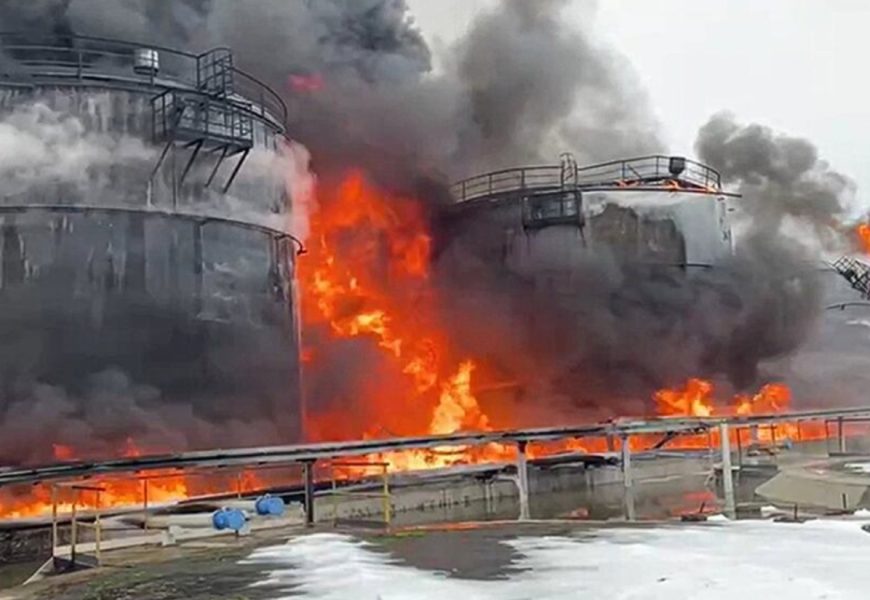
Ukrainian President Volodymyr Zelenskyy has vowed to resume attacks on Russian oil infrastructure after Russian officials reported a drone assault on a major refinery in the Ryazan region, escalating tensions over a proposed energy ceasefire and a reported disruption to US satellite support for Kyiv.
Ryazan Governor Pavel Malkov said the region had come under a large-scale drone attack, with a fire breaking out at the oil refinery. Russia's Defence Ministry subsequently reported that debris from intercepted Ukrainian drones had ignited the blaze.
Ukraine's military had not immediately confirmed responsibility for the reported strike. If confirmed, the attack would mark the first Ukrainian assault on a Russian refinery since US President Donald Trump announced a proposed energy ceasefire on October 11.
The Rosneft-owned Ryazan refinery is a significant component of Russia's oil industry, accounting for nearly five per cent of the country's total refining capacity. The facility has been targeted by Ukrainian drones several times in recent months.
In an interview published by the Financial Times on October 15, Zelenskyy said Ukraine would no longer refrain from attacking Russian energy infrastructure.
"The block [on attacking refineries] is out. We're done," he said.
Trump had announced the proposed ceasefire unilaterally, but neither Russia nor Ukraine formally confirmed an agreement to the arrangement. Ukraine temporarily suspended attacks on Russian refineries for three days, while Moscow continued striking Ukrainian energy facilities and other infrastructure.
Zelenskyy had previously indicated that Kyiv was prepared to halt attacks on Russian oil refineries if Moscow stopped targeting Ukraine's energy infrastructure.
Dispute over US satellite support
The Ukrainian president also expressed anger over a reported disruption to satellite communications and intelligence support used by Ukraine's military, describing the interruption involving Starshield as dangerous.
Starshield is a military-oriented satellite communications system controlled by the US government and associated with SpaceX's broader satellite technology.
Zelenskyy told the Financial Times that the interruption had been presented to Kyiv as a technical malfunction, an explanation he rejected.
The episode has prompted growing pressure on the US Department of Defense to clarify what happened, who authorised the restrictions and whether the disruption affected Ukraine's military operations.
Republican Senator Thom Tillis said on October 14 that he intended to request an investigation by the Pentagon's inspector-general.
Tillis said emerging reports suggested the problem may have originated within the Department of Defense's Starshield systems rather than the commercial Starlink network operated by SpaceX.
He warned that Ukrainian civilians and US diplomatic and security personnel could have been exposed to unnecessary risks without advance notice.
"At best, this was an unacceptable error or lapse, and at worst a conscious decision to clear the field for a Russian attack," Tillis said.
Congressional sources indicated that a group of lawmakers was preparing a letter requesting an independent investigation, with the document expected to be sent in the following days.
The controversy has raised concerns across party lines in Washington. Some observers have questioned whether restrictions on satellite connectivity were intended to pressure Kyiv into stopping attacks on Russian oil facilities.
However, it remains unclear who authorised the reported restrictions, whether commercial Starlink services were affected alongside Starshield, or whether US intelligence-sharing arrangements with Ukraine were also changed.
According to a report by Axios, the White House told Ukraine that the US government did not control SpaceX, the company that operates Starlink.
SpaceX chief executive Elon Musk said on social media that Starshield systems were owned and controlled by the US government. He added that decisions concerning restrictions on their speed or usage were made by the US military and ultimately the US president.
Concerns over civilian safety
Dan Rice, president of American University Kyiv and a former special adviser to the commander-in-chief of Ukraine's armed forces, warned that interruptions to satellite connectivity could have serious consequences for civilian protection.
He said Ukrainian forces relied on communications systems to coordinate interceptor drones against incoming Russian attacks, including Iranian-designed Shahed drones and their jet-powered variants.
Rice warned that any disruption preventing interceptors from reaching their targets could increase the risk of attacks on populated areas and civilian facilities.
Retired US Rear Admiral Mark Montgomery, a senior director at the Center on Cyber and Technology Innovation and a senior fellow at the Foundation for Defense of Democracies, said the reported restrictions had also affected Ukraine's ability to conduct medium-range drone operations.
He said these operations included strikes against Russian logistics routes and command-and-control facilities supporting forces in occupied Ukrainian territory, with targets located approximately 150 to 250 kilometres behind Russian lines.
Montgomery distinguished the reported satellite-service restrictions from allegations that Ukraine had not received warnings about incoming attacks. He said both issues warranted investigation by the Pentagon's inspector-general.
Russia continues attacks on Ukraine
The dispute unfolded as Russia continued its aerial campaign against Ukraine.
Russian missile and drone strikes the previous day had targeted civilian and energy infrastructure, killing at least nine people and leaving hundreds of thousands without electricity.
Ukraine's Air Force reported on the morning of October 15 that Russia had launched 580 drones and two Kh-59 missiles during overnight attacks, adding that the assault was still underway at the time of its statement.
The reported refinery strike, Zelenskyy's renewed threat to target Russian energy facilities and the uncertainty surrounding US satellite support have added further pressure to an already volatile conflict.
Whether Washington's proposed energy ceasefire can be revived remains uncertain, with Kyiv insisting that any restraint on its operations must be matched by a halt to Russian attacks on Ukrainian infrastructure.
More Top Stories