°C
 5
Min
Reduced missile warnings raise risks for civilians as Trump pushes an energy ceasefire and renewed peace negotiations between Kyiv and Moscow. Ukrainians are facing renewed fears for their safety as Russian missile and drone attacks intensify amid concerns that reduced access to US intelligence could leave air defence systems with less time to respond.
Ukrainians Fear US Intelligence Cuts as Russian Attacks Intensify
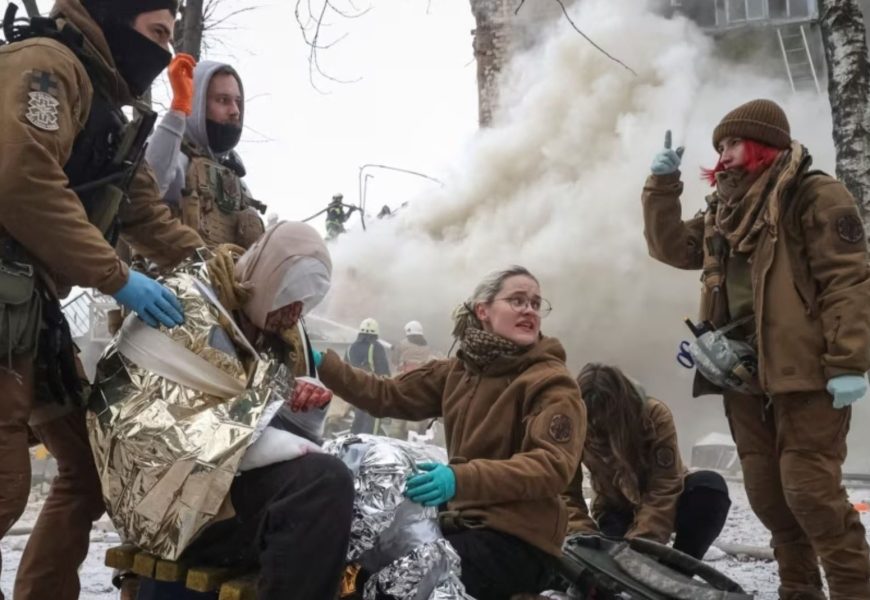
Reduced missile warnings raise risks for civilians as Trump pushes an energy ceasefire and renewed peace negotiations between Kyiv and Moscow.
Ukrainians are facing renewed fears for their safety as Russian missile and drone attacks intensify amid concerns that reduced access to US intelligence could leave air defence systems with less time to respond.
Recent overnight attacks killed at least 15 people and wounded dozens, striking residential apartment buildings, power facilities and warehouses. However, Ukrainian officials said the latest wave of attacks differed from previous raids because air raid sirens sounded only seconds before or after missiles hit their targets.
Ukrainian President Volodymyr Zelenskyy said on Monday that the country had not received intelligence from NATO early-warning satellites used to detect Russian ballistic missile launches. He did not explicitly identify the United States as responsible, while US President Donald Trump has denied that Washington halted intelligence-sharing with Kyiv.
The satellite systems detect the heat generated by missiles shortly after launch, potentially giving Ukrainian authorities several minutes to warn residents and direct them towards shelters.
Without these early warnings, Ukraine must rely more heavily on ground-based radar systems, which can detect incoming ballistic missiles only when they are much closer to their targets.
Zelenskyy has described the advance warnings as crucial to preventing civilian deaths.
Concerns over Trump's ceasefire proposal
Some Ukrainian military observers believe the apparent disruption to intelligence-sharing could be connected to Washington's efforts to pressure Kyiv into accepting a proposed ceasefire covering attacks on energy infrastructure.
Lieutenant-General Ihor Romanenko, a former deputy head of Ukraine's armed forces general staff, told Al Jazeera that the reported intelligence restrictions could significantly undermine the effectiveness of Ukrainian air defences.
He suggested the Trump administration was applying pressure on Kyiv as it sought political advantages ahead of US congressional midterm elections.
Trump announced an energy ceasefire on Sunday, declaring that Russia and Ukraine had agreed to stop attacking energy infrastructure. The proposal would cover targets including oil refineries, fuel depots, electricity facilities and heating stations.
However, Kyiv said the announcement had come as a surprise, while Moscow did not clearly confirm its acceptance of the arrangement. Russian attacks on Ukrainian energy infrastructure continued, according to the report.
The proposed ceasefire comes as Trump seeks to accelerate negotiations aimed at ending the war.
Kyiv-based political analyst Igar Tyshkevych said Washington's pressure could continue until Ukraine demonstrated greater willingness to compromise with Russia.
He warned that Moscow could exploit the diplomatic pressure to intensify military operations while Ukraine faced uncertainty over intelligence support and early-warning capabilities.
Debate over Ukraine's strategy against Russia
Ukraine's attacks on Russian oil refineries have also prompted debate over whether the strategy is delivering meaningful results.
Russian Deputy Prime Minister Alexander Novak said Ukrainian drones had targeted refineries in the Saratov and Ryazan regions on Wednesday, following a three-day pause in attacks on such facilities.
However, Nikolay Mitrokhin, a researcher at Germany's University of Bremen, argued that refinery strikes had not produced the economic damage necessary to force Russia to abandon its war effort.
He said Moscow had adapted by moving supplies and using alternative export routes through neighbouring Belarus and Kazakhstan.
Mitrokhin also noted that refinery attacks had not triggered widespread unemployment, economic collapse or significant public protests in Russia.
Instead, he argued that strikes against data centres, bridges and factories involved in drone production could have a greater operational impact.
Recent attacks on data centres associated with Russian technology company Yandex and state-controlled Sberbank reportedly disrupted services, including online payments, food delivery and taxi operations.
Mitrokhin questioned why Kyiv and its supporters continued to prioritise refinery attacks when other targets could potentially interfere more directly with Russia's military capabilities.
Further uncertainty over satellite communications
Ukraine's concerns extend beyond intelligence-sharing to the satellite communications systems used by its military.
On Wednesday, Ukrainian drone adviser Serhiy Beskrestnov accused SpaceX of imposing restrictions on Starlink terminals used by high-speed military drones.
Beskrestnov said the restrictions affected terminals operating on drones travelling faster than 160 kilometres per hour, including interceptor drones used to counter Russian aerial attacks.
Presidential adviser Serhii Sternenko said the limitations followed a request from Trump. Elon Musk, SpaceX's chief executive, said the US government owns and controls the Starshield systems and determines any applicable restrictions.
Military analysts have warned that a broader suspension of Starlink access could undermine Ukrainian battlefield communications.
Andriy Pronin, a Ukrainian military figure cited in the report, said the country had prepared for possible changes to its access to satellite services.
Ukraine's reliance on Starlink has previously become a source of controversy. In 2022, Musk reportedly ordered engineers to disable coverage over part of Russian-occupied Kherson during a Ukrainian counteroffensive. The following year, he threatened to withdraw funding for Ukrainian military access unless the US Department of Defense assumed the costs.
The Pentagon, Poland and other European allies subsequently helped cover those expenses.
With Russian attacks continuing and diplomatic negotiations under pressure, Ukraine faces uncertainty over the reliability of critical intelligence and communications systems. Any further restrictions could make it more difficult for the country to protect civilians, coordinate air defences and sustain military operations.
More Top Stories