°C
 4
Min
Ukraine's attacks on Russian technology giant Yandex have disrupted services across several countries, but researchers say there is little evidence the strikes significantly reduced pro-Kremlin propaganda on social media.
Zelenskyy Claims Ukraine Strikes Reduced Pro-Kremlin Bots as Experts Challenge Evidence
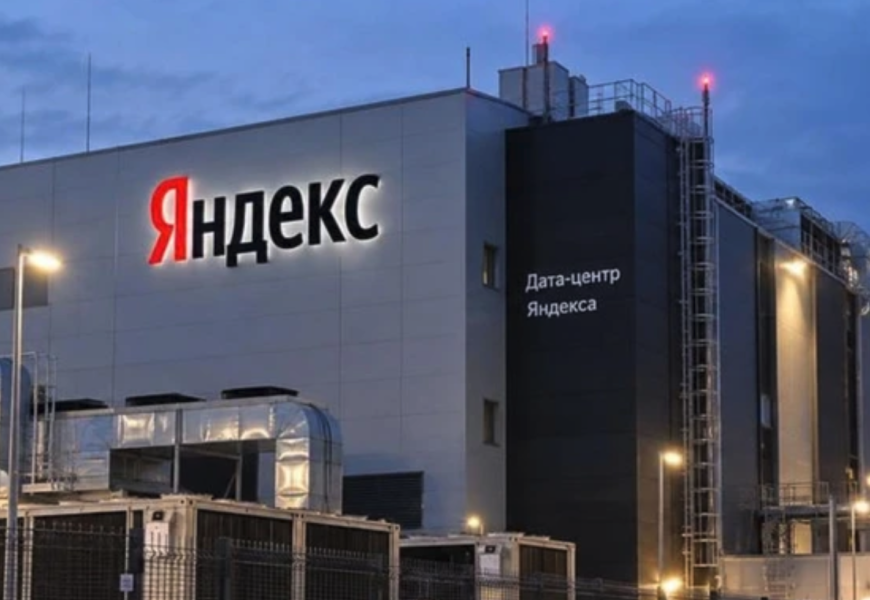
Ukraine's attacks on Russian technology giant Yandex have disrupted services across several countries, but researchers say there is little evidence the strikes significantly reduced pro-Kremlin propaganda on social media.
Ukrainian President Volodymyr Zelenskyy has claimed that recent drone strikes against Russian technology company Yandex reduced the number of online bots spreading pro-Kremlin messaging and hate, although technology researchers have questioned the evidence supporting the assertion.
Ukraine has struck three Yandex data centres in Russia in recent days, disrupting a range of services operated by the company, which is often described as Russia's equivalent of Google.
The affected services include ride-hailing, payments, food delivery, cloud computing and chatbots.
The latest reported strike targeted a Yandex facility in Vladimir, approximately 180 kilometres east of Moscow, on October 11. The attack forced the facility to suspend operations completely.
Two earlier drone strikes hit Yandex data centres in Sasovo, about 315 kilometres southeast of Moscow, on October 8, and in the Kaluga region, southwest of the Russian capital, on October 9.
Speaking at the Warsaw Security Forum on October 12, Zelenskyy said the attacks appeared to have reduced hostility and division across social media platforms.
He argued that fewer automated accounts were contributing to online provocations and suggested their apparent origins were becoming clearer.
The Ukrainian president's comments followed a sharp decline in automated internet traffic associated with Yandex, according to Cloudflare Radar, a public service that monitors internet activity.
Data showed traffic from Yandex's network falling to approximately 0.4 per cent of its recent peak following the strikes.
The figures prompted speculation across social media that the attacks had weakened Russian-backed influence campaigns targeting political movements in Western countries.
Some online commentators suggested the disruption had reduced activity surrounding Germany's far-right Alternative for Germany (AfD) party, Britain's right-wing populist Reform UK party and the Make America Great Again (MAGA) movement associated with US President Donald Trump.
Others speculated that the disruption could have implications for the US midterm elections scheduled for November.
Czech politician and European Parliament member Tomas Zdechovsky highlighted the apparent decline in online activity surrounding the AfD, suggesting the figures could be significant if a direct connection to the strikes were established.
However, technology researchers have cautioned that these interpretations go beyond what the available data can demonstrate.
According to researchers examining the Cloudflare figures, much of the recorded decline appears to involve Yandex's own web crawlers rather than malicious social media accounts.
Web crawlers are automated programs used by search engines to discover, scan and index publicly accessible websites. Their activity can generate substantial volumes of automated internet requests without involving social media posts or political propaganda.
Researchers monitoring online propaganda networks have argued that the Cloudflare data measures automated requests directed towards websites, not the number of accounts spreading disinformation on platforms such as X.
Japanese technology publication XenoSpectrum also noted that the figures reflected estimated automated traffic associated with Yandex's internet network. They did not establish the overall volume of Russian internet activity or the number of messages published on individual social media platforms.
The distinction is important because a decline in automated website traffic does not necessarily demonstrate that coordinated propaganda operations have been disrupted. Establishing such a connection would require additional evidence identifying the accounts involved and measuring their activity before and after the attacks.
Further analysis in the coming weeks may help clarify whether the strikes had any measurable effect on pro-Kremlin influence campaigns.
Zelenskyy has described the attacks as a reciprocal response to Russian strikes against Ukrainian data centres, which intensified in September and affected internet connectivity and mobile services in parts of Ukraine.
The attacks on Yandex facilities represent an expansion of Ukraine's drone campaign against Russian infrastructure, which has previously included oil refineries and other strategic targets.
As of October 12, Yandex was still reporting service disruptions while working to restore operational capacity.
Russia's defence and digital development authorities were also discussing measures to improve protection for data centres against drone attacks, according to Russian state news agency TASS, which cited Digital Development Minister Maksut Shadayev.
The disruption extended beyond Russia. Users of Yandex Go, the company's ride-hailing, delivery and urban services application, reported interruptions in Armenia, Belarus, Kazakhstan, Kyrgyzstan and Uzbekistan.
On October 11, Yandex Go's taxi and delivery services in Kazakhstan acknowledged technical problems and said specialists were working to restore normal operations.
Service resumed on October 12, although the company said further work was needed to stabilise performance.
While the attacks have clearly affected Yandex's infrastructure and services, the broader claim that they substantially reduced pro-Kremlin activity on social media remains unproven. Researchers say further evidence is needed before the disruption can be linked conclusively to a reduction in online propaganda.
More Top Stories