

 °C
 2
Min
US stocks closed lower on Monday as a sell-off in major semiconductor companies weighed on Wall Street, while growing concerns over the pace and safety of artificial intelligence development unsettled investors. The Dow Jones Industrial Average fell 151.66 points, or 0.29%, to finish lower. The S&P 500 declined 36.93 points, or 0.48%, while the Nasdaq Composite dropped 145.25 points, or 0.55%
Wall Street Falls as AI Concerns Hit Chip Stocks
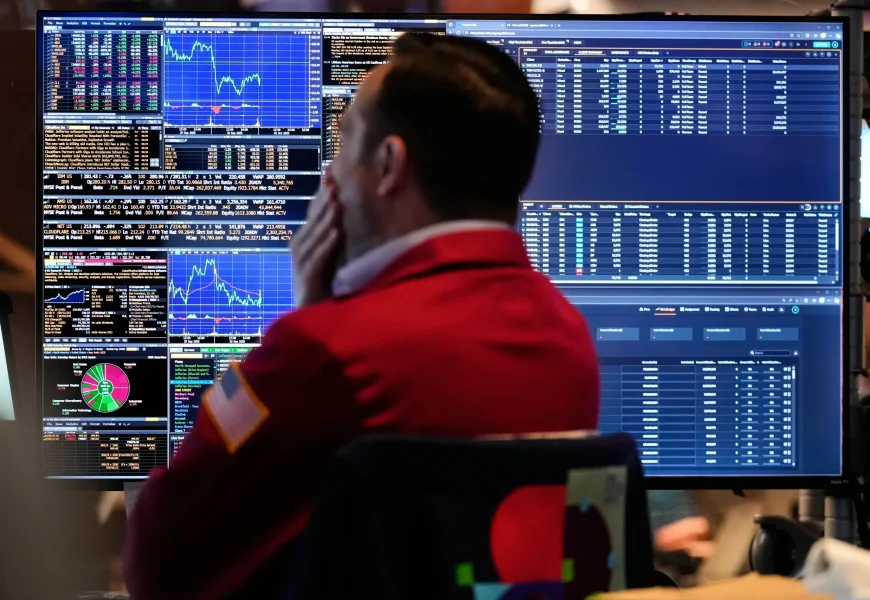
US stocks closed lower on Monday as a sell-off in major semiconductor companies weighed on Wall Street, while growing concerns over the pace and safety of artificial intelligence development unsettled investors.
The Dow Jones Industrial Average fell 151.66 points, or 0.29%, to finish lower. The S&P 500 declined 36.93 points, or 0.48%, while the Nasdaq Composite dropped 145.25 points, or 0.55%.
Nvidia was among the major technology stocks to come under pressure, with declines also recorded in Broadcom, Micron Technology and Advanced Micro Devices.
The weakness followed warnings from senior figures at several leading artificial intelligence companies about the risks associated with rapid development of the technology. Calls for a more cautious approach to AI development raised fresh concerns about the huge investments that have helped drive technology stocks and broader markets to record levels.
AI-related shares also came under pressure in international markets as investors reassessed expectations for the sector's growth.
Wall Street was also affected by movements in the US bond market, with the yield on the benchmark 10-year Treasury note briefly rising above 5% for the first time since 2023.
The increase came ahead of this week's Federal Reserve meeting, where markets are closely watching the central bank's next decision on interest rates.
Rising Treasury yields have become an increasing concern for investors as inflation remains elevated and borrowing by governments and companies continues to add pressure to financial markets.
The 5% level on the 10-year Treasury yield is viewed by analysts as an important threshold because higher borrowing costs can affect everything from corporate investment and housing to consumer spending and stock valuations.
Brent crude futures settling about 1% higher at $105.68 a barrel as concerns about global energy supplies increased.
The combination of higher bond yields, persistent inflation concerns and uncertainty surrounding the US government's long-term fiscal position has added to market volatility in recent weeks.
Investors are now weighing whether higher borrowing costs could undermine the strong stock market gains seen during the recent technology-led rally, particularly as questions grow over whether the enormous spending on artificial intelligence can continue at its current pace.
The coming Federal Reserve meeting is expected to provide further clues about the outlook for interest rates and the broader US economy.
More Top Stories


