

 °C
 4
Min
US President Donald Trump has sharply criticised the Supreme Court after the justices declined to allow new restrictions on mail-in voting to take effect ahead of November’s midterm elections. The decision represents a setback for the Trump administration, which has sought to impose tighter requirements on postal ballots as part of a broader effort to change how federal election-related mail is handled.
Trump attacks Supreme Court after mail voting setback
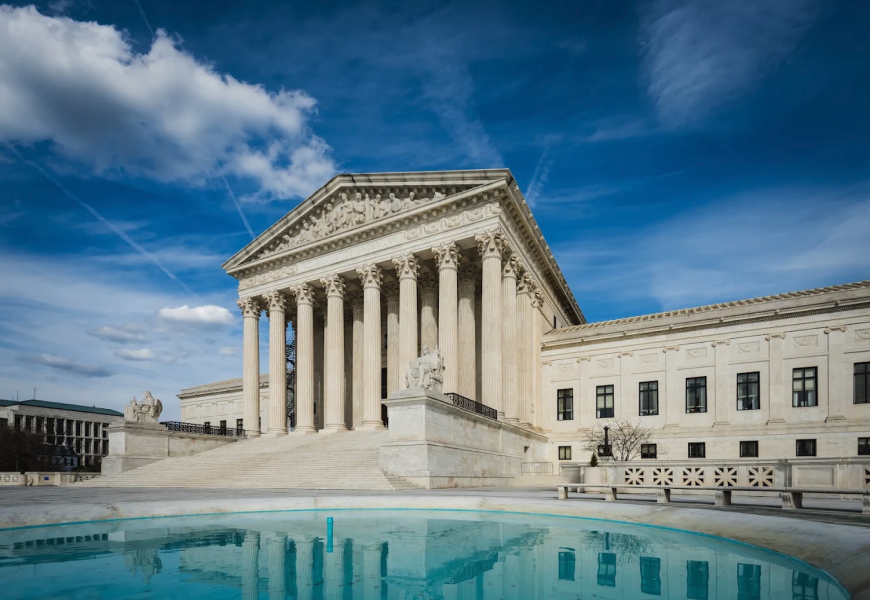
US President Donald Trump has sharply criticised the Supreme Court after the justices declined to allow new restrictions on mail-in voting to take effect ahead of November's midterm elections.
The decision represents a setback for the Trump administration, which has sought to impose tighter requirements on postal ballots as part of a broader effort to change how federal election-related mail is handled.
Trump responded angrily on Truth Social, accusing the Supreme Court of failing to support his administration and Republicans.
"The Supreme Court has really let our Country down!" Trump wrote, arguing that some justices had failed to demonstrate what he described as the courage needed to protect the country.
He also criticised previous Supreme Court decisions that went against his administration, including a ruling blocking his attempt to restrict birthright citizenship and a decision affecting an important part of his tariff programme.
Trump said the latest ruling represented another disappointment for Republicans.
The justices left in place a federal judge's order preventing the US Postal Service from implementing new requirements affecting the handling of mail-in ballots.
The administration has argued that the changes are necessary to address election security concerns and reduce the potential for fraud.
Trump's executive order, signed in March, instructed the Postal Service to introduce measures including unique barcodes on ballot envelopes and to provide election-related voter information through an online system.
The measures have faced legal challenges from states and election groups, which argue that the federal government cannot impose rules that interfere with states' constitutional authority to administer elections.
Twenty-three states and Washington DC initially sued to block the order. Election officials from 24 Democratic-led states and the District of Columbia subsequently warned that the proposed changes were not ready to be introduced so close to the midterm elections.
They said last-minute changes could create delays, errors and confusion and potentially prevent voters from receiving or returning their ballots.
The concerns have also been echoed by some Republican election officials. Seven Republican state election officials warned the Supreme Court that major changes to mail-ballot procedures shortly before the election could result in "mistakes, delays, and confusion".
Several states, including Florida, Louisiana and Montana, have backed the administration's position in court.
The Supreme Court's decision is not necessarily the final ruling in the dispute.
Justice Brett Kavanaugh, one of the court's conservative members, agreed that the restrictions should remain blocked for the 2026 elections but indicated that he could ultimately support the administration's position as the legal case progresses.
Kavanaugh said there was a reasonable possibility that the final regulations could fall within the Postal Service's legal authority. However, he concluded that applying them during the 2026 elections could be considered arbitrary and unreasonable given the timing.
Justices Samuel Alito and Clarence Thomas dissented, arguing that the legal challenge to Trump's order was unlikely to succeed.
The dispute comes as election officials across the United States prepare for the November midterms, which will determine control of Congress.
Mail voting is a significant part of the US electoral system. Around 30 per cent of voters used postal ballots in the general election two years ago, while states such as Oregon, Washington and Colorado rely particularly heavily on voting by mail.
Because mail voting is used by voters from both major political parties, changes to the system could affect Republican as well as Democratic voters.
Some states have already begun distributing mail ballots, while others have printed election materials and prepared voting systems based on existing rules.
Officials have warned that introducing new requirements at this stage could force some jurisdictions to restart parts of their election preparations.
A federal judge in Boston, Indira Talwani, issued an injunction on September 4 blocking Trump's order after finding that implementing the changes close to the election could risk disenfranchising voters.
An appeals court subsequently declined to suspend that order. Another federal judge, Carl Nichols, also ruled against the administration's position.
The latest Supreme Court decision leaves those restrictions in place while the wider legal battle continues.
Trump has repeatedly sought to limit the use of mail voting since returning to the White House, despite having used postal voting himself.
He has also continued to make claims about fraud in the US electoral system, including false claims that widespread fraud caused him to lose the 2020 presidential election.
In June, the Supreme Court separately rejected an administration effort to prevent states from counting certain mail ballots that were postmarked by election day but arrived after polling had closed.
More Top Stories


