

 °C
 3
Min
Sweden’s general election remains on a knife-edge, with the left-wing bloc holding a narrow lead as counting continues. With around 95 per cent of votes reported, the bloc led by the Social Democrats was ahead with 176 seats in the 349-member Riksdag, compared with 173 seats for the right-wing alliance.
Swedish Election Remains Too Close To Call As Left Bloc Holds Narrow Lead
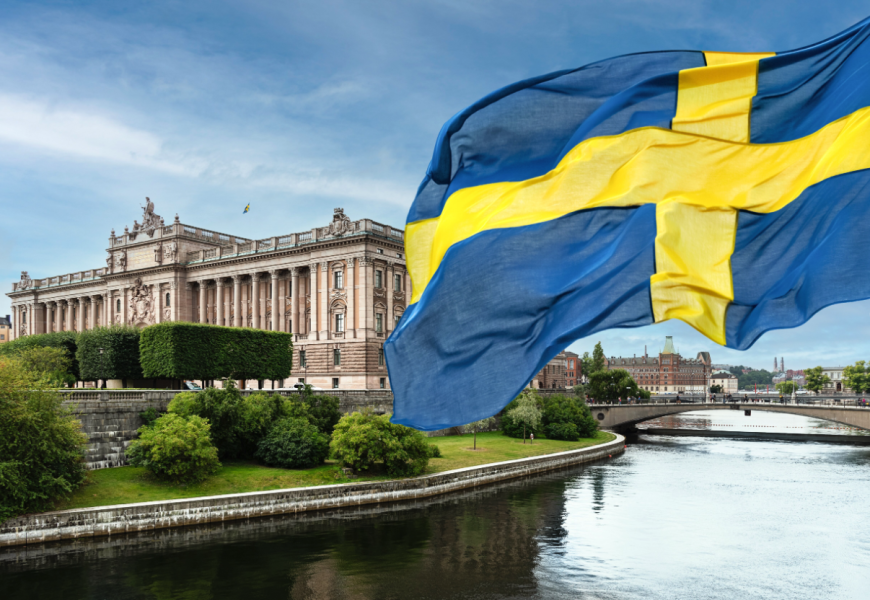
Sweden's general election remains on a knife-edge, with the left-wing bloc holding a narrow lead as counting continues.
With around 95 per cent of votes reported, the bloc led by the Social Democrats was ahead with 176 seats in the 349-member Riksdag, compared with 173 seats for the right-wing alliance.
Preliminary projections indicate that Social Democratic leader Magdalena Andersson could secure a three-seat advantage over the four-party coalition led by conservative Prime Minister Ulf Kristersson.
However, the result remains uncertain and neither major political camp has claimed victory.
Kristersson, who has governed with support from the right-wing Sweden Democrats, told supporters early on Monday that the outcome was still unresolved.
"The voters have had their say, but we still don't have a final result," he said, adding that the question of which government would lead Sweden remained open.
The final outcome could depend on additional votes due to be counted on Wednesday. Those ballots include late-arriving advance votes and votes from Swedish citizens living overseas that were not received before election day.
The number of additional ballots is not yet known. In 2022, more than 220,000 votes were included in the later count.
With only about 28,000 votes currently separating the two blocs, the additional ballots could potentially determine which side has the stronger path to government.
Sweden uses proportional representation to elect members of the Riksdag, with political parties required to receive at least 4 per cent of the national vote to win parliamentary representation.
The country's political system is dominated by two broad blocs, each made up of four parties, making coalition and minority governments common.
Andersson, the former prime minister and leader of the Social Democrats, urged supporters to wait for the final result but said a change of government could be possible if the current figures remained broadly unchanged.
Her party has been one of Sweden's dominant political forces since the end of World War Two, but early results indicated it was heading for its weakest performance in more than a century, with support at about 28 per cent.
The Sweden Democrats, meanwhile, were also losing support after years of electoral gains. The party, which was founded by figures with links to extremist and Nazi-sympathising movements in the 1980s, became Sweden's second-largest party in 2022 after campaigning heavily on immigration and violent crime.
Other parties in the left-wing alliance, including the Left Party, Greens and Centre Party, recorded gains in the preliminary count.
Turnout was also lower than in the previous election, standing at about 80 per cent - roughly four percentage points below the 2022 figure.
The campaign focused heavily on national security, gang violence, immigration and welfare spending.
Andersson framed the election as a choice between a government dominated by the Sweden Democrats and one led by her Social Democrats with a greater emphasis on cooperation.
Kristersson, meanwhile, argued that his alliance should be given the opportunity to continue its work in government.
The final result is expected to become clearer after Wednesday's additional count, although coalition negotiations could continue even after the parliamentary numbers are confirmed.
More Top Stories


