

 °C
 4
Min
A major international war crimes case involving former Kosovo President Hashim Thaci is due to reach its first verdict, with the ruling expected to have significant implications for how the country’s 1998-99 conflict with Serbia is remembered.
Kosovo Awaits Verdict in Hashim Thaci War Crimes Trial
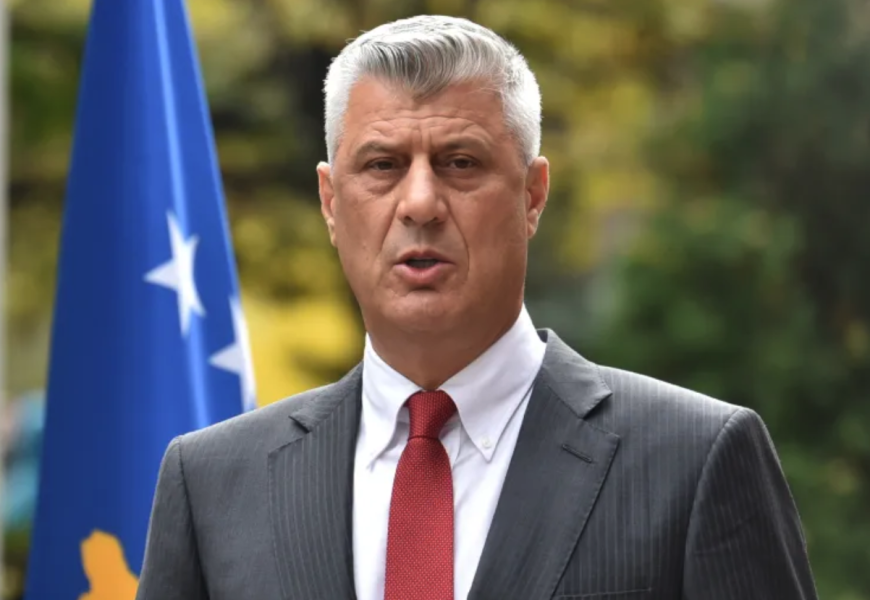
A major international war crimes case involving former Kosovo President Hashim Thaci is due to reach its first verdict, with the ruling expected to have significant implications for how the country's 1998-99 conflict with Serbia is remembered.
Thaci, a former commander of the Kosovo Liberation Army (KLA), is standing trial alongside three other senior KLA figures - Kadri Veseli, Rexhep Selimi and Jakup Krasniqi.
All four men deny charges of war crimes and crimes against humanity.
The Kosovo Specialist Chambers in The Hague is scheduled to deliver its first-instance judgment at 10 a.m. local time on September 16. The proceedings have generated strong emotions in Kosovo, where Thaci and the other defendants continue to have significant public support.
Protests and rallies have been held in Pristina, while large screens and banners have been installed in public areas ahead of the verdict.
For many ethnic Albanians, the case is closely connected to their understanding of the conflict and the KLA's role in Kosovo's struggle for independence.
KLA veteran Nusret Kadriu said some people viewed the prosecution of the former commanders as an attack on the broader Albanian community.
"If they are found guilty, then I am also accused, I am also convicted, and the entire Albanian people are convicted," he said.
Kadriu joined the KLA after leaving his work as a young music teacher and now runs a car wash in Likoc, where the KLA had a wartime headquarters.
He said he expected the defendants to be cleared, reflecting a view shared by many ethnic Albanians interviewed ahead of the judgment.
Among Kosovo's ethnic Serb community, however, expectations are more subdued.
Jasmina Zivkovic has spent 27 years trying to establish what happened to her father, who remains among about 1,600 people missing from the Kosovo war. His disappearance occurred in September 1999, after the period covered by the indictment in the current case.
She said many victims had been excluded from the proceedings because their cases fell outside the timeframe of the indictment.
The Kosovo conflict claimed about 13,000 lives or left people missing, while hundreds of thousands of ethnic Albanians were forced from their homes.
The KLA emerged during the 1990s as an armed force opposing the government of Serbian leader Slobodan Milosevic. In March 1999, NATO began an air campaign against Yugoslav targets, eventually leading to the withdrawal of Yugoslav and Serbian forces from Kosovo.
Serb defendants were also prosecuted for crimes committed during the conflict at the International Criminal Tribunal for the Former Yugoslavia.
The current proceedings are being conducted by the Kosovo Specialist Chambers, established in 2015 under Kosovo law to prosecute alleged crimes linked to the 1998-99 conflict.
Prosecutors allege that the KLA operated as an organised structure and that more than 50 detention sites were used to unlawfully detain, abuse and kill perceived opponents, including Albanians, Serbs, Roma and others.
Prosecutors are seeking prison sentences of up to 45 years for each defendant.
The defence has disputed the prosecution's description of the KLA's structure, arguing that the organisation was loosely organised and that there was no clear hierarchy allowing the defendants to be held responsible for crimes committed by other members.
A central issue for the judges will be whether the defendants exercised effective control over those allegedly responsible for crimes, whether they knew or should have known about the crimes and whether they failed to take appropriate action.
The verdict comes as Kosovo faces continuing political tensions and divisions between rival parties.
Public support for Thaci remains visible, with thousands attending a rally in Pristina on September 12. Some opposition figures have even called for Thaci to return to the presidency if he is acquitted.
Prime Minister Albin Kurti, speaking after his re-election, said Kosovo's resistance and war had been a just and liberating struggle against forces responsible for serious crimes.
Younger Kosovans have generally shown less direct personal connection to the conflict, although some continue to express support for the defendants.
The September 16 ruling will not necessarily bring the case to an end. As a first-instance judgment, it can be appealed by either side.
Thaci is also facing a separate case involving allegations of obstruction of justice.
More Top Stories


