°C
 4
Min
FIFA president Gianni Infantino is facing mounting opposition from senior football officials as the organisation's leadership prepares to examine governance reforms and a proposed $6.35 billion development fund for its member associations.
Infantino faces growing FIFA revolt over failed World Cup investment plan
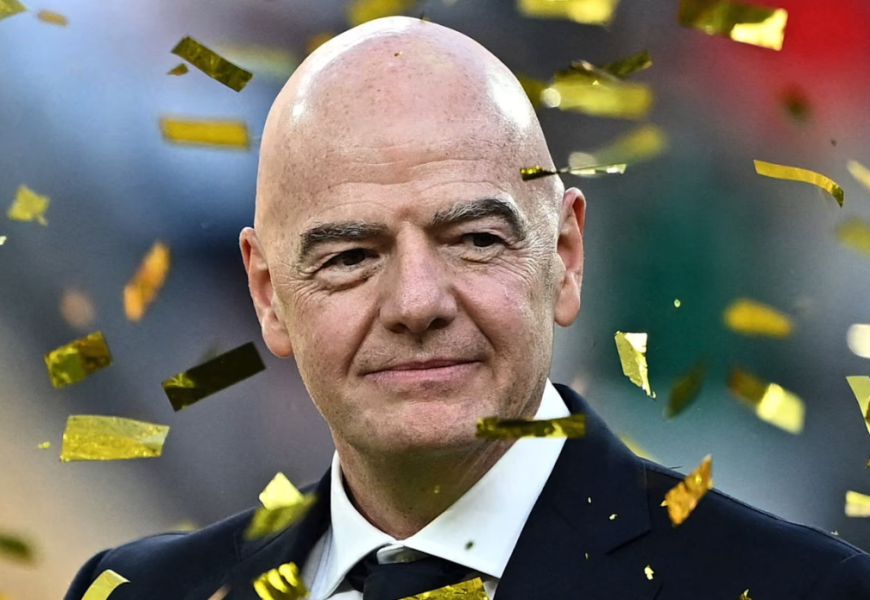
FIFA president Gianni Infantino is facing mounting opposition from senior football officials as the organisation's leadership prepares to examine governance reforms and a proposed $6.35 billion development fund for its member associations.
Thursday's FIFA Council meeting in Zurich is Infantino's first gathering with the governing body's top officials since his controversial plan to sell private investors a stake in FIFA's commercial operations, including the World Cup, was abandoned following widespread criticism.
Representatives of the European, Asian and North and Central American football confederations are expected to attend after their respective presidents called for changes at the top of world football. Officials from Africa, South America and Oceania will also participate.
The failed FIFA Forward Enterprise (FFE) proposal has become a focal point in the dispute. Announced in July, the initiative would have allowed private investors to acquire a minority stake in a FIFA commercial subsidiary. A company established by Joshua Kushner, brother of Jared Kushner, the son-in-law of US President Donald Trump, was identified as the proposed lead investor.
Infantino abandoned the plan within days of its announcement, but the controversy exposed divisions among football's most influential leaders.
UEFA president Aleksander Ceferin, Asian Football Confederation president Salman Al Khalifa and CONCACAF president Victor Montagliani have emerged as prominent critics of Infantino's leadership. Their representatives are expected to use the Zurich meeting to push for stronger governance arrangements and limits on the president's authority.
Infantino, who has led FIFA since 2016, intends to seek another term in March 2027. Candidates must submit their nominations by November 18, although potential challengers have yet to unite behind a single alternative.
Former Switzerland and Tottenham Hotspur defender Ramon Vega has announced his intention to run but has not confirmed whether he has secured the support of the five national football associations required to enter the contest.
Despite the opposition, Infantino retains significant backing across the global game. He received a standing ovation from African football leaders during a meeting in Cape Verde last week and is expected to attract substantial support from South America. Several Asian nations, including a group of Arab countries, also continue to support him despite criticism from the regional confederation's leadership.
Governance reforms under scrutiny
Council members are expected to discuss FIFA's financial reserves, disciplinary procedures, governance arrangements and the organisation's Peace Prize, which was controversially awarded to US President Donald Trump last year.
The meeting follows calls from UEFA and CONCACAF for FIFA to distribute $10 million to each of its 211 member associations. The proposal contrasts with Infantino's abandoned investment scheme, which envisaged $20 million in development funding for each association, with the possibility of accessing an additional $20 million.
Sport Integrity Global Alliance founder and chief executive Emanuel Medeiros said FIFA needed an open discussion about its governance and greater transparency.
He argued that the council had an opportunity to establish an independent and comprehensive review that could restore confidence in the organisation.
However, Miguel Maduro, a lawyer and politician who chaired FIFA's Governance Committee in 2016 before being dismissed by Infantino, expressed doubts that the meeting would produce meaningful change.
Maduro warned that a working group or governance review would have limited credibility unless it was genuinely independent and capable of enforcing its recommendations.
He cautioned that superficial reforms could be used to ease public pressure without addressing the underlying problems.
$6.35 billion development fund proposed
Alongside the governance dispute, FIFA is seeking approval for a $6.35 billion development fund covering the 2026-2030 period.
The proposed funding package would support FIFA's 211 national member associations and regional confederations. Under the plan, each national federation could receive $25 million over the four-year period.
The fund would be financed partly through FIFA's financial reserves, bolstered by the commercial success of the 2026 World Cup.
If approved, the package would exceed the $10 million per-association distribution sought by Ceferin and Montagliani, potentially giving Infantino an opportunity to strengthen his relationships with national football bodies ahead of next year's election.
FIFA began consulting its member associations on governance reforms in late September, with initial proposals potentially being considered at Thursday's meeting.
The outcome could influence both the organisation's future leadership and the distribution of billions of dollars in football development funding.
Although Infantino's opponents want greater accountability and reduced presidential powers, they have yet to agree on a replacement candidate. With the nomination deadline approaching, the Zurich meeting represents a significant test of the balance of power within world football.
More Top Stories