°C
 6
Min
Ukrainians are preparing for what could be the harshest winter since Russia launched its full-scale invasion in February 2022, as intensifying missile and drone attacks threaten electricity supplies, heating systems, transport networks and other critical infrastructure.
Ukrainians Brace for Harsh Winter as Russia Intensifies Attacks on Energy Infrastructure
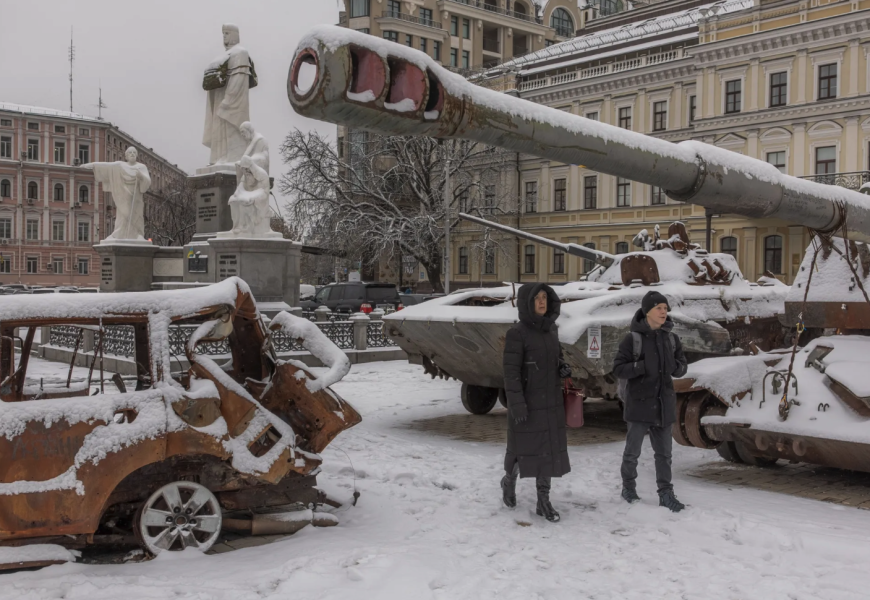
Ukrainians are preparing for what could be the harshest winter since Russia launched its full-scale invasion in February 2022, as intensifying missile and drone attacks threaten electricity supplies, heating systems, transport networks and other critical infrastructure.
Residents across Kyiv are stockpiling firewood, candles, drinking water and emergency food supplies, while some families are purchasing homes outside the capital in an effort to escape potential power and heating shortages. Apartment buildings are installing backup generators, and authorities are considering emergency transport options should Russian attacks cause further damage to bridges across the Dnieper River.
The threat became increasingly apparent on October 14, when large parts of Kyiv were plunged into darkness following a second consecutive night of Russian missile and drone attacks.
Although Ukrainian forces have continued to resist Russian advances on the battlefield, the growing volume of aerial attacks is placing significant pressure on the country's air defences. Ukraine must contend with cruise missiles, ballistic missiles, jet-powered drones and slower, propeller-driven unmanned aircraft targeting cities and essential infrastructure.
The challenge has been compounded by reduced deliveries of American weapons, particularly interceptor missiles for the Patriot air defence system. European allies have supplied some additional equipment, but Ukrainian officials say the quantities remain insufficient.
Oleh Popenko, head of the Union of Utility Services Consumers of Ukraine, warned that the country could face a repeat of last winter's widespread attacks on heating and utility infrastructure.
He said Ukraine remained inadequately protected against such strikes, raising concerns about the ability of authorities to maintain essential services during prolonged periods of freezing weather.
Residents prepare for power and heating outages
Ukraine's reliance on American air defence equipment has become a significant concern for officials in Kyiv. The Patriot system is among the country's key defences against advanced ballistic missiles, while US interceptor stocks have faced pressure from competing military requirements, including the conflict in the Middle East.
Ukrainian authorities are also concerned about access to advance intelligence and warnings of incoming Russian missile attacks. President Volodymyr Zelenskyy said on October 13 that Kyiv had gone two consecutive nights without receiving warnings from Western allies.
Political tensions have added to the uncertainty. US President Donald Trump recently announced what he described as an energy ceasefire between Russia and Ukraine, an arrangement Zelenskyy has said Moscow repeatedly violated.
Trump has also urged Ukraine to stop attacking Russian oil refineries amid rising fuel prices and indicated that the United States would import Russian diesel fuel.
Meanwhile, disagreements have emerged between Kyiv Mayor Vitali Klitschko and the national government over the pace of preparations for winter.
Residents are taking precautions of their own. In Kyiv's Solomyanskyi district, one apartment building's residents contributed additional funds to transform a previously unused basement into a basic shelter.
The space has been cleaned and equipped with donated furniture and limited sleeping arrangements. During air raid alerts, residents can shelter there overnight, bringing their own sleeping bags and mats when necessary.
Others are preparing for prolonged disruptions to electricity and heating by storing water, emergency food, portable power banks and alternative cooking equipment.
Lyudmyla Petrovna, who lives in a high-rise apartment on the eastern side of the Dnieper, said she had already accumulated drinking water, instant meals and an alcohol burner that could be used if her electric stove became unavailable.
Some residents who can afford to relocate are buying country properties where independent heating systems and wood-burning stoves could provide greater security.
Olena, a Kyiv resident who recently purchased a house about 100 kilometres south of the capital, said the property had individual gas heaters in its main rooms.
She has also purchased six cubic metres of oak firewood to prepare for the colder months.
For other residents, leaving Kyiv is not a realistic option because they have nowhere else to live.
Bridges and heating systems under pressure
Russian drone attacks have also targeted bridges crossing the Dnieper, a major transport corridor dividing Kyiv. Strikes against the capital's northern and southern bridges prompted temporary closures and traffic restrictions, contributing to congestion and disrupting public transport.
Authorities are considering pontoon bridges as a contingency if existing crossings suffer extensive damage. Transport Minister Mykola Kalashnyk has also said a tunnel beneath the river is being considered.
Such alternatives would present significant engineering and logistical challenges, particularly if the Dnieper freezes during winter.
Heating is another major vulnerability. Much of Kyiv's residential infrastructure depends on large centralised heating plants that supply thousands of homes. Authorities have been working to establish smaller, decentralised facilities, but experts warn that preparations are not progressing quickly enough.
Volodymyr Omelchenko, director of energy programmes at the Razumkov Centre, has warned that the destruction of three major municipal heating plants could leave approximately 1.5 million people without heating.
Klitschko has said the city will not order a general evacuation, but he has encouraged residents who have alternative accommodation to consider temporarily leaving the capital.
He has also warned that even extensive preparations may prove insufficient if air defences cannot prevent further attacks.
Concerns over a wider infrastructure campaign
Russia's campaign against Ukrainian energy infrastructure began during the first winter of the full-scale war and has continued through subsequent years.
Ukraine says a Russian document it intercepted outlines potential plans to severely disrupt electricity supplies in Kyiv, Kharkiv and Odesa, while also targeting heating, water supplies, sewage systems and the infrastructure used to distribute electricity imported from Europe.
The reported plans include attacks on substations, transmission lines and cross-border electricity connections, potentially making it more difficult for Ukraine to compensate for damage to domestic power generation.
Ukraine has spent years strengthening its energy network and preparing emergency responses, but the scale of the anticipated threat remains substantial.
Kateryna Shynkaruk, a Ukrainian scholar at the Bush School of Government and Public Service in Washington, has warned that Russian forces could seek to exploit any weakness in the country's infrastructure.
With winter approaching, Ukrainian households, local authorities and emergency services face the prospect of renewed attacks during the months when reliable electricity and heating are most essential.
For millions of people, the coming winter could become another test of the country's ability to maintain essential services while continuing to defend itself against Russia's ongoing invasion.
More Top Stories