°C
 3
Min
Germany has taken a major step towards developing an independent European space-launch industry after Isar Aerospace successfully sent a privately developed rocket into orbit from Norway.
Germany's Isar Aerospace launches rocket into orbit as Europe pushes for independent space access
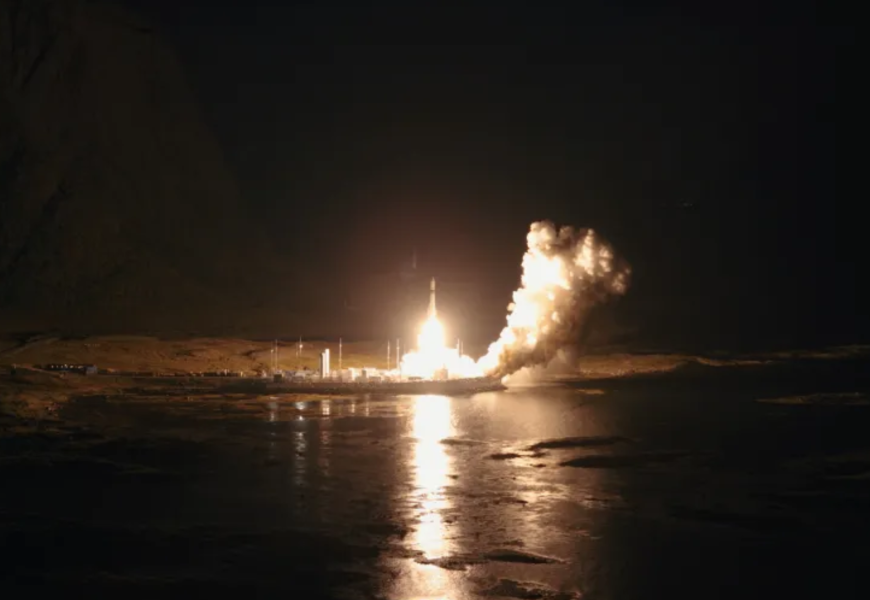
Germany has taken a major step towards developing an independent European space-launch industry after Isar Aerospace successfully sent a privately developed rocket into orbit from Norway.
The company's 28-metre Spectrum rocket lifted off from the Andøya Spaceport in Arctic Norway at 10:12pm local time on Saturday, carrying five satellites into space.
Isar Aerospace said all five spacecraft were successfully deployed after the rocket reached orbit, describing the separation process as a success.
The rocket climbed to an altitude of about 100 kilometres - the commonly recognised boundary of space - within four minutes of launch, according to presenters during a live broadcast of the mission.
The company said the achievement marked the first time a privately developed rocket had successfully reached space from European soil.
The successful launch represents a significant breakthrough for Isar Aerospace after its first test flight in March 2022 ended in failure. That rocket exploded roughly 30 seconds after launch after plunging into the sea.
The company's second launch had originally been scheduled for January but was delayed several times before Saturday's successful mission.
The achievement comes as Europe seeks to reduce its dependence on foreign launch providers and develop greater control over access to space.
European countries have faced increasing difficulties launching satellites independently since relations with Russia deteriorated and access to Russian Soyuz rockets was cut off. SpaceX, operated by US billionaire Elon Musk, has subsequently become one of the main launch providers for European satellites.
An earlier European effort to establish an independent commercial launch capability also ended unsuccessfully. In January 2023, a rocket operated by Richard Branson's Virgin Orbit failed to deliver satellites into orbit after the company reported an anomaly during the mission.
The scale of the challenge facing Europe is highlighted by the disparity in launch activity. Isar Aerospace said the United States conducted 198 rocket launches last year, compared with just eight from Europe.
The German company aims to expand its manufacturing capacity significantly, with plans to eventually produce as many as 40 launch vehicles annually.
Isar Aerospace is among a new generation of European commercial space companies seeking to develop smaller rockets capable of delivering satellites into orbit at lower costs.
The European Space Agency is supporting the development of the sector through its European Launcher Challenge. In August, Isar Aerospace announced it had secured a contract worth $230 million from the ESA to accelerate development of its launch vehicles and expand its launch infrastructure.
ESA director of space transportation Géraldine Naja said the programme was designed to encourage greater competition among European launch providers.
The push for greater independence has also received strong political backing in Germany and elsewhere in Europe.
German Chancellor Friedrich Merz visited Isar Aerospace's launch site in March alongside Norway's prime minister, highlighting European concerns about reliance on the United States for critical capabilities, including access to space.
Saturday's launch provides a significant boost to those efforts and strengthens Europe's prospects of developing a competitive, home-grown commercial rocket industry.
More Top Stories